R+D

The Sherwin-Williams Company Consolidates R&D Centers to Boost Collaboration and Increase Efficiency

Published 2/17/2026

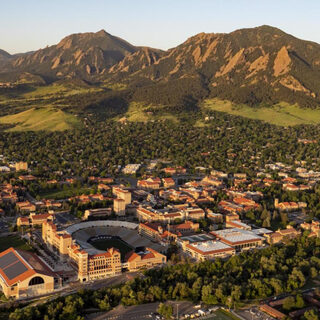
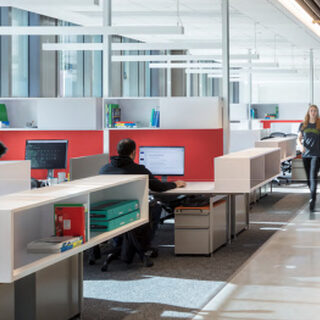
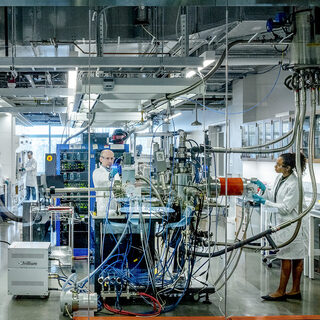
To maximize scientific synergies and encourage innovation, The Sherwin-Williams Company made the decision to combine two of its largest R&D organizations into a new global R&D center in Brecksville, Ohio. The 600,000-sf facility, named the Morikis Global Technology Center, began hosting some 900 Sherwin-Williams employees—including chemists, engineers, technicians, and support teams—upon opening in December 2025. One of the big goals is to take people from disparate business units that have been historically scattered across multiple buildings and bring them together into a space designed to maximize collaboration and spark creativity.

Read More

Management and Communication Lessons from a Stalled Lab Renovation

Published 12/3/2025

When it was proposed in 2019, repurposing underutilized space at the University of Georgia for an industry partner’s fermentation lab appeared to be a good deal for everyone involved. It was a win for the pharmaceutical company that wanted to contract with the university to help it develop new products and needed a fermentation lab that met, at a minimum, biosafety level 2 (BSL-2) standards. It was a plus for staff at the university’s Bioexpression and Fermentation Facility who would perform the work. It represented an advance for the university that wanted to form new industry relationships and had available space at its Athens, Ga. campus inside the Animal Health Research Center (AHRC). And it was a win for the AHRC, a 75,000-sf biocontainment facility that would host a new industry partner in addition to other laboratories performing BSL-2, animal biosafety level 2 (ABSL-2), biosafety level 3 (BSL-3), animal biosafety level 3 (ABSL-3), and animal biosafety level 3-agricultural (ABSL-3Ag) research work.

Read More

Incorporating Advanced Labs into Urban Commercial Buildings

Published 8/19/2025

Designing and building labs in the unlikely and constrained location of the prestigious Pacific Design Center (PDC) with Hollywood as a backdrop is a daunting task, requiring adherence to quality expectations, facilities management guidelines in a non-research environment, separation from existing high-end tenants, and compliance with infrastructure requirements. Cedars-Sinai, one of the largest nonprofit medical centers in the U.S., accepted the challenge after deciding to expand its research portfolio. Growing beyond its limited campus is necessary to accommodate the rapid growth of its research facilities and to aid in recruiting top scientists by providing innovative facilities with optimum resources. Hospital officials looked a half mile from their campus to the PDC, a designated cultural resource building complex designed by Cesar Pelli in the 1970s. Known in the 1980s and 1990s as a vibrant hub of premier art, design, and architectural showrooms, many of the tenants now have online shops rather than physical space in the cluster of buildings, leaving vacancies available for lease and an opportunity for Cedars-Sinai’s growth.

Read More

AI Is Coming to the Lab Space: Are You Ready?

Published 1/22/2025

The past few decades have brought myriad technological changes to our daily lives, and experts predict the pace of change will only increase—especially in the use of artificial intelligence (AI) tools. Much of the talk surrounding AI focuses on automating repetitive processes and analyzing data, which require additional computational power but not necessarily structural modifications. But emerging technologies, including AI and robotics, may require universities and companies to rethink their approach to designing and planning buildings and labs.
Read More

Regeneron’s $1.8 Billion “People Collider”

Published 12/18/2024

The fast-moving nature of biotechnology innovation means architects and designers for Regeneron have to plan for researchers’ requirements to change by the time new laboratories open on the Tarrytown, N.Y., campus. The campus is undergoing a $1.8 billion expansion, adding 900,000 sf of new laboratory and office space, along with additional parking, amenities, and infrastructure to support research and development. The new laboratories will be able to evolve as the biotech industry finds new ways to use artificial intelligence, CRISPR genome editing technology, robotics, and other advances.

Read More

Ohio State’s Pelotonia Research Center Emphasizes Interdisciplinarity

Published 12/4/2024

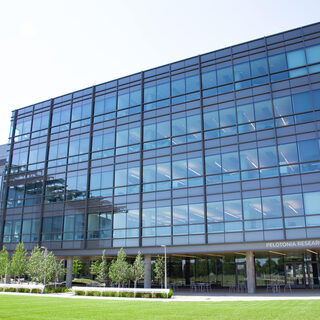
The vision of biomedical research as a collective effort is resoundingly clear in the $237.5 million Pelotonia Research Center, the first building to be completed in the 350-plus-acre Carmenton district on the campus of The Ohio State University (Ohio State) in Columbus. Opened in May 2023, the center integrates almost 100,000 sf of wet labs, 25,000 sf of computational labs, and 20,000 sf of core labs in a single facility designed to host interdisciplinary collaborations and public-private initiatives that focus on solving some of the most critical health challenges. With life science as the backbone of the research endeavor, current projects range from modeling cancer progressions to 3D printing of patient-specific anatomic models. 

Read More

Enhancing Interdisciplinary Research Using Benchmarking Data

Published 8/28/2024

The decreasing amount of time researchers spend in their labs is changing research facility design and space allocation, with an increased need for lab support space, a more significant reliance on core facilities, the creation of additional write-up and data analysis environments, and the purposeful inclusion of collaboration spaces.

Read More