Academic Medical Center

Medical and Health Education Buildings Serve as a Model for a Hybrid Future

Published 7/23/2025

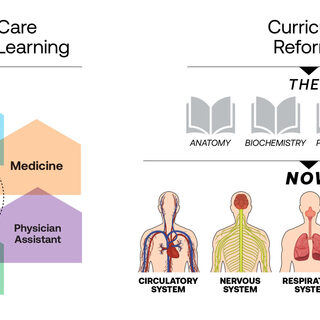
The design and planning of medical and health sciences education facilities serve as both the precursor and the wave of the future, with facilities that are not only mixed-use, but truly hybridized and integrated. Formerly siloed programs for nursing, medical, surgical, and pharmaceutical training reap exponential benefits from shared technology, resources, and spaces that enable multiple institutions and stakeholders to offer more robust programs. The hybrid building model mirrors a coevolving approach to healthcare, where teamwork is central, and training with the latest technologies is key. By accommodating the functions of multiple disciplines, forward-thinking institutions can both leverage available space and focus on creating environments for the interpersonal collaboration that underpins the experience of 21st-century health practitioners, as well as that of their patients.
Read More

Continual Planning Reviews and Design Process Updates Allow Universities to Flex with Program and Leadership Changes

Published 3/19/2025

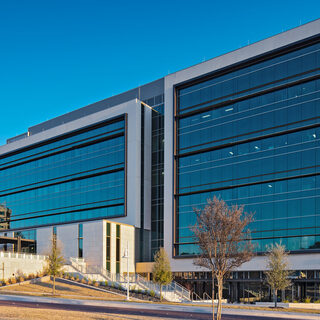
Though universities may update master plans every five or 10 years, many find planning works best when it is continual and flexible to accommodate program and leadership changes. A number of projects at the University of North Texas Health Science Center (HSC) in Fort Worth demonstrate the need to assess existing spaces and develop plans for growth and flexibility, as well as the benefits of building long-term relationships with architects and other vendors.

Read More

URMC's Orthopaedics & Physical Performance Center Offers World-Class Care

Published 11/21/2024

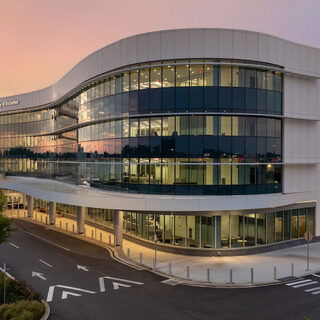
The University of Rochester Medical Center has repurposed a suburban retail center as the Saunders Orthopaedics & Physical Performance Center in Henrietta, New York. Designed by Perkins&Will and SLAM, the adaptive reuse project transformed the Marketplace Mall into a 372,400-sf healthcare destination. The renovation of 227,000 sf of existing space involved significant upgrades to building systems, minimizing vibration impacts to diagnostic imaging equipment and robotic-assisted surgical procedures.

Read More