Dow Chemical Company Renovates Electronics Materials Lab
Valent Biosciences opened the 85,000-sf Biorational Research Center in July of 2018 in Libertyville, Ill. Sited adjacent to the company's existing headquarters, the facility offers 65,000 sf of open lab space designed to foster collaborative research and development. The facility features a state-of-the-art 20,000-sf greenhouse to support the creation of innovative agricultural products and technologies. Valent Biosciences is a subsidiary of Sumitomo Chemical Company Health and Crop Sciences.
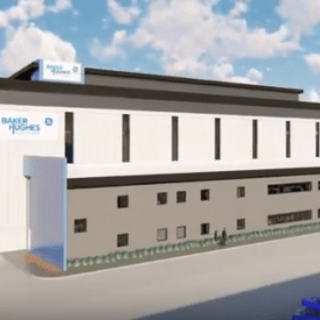
Baker Hughes General Electric, a subsidiary of GE, is planning to build a £31 million Centre of Excellence in Montrose, Scotland. The company's existing facilities will be expanded and renovated to create a leading-edge R&D complex for the manufacture, testing, and assembly of subsea equipment for oil and gas extraction and production. Sited on 35 acres, the 430,000-sf project will offer sophisticated virtual reality tools and 3D printing suites to enable the development of new manufacturing processes and technologies.
King Abdullah University of Science and Technology (KAUST) inaugurated the 145,300-sf Dow Innovation Center in May of 2018. Created in partnership with The Dow Chemical Company, the facility offers sophisticated research laboratories for creation of advanced technologies for water, oil, and gas processing, and the development of innovative construction materials and coatings. The project was designed by HOK and Kirksey Architects with Vanderweil Engineers as MEP engineer.
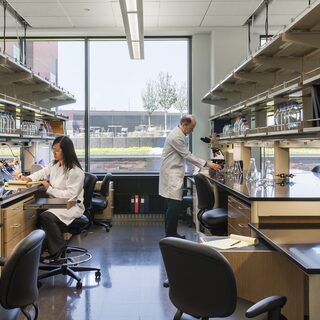
The Dow Chemical Company is planning a $121 million expansion and renovation of its heritage corporate campus in Williams Township, Mich. The new Innovation Center will house approximately 200 R&D employees engaged in the collaborative development of innovative products and technologies that bridge silicone science and organic chemistry. An existing structure will be renovated to create the 28,000-sf Product Safety Laboratory.
CSIRO broke ground in March of 2018 on the AUD$8 million Centre for Industrial Flow Chemistry in Melbourne. Enabling manufacturers to access advanced flow chemistry technologies, the 4,400-sf facility will offer services ranging from early-stage discovery through technology transfer and large-scale production. The center will also accommodate research on new chemical manufacturing processes. The general contractor for the project is Monaco and Hickey and completion is expected in November of 2018.
Monsanto celebrated the completion of a $400 million expansion of its Chesterfield Research Center in December of 2017. Designed to accommodate agronomy research programs in biotechnology, plant genetics, data science, and crop protection, the 400,000-sf facility provides a conference center, 13 Controlled Environment Agriculture (CEA) rooms and 250 research labs.
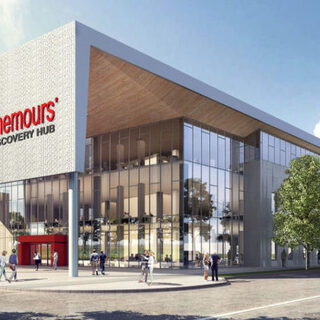
The Chemours Company, a specialty chemical manufacturer, will begin construction in January of 2018 on the $150 million Discovery Hub in Newark, Del. Supporting collaborative research, commercialization, and training initiatives, the four-story, 312,000-sf facility will be located on the University of Delaware’s Science, Technology, and Advanced Research (STAR) Campus. The Discovery Hub will provide 100 labs, 20 huddle rooms, 50 specialty rooms, conference spaces, and cafés. Completion is expected in early 2020.

Pepperl+Fuchs began construction in June of 2016 on a 110,000-sf operations hub in Katy, Texas. Located in the West Ten Business Park, the $25 million project will act as the company’s regional headquarters and features an expanded engineering center, warehouse and distribution facilities, and a customer training area. Completion is expected in spring of 2017. Pepperl+Fuchs creates customized process automation solutions for the chemical, pharmaceutical, and manufacturing industries.
Asahi Kasei Chemicals will break ground in July of 2016 on a $27 million research complex at its Mizushima Works campus in Okayama, Japan. Consolidating and expanding the company's R&D facilities, the project will enable the development of new technologies for the health care, energy, and environmental science sectors. Designed to promote collaboration and innovation, the complex will include laboratories for petrochemical processing, catalyst chemistry, and organic/inorganic synthesis.
Dow Chemical Company will begin construction in late 2015 on the 145,300-sf Middle East Research and Development Center at King Abdullah University of Science and Technology in Thuwal, Saudi Arabia. Designed to attain LEED Silver sustainable design certification, the facility will feature laboratories for the creation of advanced technologies for water, oil, and gas processing as well as the development of innovative construction materials and coatings.
The University of Kansas is building the $82 million Earth, Energy and Environment Center in Lawrence. Featuring laboratories for isotope analysis, 3D visualization, and computing, the multidisciplinary complex will accommodate programs in geology, nanoscience, physics, chemistry, and chemical and petroleum engineering. The 130,000-sf center will also provide a 30-seat mediated synchronous collaboration lab and conference room, a 150-seat auditorium, and a 10-workstation suite for industry and academic partners.
BASF opened a $55 million research center in July of 2015 in Ludwigshafen, Germany. The 118,400-sf facility provides laboratories and offices for approximately 200 employees in the Advanced Materials & Systems Research division. The seven-story project is strategically sited between other research buildings to foster collaboration. The center, built using BASF’s innovative construction technologies, features high-performance insulation panels based on inorganic aerogel.
Procter & Gamble will begin construction in summer of 2015 on the $300 million Beauty Innovation Center in Mason, Ohio. Designed by HDR, the 500,000-sf facility will provide laboratories, pilot plants, and consumer research space. The project team includes interior designer Gensler and general contractors M+W Group and Hunt Construction Group. Occupancy is expected in 2018.
The new four-story Cancer and Cardiovascular Research Building at the University of Minnesota consists of the 158,000-sf Cancer Research Building, a 96,000-sf addition to the Lillehei Heart Research Building, and a 34,000-sf vivarium used by the entire Biomedical Discovery District. The facility houses the University’s Department of Integrative Biology and Physiology, as well as two groups of investigators from Masonic Cancer Center: chemical biologists focusing on studying chemical carcinogens as a cause of cancer, and faculty focusing on novel therapeutic strategies to fight cancer.