Tradeline's industry reports are a must-read resource for those involved in facilities planning and management. Reports include management case studies, current and in-depth project profiles, and editorials on the latest facilities management issues.
Latest Reports

Sustained Economic Growth Continues to Increase Construction Costs and Labor Demand
The U.S. economy grew at a healthy rate in the first quarter of 2017, adding roughly 176,000 jobs per month. Capital construction prices continued their 2016 trend, increasing at an average of 6 percent, depending on location. Construction job growth was approximately 89,000 or 1.3 percent nationally. Energy and commodity prices continue to remain at levels not seen since the 1990s, due to abundant international and domestic supplies combined with a strong U.S. dollar.
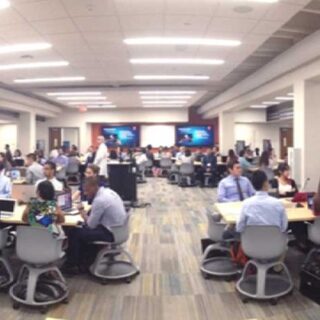
UT Southwestern Turns a Library into a Team-Based Learning Lab
Today, doctors seldom work alone, and often work with technology, so the faculty at UT Southwestern Medical Center in Dallas knew they wanted to make team-based learning a central part of their curriculum. They just needed a space to back up that plan. With a class of 240 students and an intense learning program, they realized their vision by creating a technology-rich space big enough to accommodate the entire class at once, and flexible enough to divide into smaller spaces when needed.
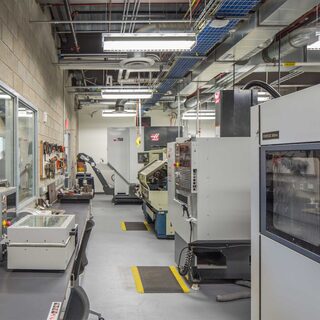
Innovative Engineering Buildings Offer Hands-On, Entrepreneurial Learning
Intense pressure to attract the smartest students and prepare them for tomorrow’s workforce is prompting engineering schools to provide a broad education with hands-on learning, an interdisciplinary curriculum, collaborative activities, and partnerships with local industries. The broader curriculum goes beyond the traditional engineering principles and practices by providing maker spaces to stimulate students’ creativity, critical-thinking ability, and problem-solving skills.
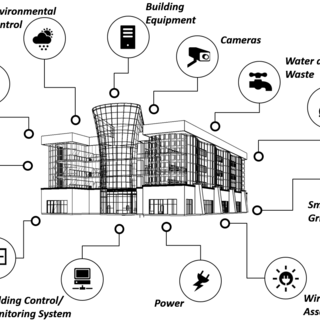
Space Planning and Management Software for the 21st Century Workplace
The vision of “work anywhere, anytime” that accompanied the rise of the Internet is now firmly entrenched in reality, and static office seating is on its way to becoming a rarity. Employees can choose among conference or collaboration rooms, private “phone booths,” lounges, or coffee bars, all in the course of a single work day. A plethora of mobile apps easily handles functions like finding an available desk in real-time, booking a meeting room, specifying A/V set-up, controlling lights and HVAC, preparing visitor badges, even placing a catering order. Automated wayfinding can pinpoint a colleague’s whereabouts in the building and provide directions to the location. All these tasks don’t exist in isolation. The technology that makes them possible, like sophisticated motion sensors and cameras, is constantly feeding data into centralized space management systems that can do everything from scheduling restroom cleaning according to usage to calculating a building’s occupancy cost per employee.
Survey: University Planning, Design, and Construction
College and University directives targeting student life, engagement, knowledge transfer, discovery, and resource utilization are transforming capital project priorities and initiatives, space plans, and campus planning decisions on all types of buildings and space. We’d like your opinion on the specific facility and campus initiatives that your institution (or your clients) will be investing in. We'll compile the survey results and return them to you so you can compare your priorities with the top issues that others are focusing on.
University professionals click here to begin the survey.
Consultants, service providers, and product vendors click here to begin the survey.