Vermeulens Releases Q4-2021 Market Outlook
Vermeulens has released its market outlook report for the fourth quarter of 2021. Key points include:
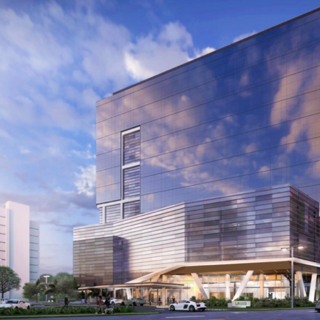
Build the first 14 floors now, then add a 16-story tower a decade or so into the future. That was Northwestern University’s unconventional approach to the construction of the Louis A. Simpson and Kimberly K. Querrey Biomedical Research Center on the Chicago campus of its Feinberg School of Medicine. It wasn’t the only out-of-the-box decision that enabled the university to move forward with its vision of creating a 1.2 million-sf, next-generation research hub about 10 miles south of its main campus in Evanston. Similarly inventive is the ownership arrangement of the first half, which became the largest academic biomedical research building in the U.S. when it opened in 2019. One of the medical school’s three major hospital affiliates, Ann and Robert H. Lurie Children’s Hospital of Chicago, owns four of the nine lab floors (amounting to roughly 160,000 sf) and has easements to four-ninths of all the common space in the 625,000-sf structure.
Imperial College London opened the £70 million Sir Michael Uren Biomedical Engineering Research Hub in London in December of 2021. Designed by Allies and Morrison, the 13-story, 215,000-sf building provides flexible laboratories, a 160-seat auditorium, and a variety of social spaces to foster interaction and informal knowledge exchange.
Washington University School of Medicine will break ground in spring of 2022 on a $150 million vertical expansion of the Steven & Susan Lipstein BJC Institute of Health in St. Louis. Designed by Lawrence Group to promote collaboration and discovery, the six-story, 160,000-sf addition will provide 103,000 sf of biomedical research space and a 7,900-sf BSL-3 laboratory for the study of infectious diseases such as SARS-CoV-2 and tuberculosis.
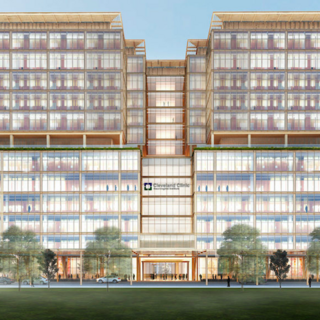
The University of Massachusetts Chan Medical School is constructing the $325 million New Education and Research Building in Worcester. Designed by ZGF Architects and ARC/Architectural Resources Cambridge, the 350,000-sf facility will house the departments of neurology and neurobiology, a gene therapy center, and programs in animal research, molecular medicine, and human genetics and evolutionary biology.
The University of Texas at Dallas and UT Southwestern broke ground on the Texas Instruments Biomedical Engineering and Sciences Building in November of 2021. Located on the East Campus of UT Southwestern Medical Center, the 150,000-sf facility will strategically collocate complementary research programs to foster the discovery and development of innovative medical solutions.
The University of California, Riverside began construction in October of 2021 on the $100 million Education Building II to provide innovative learning environments for the School of Medicine. Created by the design-build team of CO Architects and Hensel Phelps Construction Company, the 90,000-gsf (57,000-asf) facility will feature state-of-the-art classrooms, lecture halls, and specialized instructional venues. The five-level building will also provide meeting rooms, study areas, lounges, support spaces, and faculty offices.
Vermeulens has released its market outlook report for the third quarter of 2021. Key points include:
Towson University began construction in October of 2021 on the $175 million College of Health Professions in Towson, Md. Designed by Perkins&Will and JMT Architecture, the 240,000-sf facility will accommodate growing programs in nursing, health sciences, occupational therapy, occupational science, and speech-language pathology and audiology.
The University of Vermont is building the $45 million Firestone Medical Research Building in Burlington. Designed by Payette and Black River Design, the collaborative 62,250-sf structure will provide the Larner College of Medicine with core facilities, flexible labs, conference rooms, and support spaces.
The University of Pittsburgh at Greensburg broke ground on the $19.2 million Life Sciences Building in August of 2021. Accommodating programs in nursing, allied health, biochemistry, and natural sciences, the 32,000-sf facility will provide sophisticated simulation suites, chemistry and biology labs, a telemedicine center, a clinical training lab, a computer lab, student lounges, and administrative space.
Howard University will begin construction in 2023 on the National Research Center for Health Disparities in Washington. Accelerating the discovery of new solutions for chronic illnesses, the 260,000-sf facility will provide sophisticated laboratory and office environments where academic investigators can engage in collaborative discovery with pharmaceutical companies and biomedical research organizations.
Vermeulens has released its market outlook report for the second quarter of 2021. Key points include:
Faculty in higher education often spend less than 20 percent of their workday at their assigned desks, so why do they still have them? It is a question that academic administrators are asking, as they look for ways to provide building occupants with the spaces they need to do their work and the autonomy to select the right space for the right task, all within an increasingly constrained campus footprint. Corporate offices have been making the transition to unassigned seating for years now, and despite trepidation, there are signs that academia may be following suit: In a recent survey of 88 U.S. colleges and universities (conducted by the Society for College and University Planning and brightspot, a Buro Happold company), about 62 percent of respondents said they are pursuing more flexible or unassigned workspaces for administrative staff, and 54 percent are planning to do so for academic work facilities, as well.
Landmark Bio began construction in July of 2021 on a leased facility in Watertown, Mass. Supported by $76 million in funding, the 40,000-sf project will accelerate the availability of novel therapeutics by collocating research, development, manufacturing, and commercialization activities in the same structure. Featuring eight GMP cleanrooms configured to allow production of both cell and viral vector materials, the center will include labs, offices, and quality control suites.