Biocontainment

D.C. Facility Consolidates Public Health, Medical Examiner, and Forensic Sciences

Published 10/30/2013

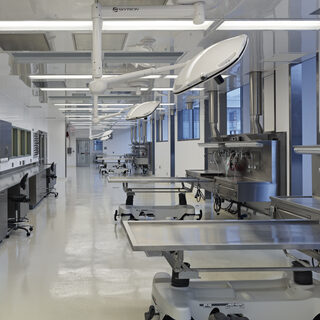
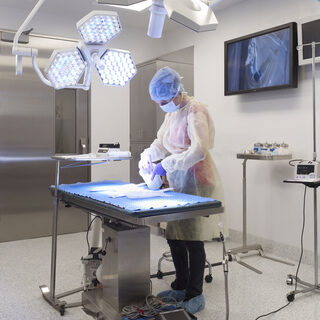
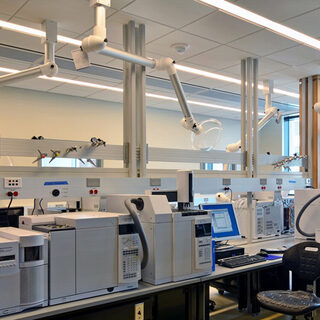
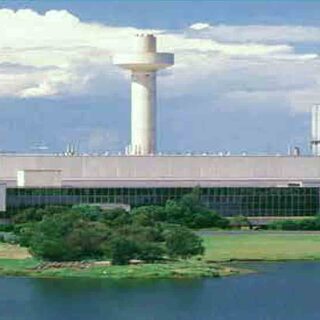
The new Consolidated Forensic Laboratory (CFL) in the heart of Washington, D.C., not only merges the physical environs of three city public safety agencies—public health, the chief medical examiner, and the forensics labs—but also creates a new dynamic for interagency cooperation. Co-location in the 351,000-sf, six-story, state-of-the-art facility allows the city to upgrade all three agencies cost effectively while improving the science, efficiency, and integrity of the work performed there. The efficiency extends to the building systems, with the CFL achieving LEED Platinum.
Read More

Arbovirus Surveillance: Improving Practices, Saving Lives

Published 10/23/2013

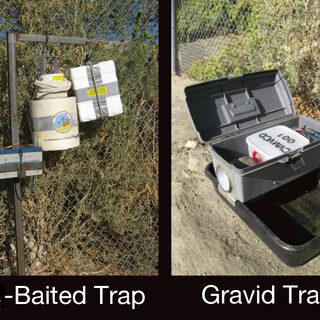
The Coachella Valley Mosquito and Vector Control District is constructing a new BSL-3 laboratory, to be completed in March 2014, to reduce turnaround time on mosquito testing by bringing currently outsourced procedures in-house. The District is dedicated to arbovirus (arthropod-borne virus) surveillance, focusing on mosquito abundance, mosquito infections, and avian infections to target mosquito control in areas that are the most important to preventing disease transmission. By limiting mosquito control to selected areas, the District lowers expense, time, and labor, and minimizes harm to the environment.

Read More

Forward-Thinking Design Ensures Uninterrupted Operation of AAHL

Published 10/9/2013

The Australian Animal Health Laboratory (AAHL), a high-containment facility in Geelong, Victoria, has been operating 24/7 with no shutdowns, even for maintenance or upgrades, for nearly 30 years, thanks to the initial design, selection of materials, and quality of construction.

The AAHL—with BSL-2, BSL-3, and BSL-4 biocontainment areas—has an extensive redundant plant to ensure that critical systems, such as the air handling units, remain continually operational. The facility was one of the first in the world to use microprocessor control for all engineering systems.

Read More

Measuring Reverse Airflow in Laboratory Failure Conditions

Published 9/18/2013

A study at Yale University suggests that quantitative performance analysis of laboratory airflow may show more conclusive results than traditional methods of measurement, and thus obviate the perceived need for costly retrofits and upgrades in order to comply with the CDC/NIH’s new prohibition against reversal of airflow under failure conditions found in Biosafety in Microbiological and Biomedical Laboratories 5th Edition (BMBL).

Read More

AgriBio, Centre for AgriBioscience

Published 9/18/2013

AgriBio, Centre for AgriBioscience is one of Australia's premier biosciences facilities, with a key emphasis on supporting and protecting Victoria's $8.4 billion (USD) agricultural sector by focusing on cutting-edge research to improve productivity, fight disease, and reduce environmental impact. The state-of-the-art research facility serves joint venture partners La Trobe University (La Trobe) and the Victorian Department of Primary Industries (DPI).

Read More

University of Edinburgh Opens National Avian Research Facility Phase One

Published 9/17/2013

The University of Edinburgh opened the first phase of the National Avian Research Facility in early 2013. The $7.9 million facility is part of a collaborative two-building research campus currently under construction for the Roslin Institute of the Royal (Dick) School of Veterinary Studies and The Pirbright Institute. Ground was broken on the project in early 2013. Phase two of the $22 million project is expected to open in late 2014.

Read More

High Market Confidence Increases Capital Construction Costs for Near to Midterm

Published 9/11/2013

Non-residential construction volumes and pricing continued their upward trend in the second quarter, with prices increasing an average of 2 to 4 percent in the first half of 2013. These factors, along with growing market confidence and a narrowing labor supply, will continue to push new construction costs closer to the trend line for the near to medium term.

Read More

Paul G. Allen Center for Global Animal Health

Published 9/4/2013

Washington State University’s three-story, 62,000-sf Paul G. Allen Center for Global Animal Health is the first of a two-phase project dedicated to infectious disease research and animal diagnostics. It houses the Paul G. Allen School for Global Animal Health, which provides innovative solutions to global infectious disease challenges through research, education, global outreach, and application of disease control at the human-animal interface. The second phase will be completion of the Washington Animal Disease and Diagnostic Laboratory.

Read More

Consolidated Forensic Laboratory

Published 8/28/2013

The 351,0000-gsf Consolidated Forensic Laboratory (CFL) in the District of Columbia serves the Department of Forensic Services, the Office of the Chief Medical Examiner, and the Department of Public Health. The building rises seven stories above ground; two below-grade levels contain evidence storage, vehicle exam, firing range/bullet recovery, lab/exam areas, BSL-3, autopsy, support lab areas, offices/conference space, and the parking garage.

Read More

Kazakhstan Constructs Biocontainment Laboratory

Published 8/26/2013

The $102 million Central Reference Laboratory (CRL) is being constructed in Kazakhstan to support research on emerging infectious diseases and pathogens. The 87,000-sf biocontainment facility will provide 5,400 sf of BSL-3 space as well as BSL-2 research areas. The project is being created in collaboration with the U.S. Defense Threat Reduction Agency and will be affiliated with the Kazakhstan Scientific Center for Quarantine and Zoonotic Diseases. The CRL is located in Almaty and is expected to open in 2015.

Read More

New ANSI Standard Z9.14 Governs BSL-3 and ABSL-3 Performance Verification Methodologies

Published 8/19/2013

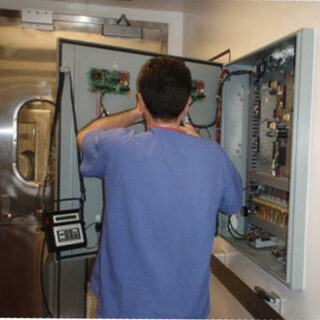
The new ANSI Standard Z9.14-201X will govern the testing and performance verification methodologies for ventilation systems for BSL-3 and ABSL-3 facilities. High containment laboratory verification is the systematic review and evaluation of all safety features and processes associated with the laboratory, including engineering controls, personal protective equipment, SOPs, administrative controls, and building and system integrity.

Read More

Texas A&M University Builds Research Aviary

Published 8/15/2013

Texas A&M University is building an 11,000-sf research aviary for the College of Veterinary Medicine & Biomedical Sciences. Located in College Station, the facility will include a biocontainment laboratory, a bird hospital, quarantine suites, two isolation rooms, classrooms, and administrative offices. Completion is expected in May of 2014.

Read More

Proposed ANSI Standard on BSL-3 Ventilation Systems Open for Review

Published 8/14/2013

The American National Standards Institute (ANSI) will be collecting comments through Sept. 10 on its new standard, Testing and Performance-Verification Methodologies for Ventilation Systems for Biosafety Level 3 (BSL-3) and Animal Biosafety Level 3 (ABSL-3) Facilities, also known as ANSI Standard Z9.14-2013. The 127-page document provides guidance for the inspection and testing of ventilation system components of new or existing BSL-3 and ABSL-3 laboratories, including research, pharmaceutical, and insectary facilities.

Read More

Best Practices for Successful Revalidation of BSL-3 Labs

Published 8/7/2013

Annual revalidation of BSL-3 biocontainment facilities—which involves verifying that systems are operating to specifications—is important not only to maintain a safe working environment for scientific needs, but also to reduce utility and maintenance costs and protect the substantial financial investments such buildings represent. The time and expense of the revalidation process can be minimized with careful preplanning.

Read More

Sandler Neurosciences Building

Published 8/7/2013

The five-story, 237,000-sf Sandler Neurosciences Center creates a new hub for the Mission Bay campus of the University of California, San Francisco, with the consolidation of the Department of Neurology, the Neurodegenerative Disease Research program, the Center for Integrative Neurosciences, and the Institute for Neurodegenerative Diseases. The 38-year lease, after which UCSF will own the building, represents the first time the University of California System has used a public-private-partnership funding model for a solely programmatic facility.

Read More