Education: Chemistry

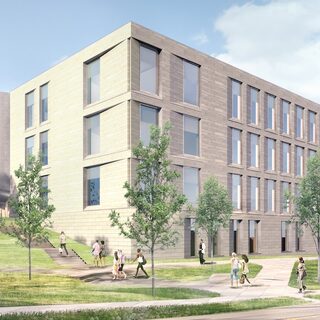
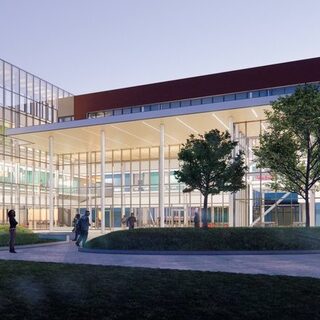
Constructing a Vibrant STEM District at University of Maryland

Published 2/4/2026

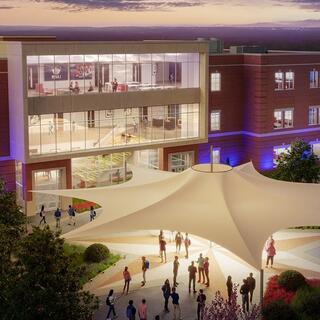
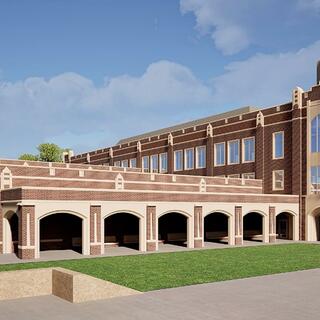
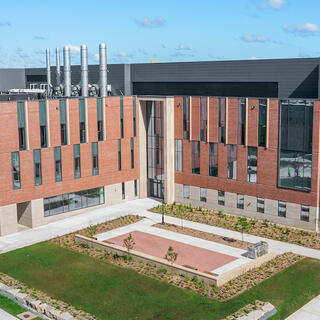
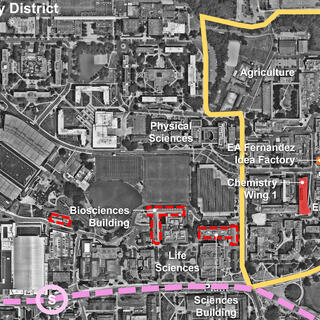
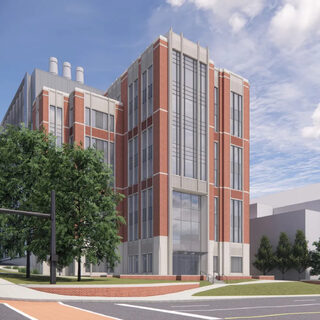
The 1,235-acre University of Maryland (UMD) campus in College Park sits just eight miles from the nation’s capital. Founded in 1856 as a land-grant institution, the university offers 300 degree programs through 12 colleges serving 41,000 students and—together with the University of Maryland, Baltimore—has $1.4 billion in sponsored research expenditures. Over the past decade, the school has experienced many shifts, including joining the Big Ten Conference and receiving its largest donation in university history.

Read More

University of North Texas at Dallas Opens STEM Facility

Published 12/15/2025

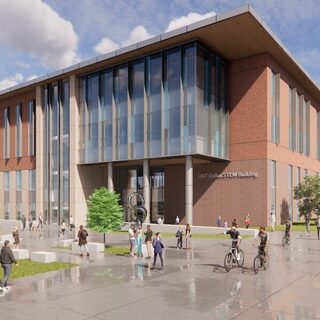
The University of North Texas at Dallas celebrated the opening of a $100 million STEM facility in December of 2025 that will expand pathways into healthcare and science for current and future students. Addressing statewide practitioner shortages, the 120,220-sf building is a learning destination for fields such as nursing, dentistry, pharmacy, and optometry, as well as housing programs in biology, chemistry, mathematics, and neuroscience. 

Read More

Northern Kentucky University Expands Herrmann Science Center

Published 12/10/2025

Northern Kentucky University is expanding and renovating the Dorothy Westerman Herrmann Science Center in Highland Heights. Designed by Omni Architects and Flad Architects, the $86 million facility will enhance the delivery of STEM+Health programs, accommodate growing enrollment, and drive regional workforce development. The addition of an 85,400-sf wing will consolidate several academic departments under one roof, including Biological Sciences, Chemistry & Biochemistry, and Physics, Geology & Engineering Technology.

Read More

Building Next-Gen STEM Facilities for Long-Term Viability

Published 11/12/2025

Academic STEM facilities need the flexibility to accommodate an expanding range of disciplines and pedagogical methods while equipped with an adaptable infrastructure responsive to occupancy shifts and technology advances. Today’s projects often span the complexity spectrum, from soft spaces and graduate student workstations outside the lab to a zero-point energy (ZPE) environment for quantum physics research or an engineering lab housing a wind tunnel. While the terms “flexibility” and “adaptability” are often used interchangeably to describe the requirements of a lab building, planners at Research Facilities Design (RFD) draw a clear distinction between the two. In their context, flexibility is what occurs below the ceiling, for example, movable casework that allows a lab to accommodate new equipment or new research opportunities. Adaptability refers to what happens above the ceiling, such as robust MEP systems, well-organized ductwork and piping racks, and spare capacity at the electrical panel to support new or expanded programs in the building. 

Read More

University of Tennessee, Knoxville Breaks Ground on Chemistry Building

Published 10/2/2025

The University of Tennessee, Knoxville broke ground in September of 2025 on a state-of-the-art facility for chemistry education and training. Designed by BarberMcMurry Architects and Lord Aeck Sargent, the $199 million building will prepare the workforce of the future for the growing chemical industry in the state and beyond. The eight-story structure will span 162,000 sf, accommodating two 50-seat lecture halls, 30 research laboratories, and a 50-seat study room. 

Read More

Wesleyan University Constructs Science Building

Published 9/22/2025

Wesleyan University is constructing a $255 million science building to consolidate two existing facilities and anchor a transformational life sciences precinct in Middletown, Conn. Designed by Payette, the 195,000-gsf structure will house the departments of Biology, Chemistry, and Molecular Biology and Biochemistry.  The four-story development will feature 39 research and support labs, nine teaching labs, seven classrooms, and a vivarium.

Read More

Roanoke College Constructs McConnon Discovery Center

Published 9/3/2025

Roanoke College is constructing the Shaun McConnon Discovery Center in Salem, Va. Designed by VMDO Architects, the $60 million project will advance the study of biology, chemistry, environmental science, physics, and engineering. Forming a dynamic link between the existing Life Science building and Trexler Hall, the four-story facility will feature eight teaching labs, classrooms, and technology-rich fabrication and visualization labs to provide opportunities for hands-on learning.

Read More

Morgan State University Breaks Ground on Science Center

Published 6/17/2025

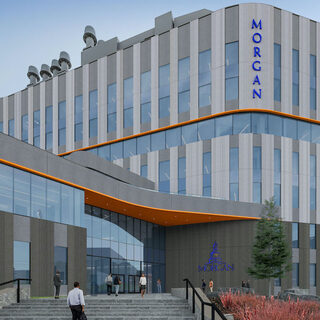
Morgan State University broke ground in May of 2025 on the $337 million Science Center in Baltimore. Designed by Moody Nolan, CannonDesign, and K. Dixon Architecture, the 246,435-gsf building will become the centerpiece of scientific research and instruction on campus. This new home for the School of Computer, Mathematical and Natural Sciences will provide 135,539 asf of leading-edge space for interactive learning, innovation, and discovery.

Read More

Houston Christian University Breaks Ground on Smith Engineering, Science and Nursing Building

Published 6/12/2025

Houston Christian University broke ground in April of 2025 on the Smith Engineering, Science and Nursing Building to provide new opportunities for transformative education and further solidify its position as a leader in academic innovation. Kirksey Architecture designed the $60 million facility to meet the functional needs of both the College of Science and Engineering and the Linda Dunham School of Nursing while creating a vibrant destination for all students.

Read More

Norfolk State University Breaks Ground on New Science Building

Published 5/13/2025

Norfolk State University broke ground in April of 2025 on the $118 million New Science Building in Norfolk, Va. Designed by Work Program Architects in partnership with SmithGroup, the 131,376-sf facility will offer future-ready environments for multidisciplinary learning and discovery. Housing the departments of biology, chemistry, and physics, the four-story structure will enable the next generation of scientists to engage in immersive education and develop innovative solutions to real-word problems.

Read More

Building and Fire Codes for Hazardous Chemical Safety: A Primer

Published 4/30/2025

Designing higher education labs is sometimes as much about managing the chemicals that inhabit the space as it is about the scientists and their work in the lab. How hazardous are the chemicals? How are they stored, and what are the allowable quantities? How do you protect the researchers and occupants in adjacent spaces, both during normal lab operations and in an emergency? Is it possible to craft a code-compliant chemical management strategy that aligns with the current shift toward large open labs that foster interdisciplinary collaboration? 

Read More

Fresno City College Celebrates Science Building Opening

Published 4/22/2025

Fresno City College opened the $87 million Science Building in March of 2025 to expand instructional capacity for students seeking to enter in-demand STEM professions. Designed by Lionakis, with RFD as the laboratory consultant, the 87,000-sf facility provides technology-enabled laboratories and instructional venues for courses in chemistry, biology, physics, and engineering. The three-story structure features a maker space sponsored by Chevron, flexible study environments, and tutoring areas.

Read More

Denver University to Break Ground on STEM Horizons Building

Published 4/15/2025

Denver University is planning to construct the STEM Horizons building to expand and accelerate vital research in science, technology, engineering, and mathematics. Designed by Anderson Mason Dale with Research Facilities Design (RFD) as laboratory design consultant, the six-story structure will provide 87,000 sf of new and renovated space for hands-on learning, research, business incubation, and community partnerships.

Read More

Pennsylvania Western University Constructs Science Building

Published 3/7/2025

Pennsylvania Western University is constructing a 63,500-sf science building to advance education and research in the natural sciences. Located on the PennWest California campus, the $39 million facility was designed by DRAW Collective to foster experiential learning and put science on display. Driving interdisciplinary collaboration, the three-story structure will house 17 labs and 19 science support areas tailored for disciplines including biology, physics, chemistry, microbiology, ecology, and anatomy and physiology.

Read More