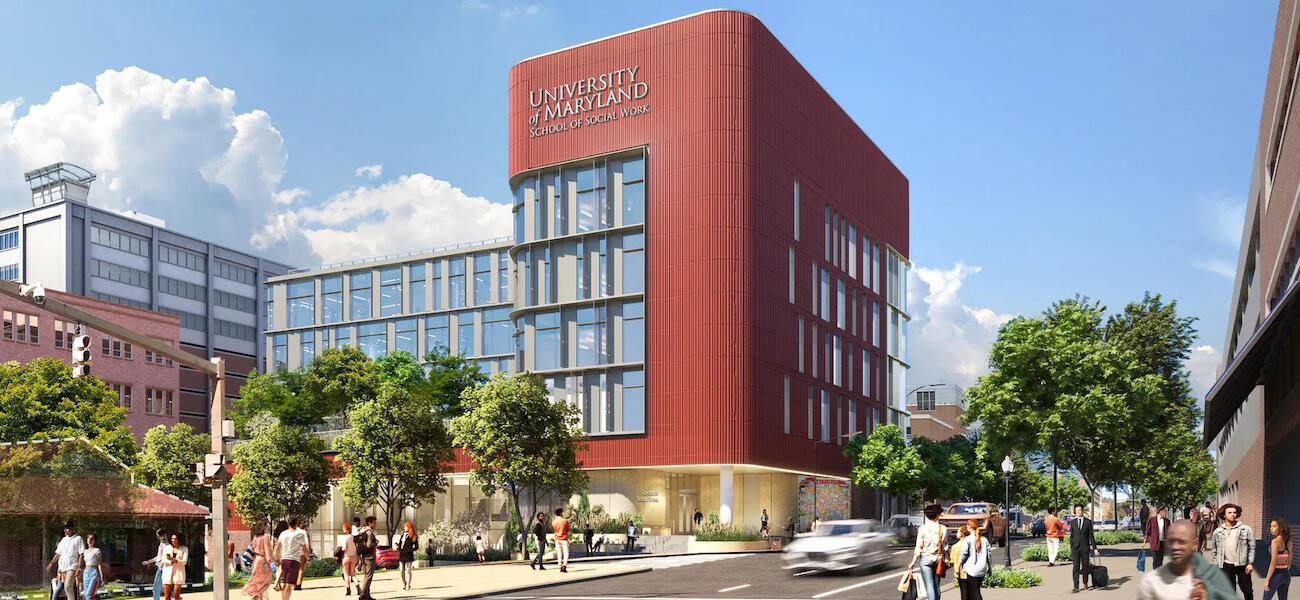
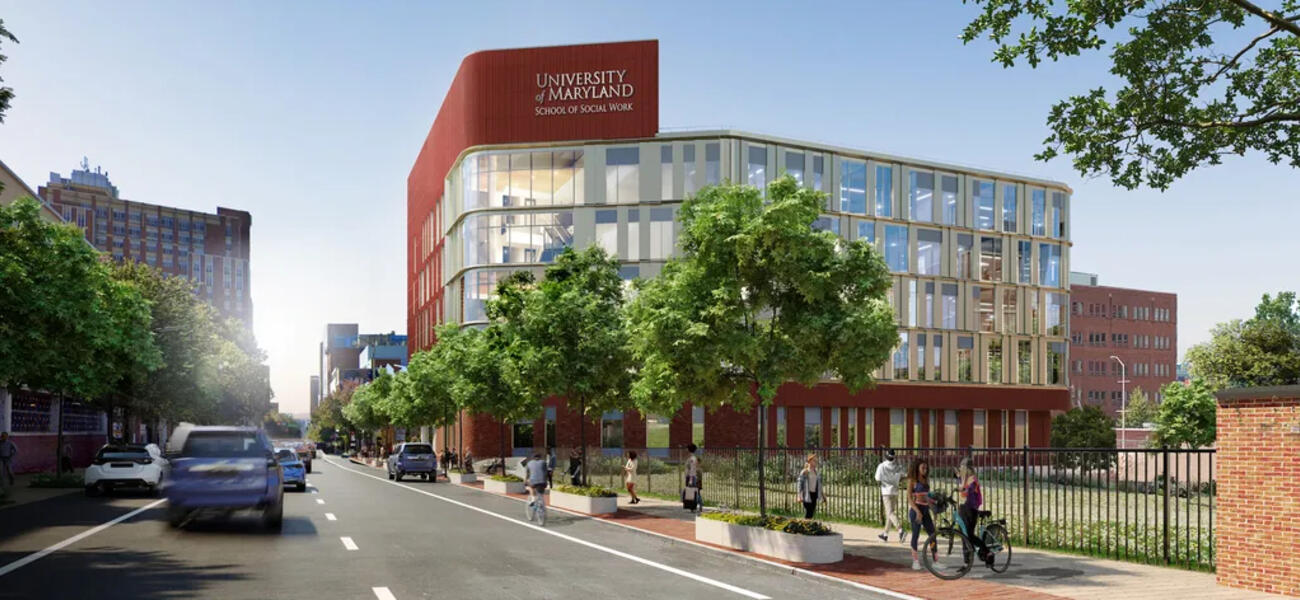
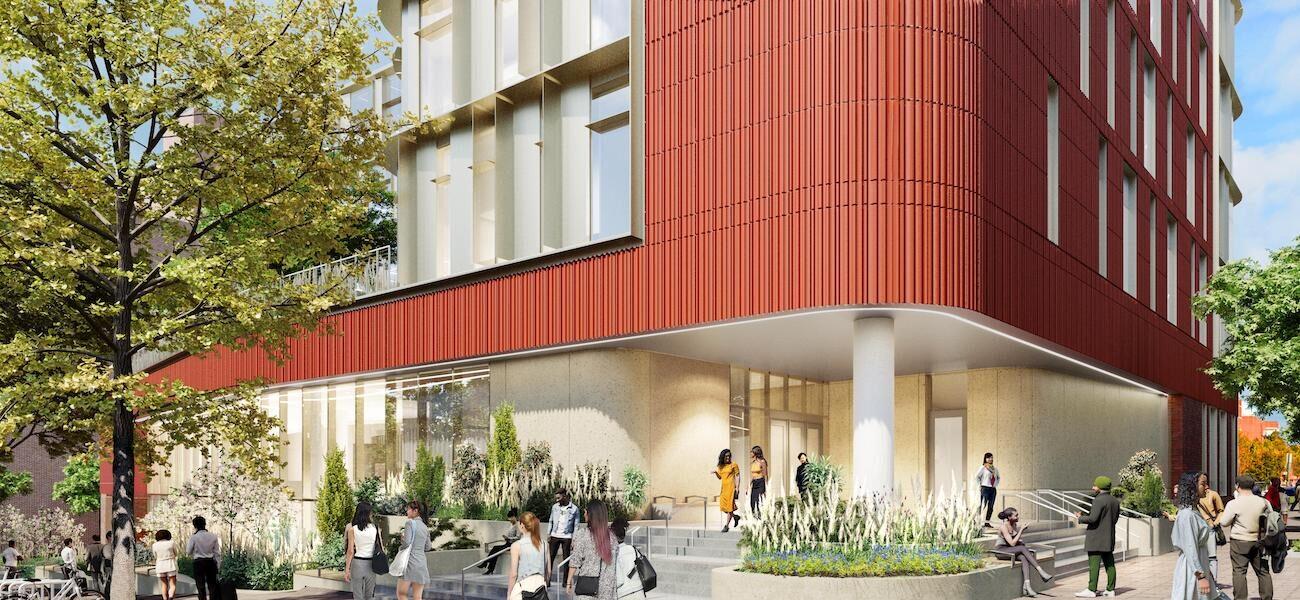
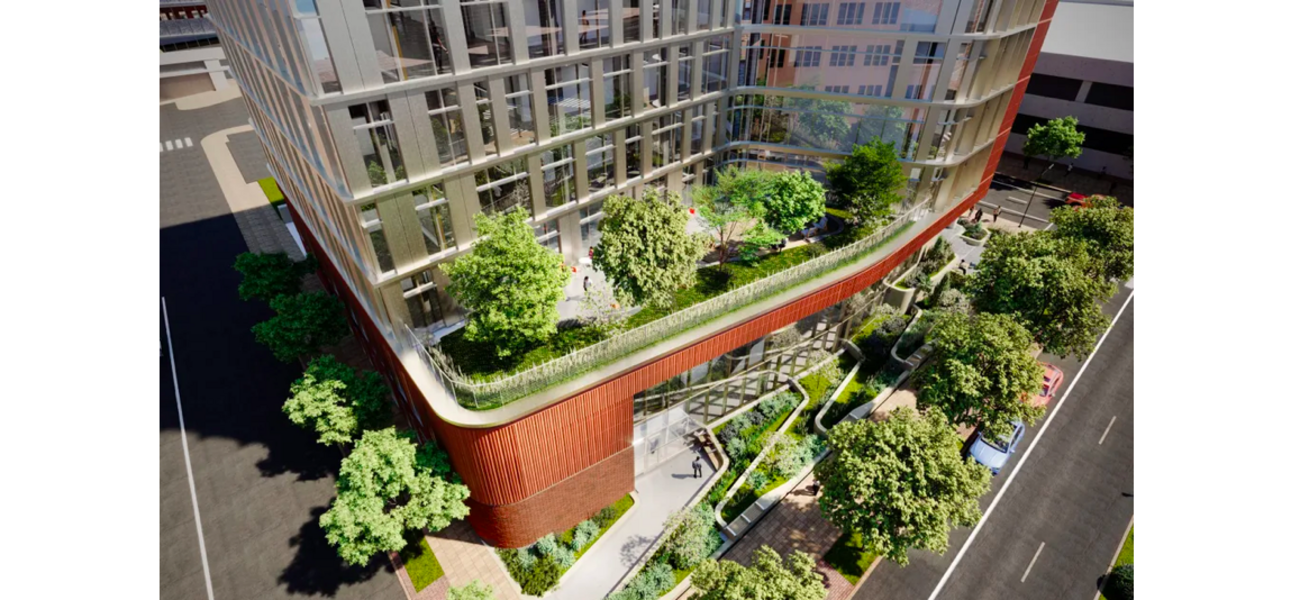
The University of Maryland, Baltimore is constructing a dynamic home for the School of Social Work that will equip the next generation of change-makers to create new solutions for key societal challenges. Designed by Ballinger, the $125 million facility will feature modern learning environments that prioritize openness, transparency, and inclusivity. The 127,400-gsf building will consolidate activities previously dispersed in six separate locations, as well as accommodating the Master of Social Work and Doctor of Philosophy programs.
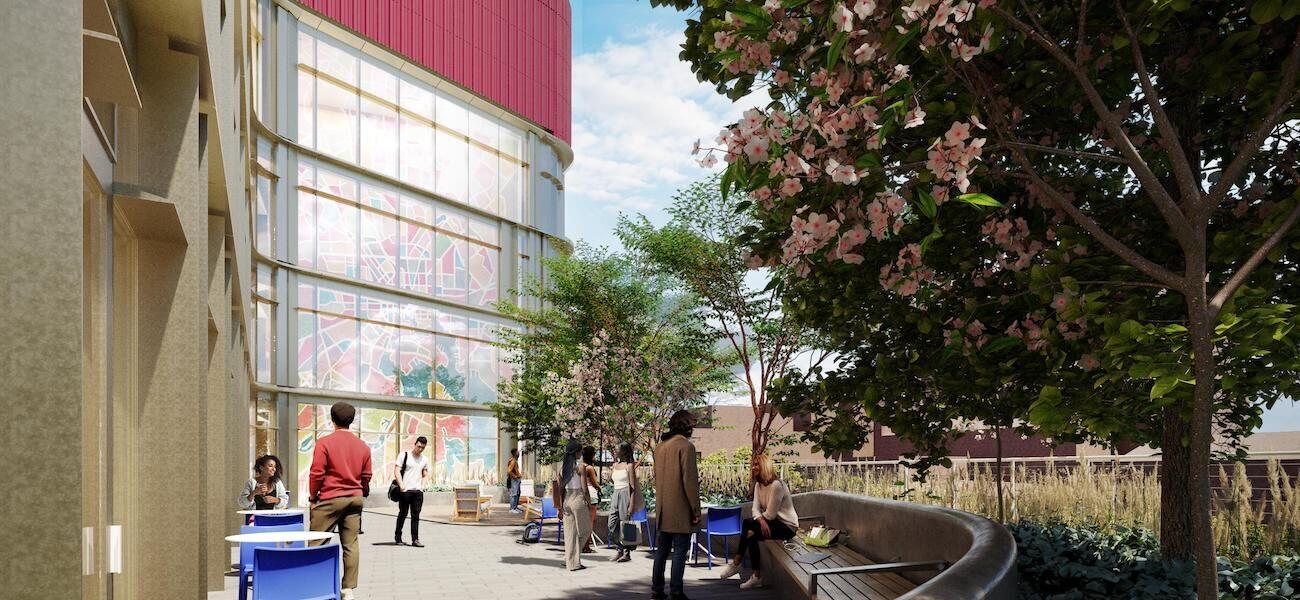
With sophisticated research spaces and areas for student-faculty collaboration, the six-story structure will provide 10 flexible classrooms, six simulation suites, two media labs, and offices. This vibrant hub will foster knowledge exchange with 13 conference rooms, 16 small meeting rooms, 27 huddle rooms, an indoor gathering venue, and an elevated outdoor terrace. The center will also offer a café, a meditation and prayer room, and a foot-washing station. Indoor bicycle parking with adjoining showers will encourage active travel.
Creating a welcoming entry point to campus, the future-facing development will further UMB's mission of innovation in community service with green spaces accessible to both the university and the general public. A high-performance envelope will optimize energy performance in concert with advanced systems, onsite photovoltaic arrays, chilled beams, and decoupled dual energy recovery units. The highly sustainable and resilient project is targeting net-zero emissions and both LEED Platinum and LEED Net Zero Energy certification. Beneath the structure, 42 geo-exchange wells will extend more than 600 feet into the ground. The facility will use no operational fossil fuels and is expected to achieve a 65 percent reduction in energy consumption as compared to a conventional building of its size.
Delivered by Whiting-Turner, the new School of Social Work is envisioned as a model for environmentally responsible construction. The state's Capital Improvement Plan was the sole source of funding for the development. Ground was broken in October of 2024 and occupancy is anticipated in fall of 2027.
| Organization | Project Role |
|---|---|
|
Ballinger
|
Architect
|
|
Whiting-Turner
|
General Contractor
|