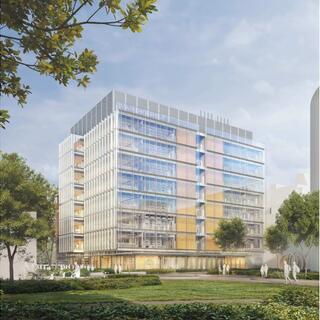
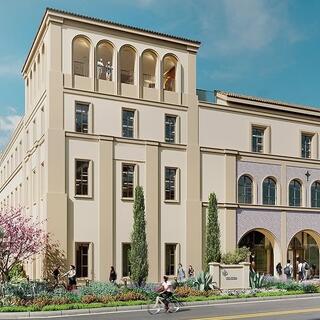
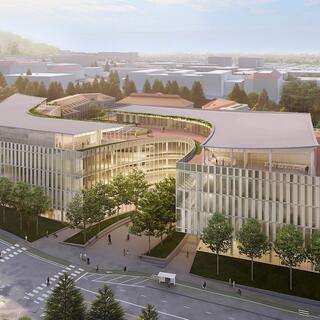
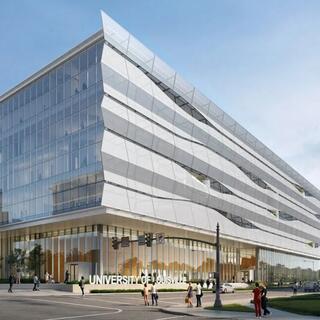
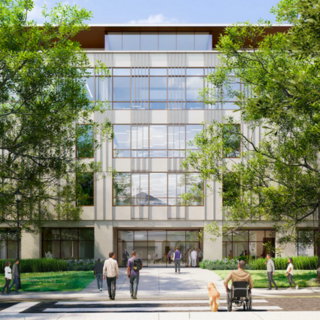
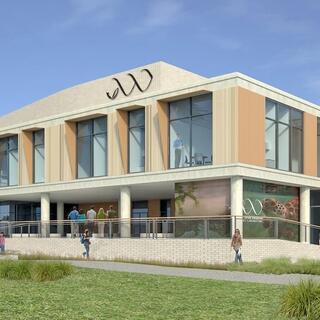
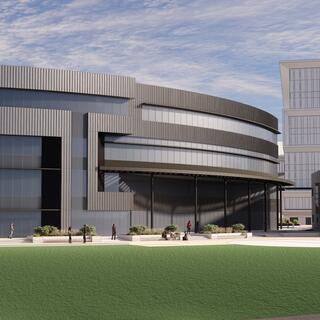
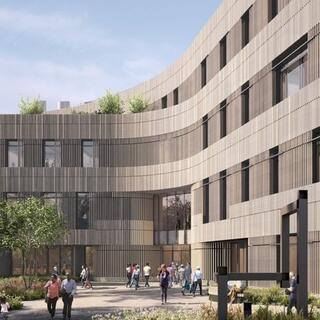
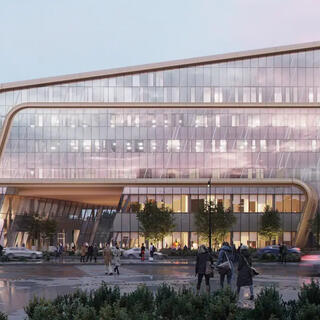
Kadans Science Partner achieved substantial completion in May of 2026 on Merlin Place in Cambridge in the United Kingdom. Designed by HOK, the leading-edge facility provides 139,000 sf of Grade A lab and office environments for start-ups, scale-ups, and established companies in the life sciences, health, and deep tech industries.
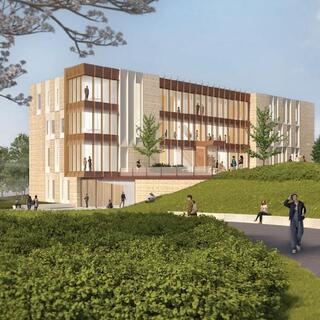
Hamilton College is constructing the Nye Center for Innovation and Technology in Clinton, N.Y., as a flexible hub for education, experimentation, and interdisciplinary research. Designed by Kennedy & Violich Architecture to spark collaboration and creativity, the 41,000-sf facility will accommodate the growing Computer Science Department and provide students with unique opportunities for immersive learning.
Vanderbilt University is planning to construct an interdisciplinary science facility on the site of the former Stevenson Center 6 building in Nashville, Tenn. The 210,000-sf structure will house faculty from the College of Arts and Science, the School of Engineering, and the School of Medicine Basic Sciences, while enabling a stronger connection with the College of Connected Computing.
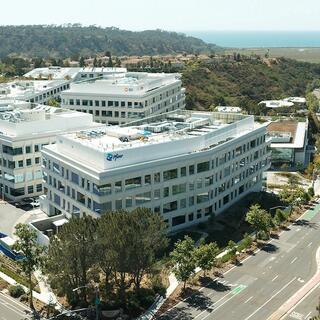
Pfizer opened an oncology research and development center in May of 2026 on the Torrey Heights campus in San Diego. Designed by DGA, the 230,000-sf facility will accelerate the creation of groundbreaking medicines for gastrointestinal, hematologic, thoracic, breast, and genitourinary cancers. Supporting a broad pipeline of innovative biologics, the leading-edge complex features specialized laboratories dedicated to small-molecule drugs, antibody-drug conjugates (ADCs), and multispecific antibodies.
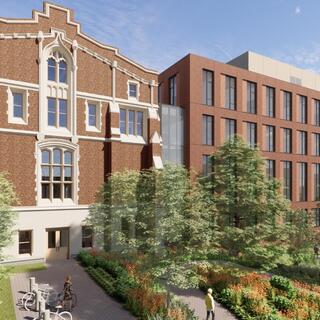
Princeton University broke ground in May of 2026 on a comprehensive expansion and renovation project that will create a unified home for the Department of Computer Science. Designed by Frederick Fisher and Partners alongside Shepley Bulfinch, Eric and Wendy Schmidt Hall will catalyze innovative computational thought that unlocks new frontiers of learning and drives the discovery of vital solutions with real-world impact.
The University of San Diego broke ground in May of 2026 on the Shiley STEM Initiative Building to drive excellence in education and research. Designed by Gensler, the 70,000-sf facility will feature labs for biomedical engineering, robotics, neuroscience, and food science, as well as a medical device lab for prototype development. Flexible instructional venues will be accompanied by teaching labs, maker spaces, and a lecture auditorium.
The University of California, Berkeley held a ribbon-cutting ceremony in May of 2026 to celebrate the approaching completion of the Barbara and Gerson Bakar Gateway building. The $557 million facility will house the College of Computing, Data Science, and Society (CDSS) and bring together approximately 1,325 faculty, students, and staff to elevate education and accelerate AI-driven discovery.
The University of Louisville broke ground in April of 2026 on the Health Sciences Building to advance discovery and provide the critical infrastructure needed to prepare the next generation of healthcare providers in Kentucky and beyond. Designed by Champlin | EOP and Perkins&Will, the $280 million facility will act as a nexus for the schools of medicine, nursing, public health, information sciences, and dentistry.
Louisiana State University (LSU) opened the Our Lady of the Lake Health Interdisciplinary Science Building in April of 2026 in Baton Rouge. Serving as a vibrant nexus for scientific inquiry, STEM education, and industry collaboration, the new home of the College of Science drives innovation in the five key focus areas of geology and geophysics, chemistry, biological sciences, mathematics, and astronomy and physics.
The landscape of academic research has shifted dramatically over the past three decades. Where scientists once worked within single disciplines, today’s researchers tackle complex societal challenges demanding collaboration across multiple fields, and the development of partnerships with private industries addressing the same issues. This evolution has fundamentally changed the approach to research facility design, requiring unique considerations for buildings whose users may not yet be identified and whose research hasn’t been imagined. As a result, the design process has become more cyclical, with fewer known variables upfront, requiring uncertainty management while still delivering buildings that will serve institutions for decades to come.
The University of Florida opened the Whitney Marine Research Center in April of 2026 in Marineland, Fla. Designed by Lord Aeck Sargent and TTV Architects, the $41.2 million facility more than doubles the available research space for the Whitney Laboratory for Marine Bioscience while expanding capacity for education and conservation efforts. The 38,000-sf building features 12 leading-edge labs, a dedicated microscopy area, aquaculture venues, and a maker space equipped with 3D printers and laser cutters.
The University of Utah Health dedicated the James LeVoy Sorenson Center for Medical Innovation in April of 2026 in Salt Lake City. Designed by VCBO Architecture, the $50 million facility will foster hands-on discovery, bridge connections between academia and industry, and accelerate the translation of leading-edge science into improved patient outcomes. The 60,000-sf building houses an ISO 8-compliant cleanroom, as well as advanced prototyping and assembly labs with the latest equipment for rapid design and fabrication.
The University of Texas at San Antonio opened San Pedro II in April of 2026 in the city’s downtown technology corridor to fuel innovation, education, and research. Designed by Gensler and OVERLAND Partners, the $131 million facility features flexible and reconfigurable spaces for the College of AI, Cyber and Computing, including classrooms, teaching labs, and meeting areas.
The John Innes Centre and The Sainsbury Laboratory are planning a £390 million transformation of their joint campus at the Norwich Research Park in the United Kingdom. Designed by BDP (Building Design Partnership), the Next Generation Infrastructure Programme will deliver a total of 431,000 sf of leading-edge environments for plant science and microbial research. This dynamic complex will accelerate the translation of scientific knowledge into practical solutions by leveraging shared resources, spaces, and networks.
The University of Michigan is constructing the Center for Innovation in Detroit to accelerate technology-focused research and train the next generation of skilled workers. Designed by KPF, the $250 million facility will act as a powerful engine for job creation and inclusive talent development by accommodating both degree-based offerings and instructional courses for non-students in a range of fields.