Many more soon to be added!
Plenary Sessions


Rebecca Blackwood, DVM, DACLAM
Rebecca Blackwood
Infrastructure as strategy: How Baylor College of Medicine built a vivarium to drive translational discovery
Translational research pipelines accelerate or stall based on the infrastructure connecting animal studies to clinical application—and institutions that treat the vivarium as a support function rather than a strategic asset tend to find out too late. Joe Petrosino and Rebecca Blackwood describe how BCM positioned its new vivarium as the operational foundation of an integrated ecosystem including CGMP manufacturing, preclinical development, and early-phase clinical research. They outline the planning criteria used to determine scale, program mix, and departmental adjacencies, and address how leadership secured stakeholder alignment around a capital investment framed as a driver of institutional research competitiveness.
Schedule
- Thu, Aug 27, 2026 · 8:30 – 8:55 AM · Conference Ballroom

Sally A Thompson-Iritani, DVM/PhD
Sally Thompson-Iritani
Restructuring for the long game: Facility utilization, programmatic sustainability, future readiness task forces
When aging infrastructure and tightening federal funding converge, animal research programs need more than gut instinct to guide capital and operational decisions—they need structured governance. Sally Thompson-Iritani describes how two advisory bodies, the Animal Research Task Force and the Emerging Technologies Task Force, have been chartered to conduct evidence-based evaluations of facility utilization, building maintenance requirements, workforce readiness, and program sustainability across UW's animal care and use enterprise. She outlines the task force model, the data frameworks applied to assess long-term programmatic value, and how the process is generating formal recommendations on digitization, 3Rs integration, and infrastructure investment that leadership can act on with confidence.
Schedule
- Thu, Aug 27, 2026 · 9:05 – 9:30 AM · Conference Ballroom

From BSL-2Ag to BSL-4: Design and construction realities from VIDO's high-containment expansion
VIDO has recently completed a BSL-3Ag to BSL-4 conversion and is commissioning a new 43,000-square-foot BSL-2Ag multi-species animal facility — together establishing in vivo and in vitro capability across containment levels 2 through 4, a GMP-qualified vaccine development facility, and a permanent NHP colony. Cam Ewart shares the challenges, last-minute complications, and practical lessons learned from delivering both projects, offering ground-level insight for institutions navigating the design and construction demands of high-containment agricultural research facilities at the frontier of translational vaccine development.
Schedule
- Thu, Aug 27, 2026 · 9:55 – 10:20 AM

Small bets, real returns: A playbook for low-cost vivarium Innovation
Capital projects move slowly, but operational problems do not wait. Michael Wisnieski presents a disciplined framework for identifying and scaling high-ROI improvements without major infrastructure investment — tested through real pilots. He profiles initiatives that have automated floor sanitation, replaced manual compliance rounds with real-time monitoring alerts, and reduced routine labor burdens across vivarium operations. He details the stage-gated process his team uses to move from idea intake through pilot readout to business case and standard operating procedure, ensuring that successful experiments scale and failed ones still generate reusable institutional knowledge.
Schedule
- Thu, Aug 27, 2026 · 10:25 – 10:50 AM
Shedding new light: Future implications of LED systems in animal research facilities
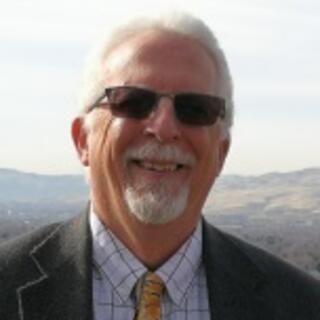
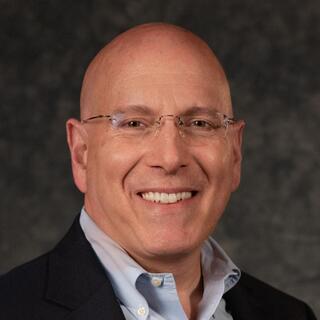
The fluorescent-to-LED transition is not a simple swap—it is an infrastructure decision with direct consequences for animal physiology, behavioral research validity, and regulatory compliance. John Hasenau and Ira Rothman define the metrics that matter in research animal environments, including Melanopic Equivalent Daylight Illuminance, Color Fidelity, and Color Gamut, and present findings from a recent AALAS survey on LED adoption and its barriers across the field. Together, they equip design and facilities teams with a protocol-driven evaluation framework for selecting lighting systems that protect scientific integrity, support occupant welfare, and navigate a shifting manufacturing supply chain.
Schedule
- Thu, Aug 27, 2026 · 3:45 – 4:10 PM
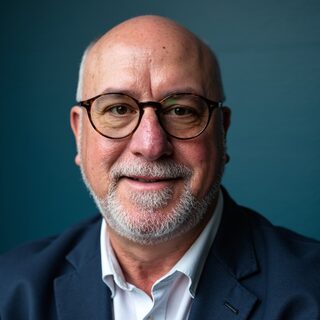

Rachel Rubino, DVM
Rachel Rubino
Planning for an uncertain horizon: Program and infrastructure strategies for the 3Rs transition
Regulatory mandates to replace, reduce, and refine animal use are reshaping long-range facility planning—even as the science to achieve those goals remains years away. Jeff Schantz and Rachel Rubino examine the gap between where the vivarium industry operates today and the targets policy has set. They share near- and long-term planning frameworks for operators navigating genuine uncertainty, describe design approaches that embed adaptability into capacity planning, and position digitization investments to serve current operations and future program shifts. They deliver key distinguishing capabilities and strategies for institutions navigating facility planning in the 3Rs transition.
Schedule
- Thu, Aug 27, 2026 · 4:15 – 4:40 PM
Clearing the air: Smarter directional airflow device selection for safety, flexibility, and cost performance
Budget pressure and evolving research protocols are prompting animal facilities to take a fresh look at how directional airflow devices are selected — and a clear understanding of the tradeoffs across performance, cost, flexibility, and regulatory obligation can reveal real opportunities to optimize. Timothy Mandrell surveys the full range of devices used in research animal environments — ducted and recirculating BSCs, chemical fume hoods, animal transfer stations, downdraft and backdraft workstations, and updraft snorkels — examining how each functions, where its limitations lie, and how a rigorous procedure-level risk assessment can open up device choices that better match operational realities and institutional resources. Facilities navigating tighter budgets without relaxing safety standards will leave with a sharper framework for making those calls.
Schedule
- Fri, Aug 28, 2026 · 9:15 – 9:40 AM
Maximizing uptime in high-containment animal facilities: A risk-based approach to maintenance coordination
In high-containment animal facilities, an unplanned shutdown is never just an inconvenience — it can derail months of research and trigger compliance exposure. Jason Tearle presents a risk-based scheduling framework that synchronizes preventive maintenance, statutory inspections, and planned shutdowns with active animal study timelines, minimizing facility downtime without compromising safety or regulatory standing. Drawing on operational experience in Pirbright's high-containment environments, he outlines the coordination protocols, communication structures, and decision criteria that align engineering, animal care, and research teams around a shared maintenance calendar — turning a persistent operational tension into a managed, predictable process.
Schedule
- Fri, Aug 28, 2026 · 9:45 – 10:10 AM
Capstone Town Hall Meeting
This panel brings together social science-based workplace research, enterprise capital planning, and data-driven governance. The audience is invited to share their own experience alongside the panelists, grounding expert insight in the room’s real-world context.
Schedule
- Fri, Aug 28, 2026 · 2:55 – 3:20 PM · Conference Ballroom
Concurrent Forum Sessions
(Pre-selection is not required.)



Designed to adapt: Facility strategies for scalable capacity and improved staff well-being
Research programs evolve faster than buildings — and facilities that cannot adapt create both operational and recruitment problems for the institutions they serve. Session leaders present the latest innovative designs for holding rooms, procedure spaces, and behavioral study areas that allow rapid reconfiguration in response to shifting scientific demands. They illustrate solutions for integrating natural light and exterior views into staff circulation zones while preserving rigorous light control in sensitive animal areas, demonstrating how thoughtful facility expansion can simultaneously increase programmatic capacity, strengthen regulatory compliance, and meaningfully improve the daily working environment for animal care staff.
Schedule
- Thu, Aug 27, 2026 · 11:10 AM – 12:05 PM
- Fri, Aug 28, 2026 · 1:45 – 2:40 PM

Right-sizing automation: Aligning cage wash investments with staffing, wellness, and long-term costs
Labor costs and staff retention pressures are forcing vivarium leadership to take a harder look at cage processing—one of the most physically demanding and resource-intensive functions in animal facility operations. Coryne Casey of ZGF Architects presents a comparative analysis of cage wash automation options across the full spectrum, from manual and semi-automated equipment to fully integrated robotics, examining how facility scale determines which tier delivers the best return. She quantifies how each level of automation affects full-time equivalent staffing requirements, ergonomic burden and staff wellness outcomes, and total lifecycle cost—equipping facilities planners and institutional decision-makers with the economic and operational framework to make automation investments that pay off in both the budget and the workforce.
Schedule
- Thu, Aug 27, 2026 · 11:10 AM – 12:05 PM
- Fri, Aug 28, 2026 · 10:35 – 11:30 AM
One system, four solutions: An equipment integration case study on cage density, labor, energy, and allergen
Modern animal research facilities face mounting operational pressures that rarely arrive in isolation: chronic staffing shortages demanding labor-efficient systems, constrained footprints requiring higher caging density, ambitious sustainability mandates targeting measurable energy reduction, and persistent occupational allergen risks affecting staff health. This session presents a real-world equipment integration case study demonstrating how a unified platform simultaneously addresses all four challenges. Through documented outcomes in density optimization, labor efficiency, energy consumption reduction, and allergen mitigation, presenters set out a replicable decision framework for evaluating integrated equipment investments that advance operational resilience, environmental stewardship, and occupational health in a single coordinated approach.
Schedule
- Thu, Aug 27, 2026 · 11:10 AM – 12:05 PM

Robin Kastenmayer, DVM, PhD, DACLAM
Robin Kastenmayer

The Collaboration Hub: Redesigning vivarium space to connect teams and improve scientific performance
Siloed vivarium layouts do more than limit communication—they create inefficiency, mpede safety, slow decision-making, and undermine the workforce cohesion that sustains a high-performing animal care program. Robin Kastenmayer and Ginena Harkins present the design philosophy behind AstraZeneca's new Kendall Square vivarium, where a centralized operations hub surrounded by specialized procedure rooms replaced the fragmented room-by-room model of the prior facility. They detail how integrated digital displays, shared KPI visibility, protocol alerts, and structured cross-functional gatherings translate space design into measurable improvements in coordination, compliance communication, staff recognition, and the scientific outcomes that depend on a connected, informed team.
Schedule
- Thu, Aug 27, 2026 · 1:10 – 2:05 PM
- Fri, Aug 28, 2026 · 11:45 AM – 12:40 PM

The new normal: Embracing a wash-free IVC future
Cage wash infrastructure represents one of the largest resource commitments in vivarium design—consuming water, steam, energy, and square footage that single-use alternatives can substantially reduce or eliminate. Jeremy Jenson examines what a broad industry transition to wash-free individually ventilated caging would mean in practice: quantifying the potential carbon footprint reduction, modeling the impact on U.S. research capacity and facility programming, and analyzing changes in utility demand across water, steam, and HVAC systems. For architects, planners, and facility leaders evaluating next-generation vivarium design, he provides a data-grounded framework for weighing the operational and sustainability implications of a wash-free model.
Schedule
- Thu, Aug 27, 2026 · 1:10 – 2:05 PM
Beyond robotics: Building an integrated automation ecosystem for the modern vivarium
Vivarium automation is not a single technology — it is a connected ecosystem of physical and digital systems that reshapes how facilities operate, how data flows, and how research gets done. Brian Bilecki maps the full scope of automation across animal rooms, support spaces, and facility workflows, from cage-level environmental monitoring and automated census tracking to cage wash robotics and unified control infrastructure. He advises on where to start, how to sequence investments, and how facility design — organized around functional cores like biocontainment, breeding, and behavioral research — enables automation to deliver durable operational and scientific returns.
Schedule
- Thu, Aug 27, 2026 · 1:10 – 2:05 PM



Better outcomes by design: Integrated delivery unlocks vivarium innovation for Brown University
Vivarium owners are asking for more — better space efficiency, smarter workflows, lower long-term costs — and integrated project delivery is proving to be one of the most powerful tools for getting there. Using Brown University's 16,000-cage Danoff vivarium as a case study, session leaders share how bringing owner stakeholders, architect, and contractor together from day one generated innovative solutions in equipment selection, space planning, and construction sequencing that a traditional siloed process simply would not have surfaced. The result is a facility that outperforms conventional benchmarks on efficiency and long-term operability — and a replicable model for institutions ready to demand more from their project teams.
Schedule
- Thu, Aug 27, 2026 · 2:20 – 3:15 PM
- Fri, Aug 28, 2026 · 11:45 AM – 12:40 PM
Designing for what's next: Vivariums that can flex for non-animal models
With the FDA and NIH accelerating their push toward New Approach Methodologies — and federal funding cuts already increasing pressure on animal research programs — the question isn't whether animal research facilities need to accommodate non-animal models. It's how to build that flexibility in from the start. Michele Cunneen presents a design framework for facilities that can pivot between live animal work and in vitro systems without major renovations. She explores modular mechanical strategies, utility planning, and barrier adjacencies that preserve optionality. She also explains why full animal model replacement within five years remains an unrealistic planning assumption despite current policy momentum.
Schedule
- Thu, Aug 27, 2026 · 2:20 – 3:15 PM
- Fri, Aug 28, 2026 · 1:45 – 2:40 PM

The Automation Loop: Integrating automation to transform vivarium workflow, data, and sustainability
The LAS sector faces converging pressures—reproducibility demands, workforce volatility, sustainability mandates, and public scrutiny — that manual, labor-intensive vivarium models were not built to absorb. Presenters introduce the “Automation Loop,” a systems-level approach that connects cage wash operations, autonomous guided vehicles, and intelligent cage-level monitoring into a continuous, data-driven workflow. They examine how this integration reduces repetitive manual tasks, improves environmental consistency, generates actionable research data, and measurably reduces water, energy, and resource consumption — positioning the automated vivarium not as a technology aspiration but as an operational and institutional sustainability strategy.
Schedule
- Thu, Aug 27, 2026 · 2:20 – 3:15 PM


Protecting for the long term: Why wall and door protection starts at design
Wall and door protection in vivarium facilities is most effective — and most cost-efficient — when it is designed in from the start, not specified as an afterthought once the damage patterns become obvious. Session leaders present the collaborative protection strategy developed for Brown University's Danoff Laboratories vivarium, where architects, vendors, and contractors engaged early to develop a unified system of walls, doors, and hardware tailored to actual traffic patterns, equipment movement, and operational conditions. The session traces how that early coordination produced protection details that standard specifications alone would not have captured — and how the resulting system reduces long-term maintenance burden, contamination risk, and costly remediation
Schedule
- Fri, Aug 28, 2026 · 8:05 – 9:00 AM

Tyler Caron, DVM, DACLAM
Tyler Caron
Steam to dry heat: A sterilizer retrofit case study in an operating vivarium
Replacing sterilization equipment in a live cage wash operation requires as much operational planning as it does technical specification. Robert Davis and Tyler Caron examine a recent project at The Broad Institute in which two steam sterilizers were replaced with dry heat units in an active vivarium facility—with minimal disruption to daily workflows. They detail the project drivers, how the choice of dry heat technology reduced the complexity of the installation, what facility preparations proved essential, and how the project team managed throughput continuity and staff coordination throughout execution. They deliver a replicable model for institutions facing aging sterilization infrastructure without the option of a facility shutdown.
Schedule
- Fri, Aug 28, 2026 · 8:05 – 9:00 AM

Phil LaTourette, DVM, DACLAM
Phil LaTourette
Real-time noise and vibration monitoring to protect active vivarium research
Renovating an occupied biomedical research facility while animal studies remain active is among the highest-stakes operational challenges a research institution can face—and informal coordination is rarely sufficient. Phil LaTourette and Dawn Hidenfelter detail the integrated monitoring and communication strategy deployed during a multi-million-dollar renovation of a mid-century urban research building. They lay out an approach combining pre-construction baseline assessment, targeted sensor deployment in critical vivarium zones, automated real-time data integration, and a structured stakeholder communication framework spanning IACUC engagement, faculty updates, and daily construction coordination. They provide lessons learned, and document the results achieved in animal welfare and research continuity.
Schedule
- Fri, Aug 28, 2026 · 8:05 – 9:00 AM

Suyapa F Ball, MS
Suyapa Ball
Modular construction for research facility scalability and program flexibility: A case study
Constrained sites, prohibitive construction timelines, and urgent demands for operational research space are pushing institutions to rethink conventional delivery — and modular construction is proving to be a serious long-term infrastructure strategy, not a stopgap. United Therapeutics' experience scaling a pioneering research program through phased modular construction — from a startup vivarium unit to a permanent facility engineered for 30-year longevity — offers a replicable framework for institutions navigating similar pressures. Session leaders examine the real advantages in cost certainty, schedule compression, and sustainability performance, and address the permitting complexity and stakeholder misconceptions that remain the primary barriers to broader adoption.
Schedule
- Fri, Aug 28, 2026 · 10:35 – 11:30 AM