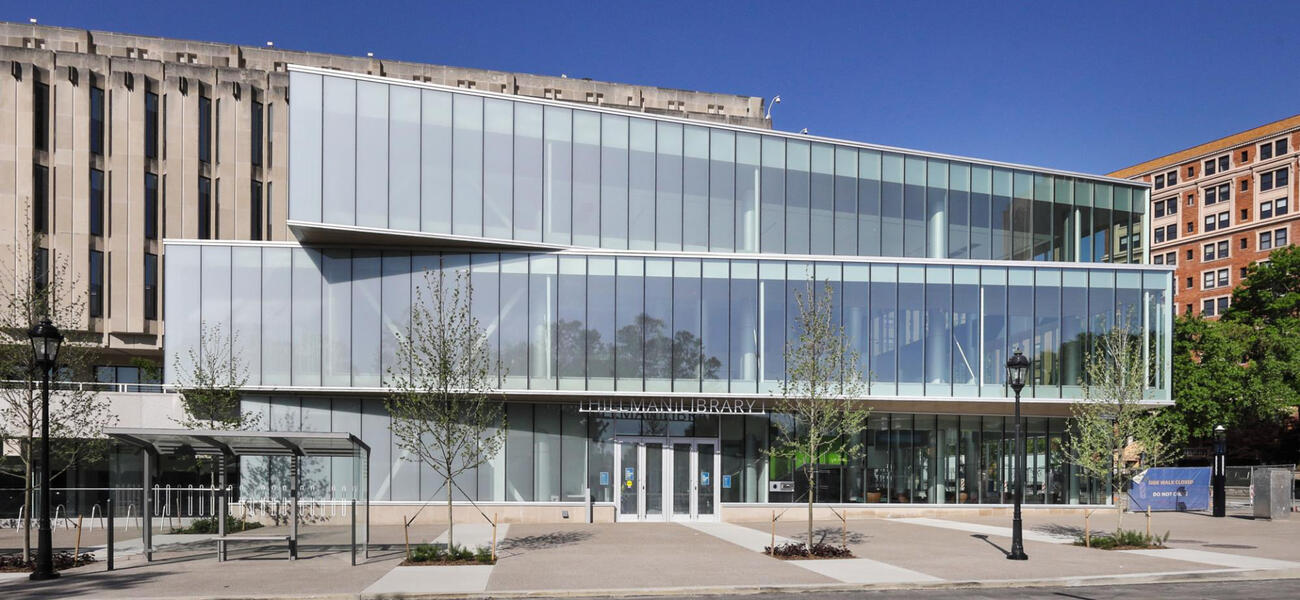
Hillman Library
Photo by Rombout Photography
The University of Pittsburgh transformed a brutalist 1960s library into a thriving hub for experiential learning, community engagement, and sustainable design.
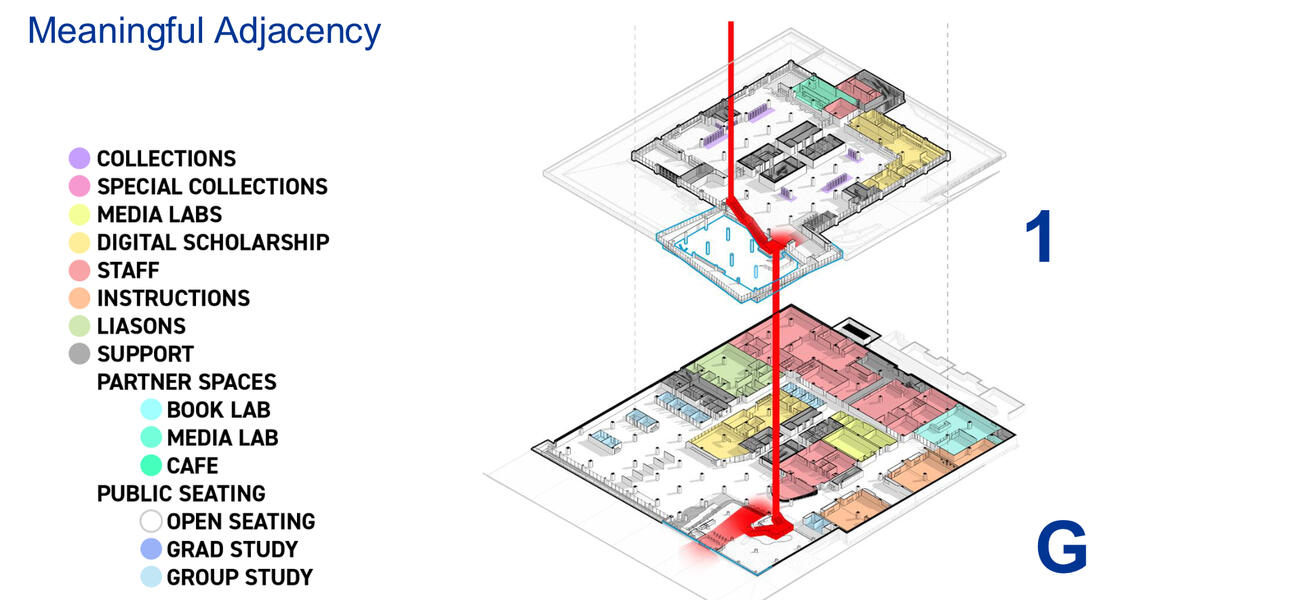
Meaningful Adjacency
Courtesy of GBBN
The principle of “meaningful adjacency” shaped the spatial organization of the entire building. One of the clearest examples is the book lab, where students can explore binding techniques and make pop-up books, positioned directly adjacent to the special collections that inspire that work.
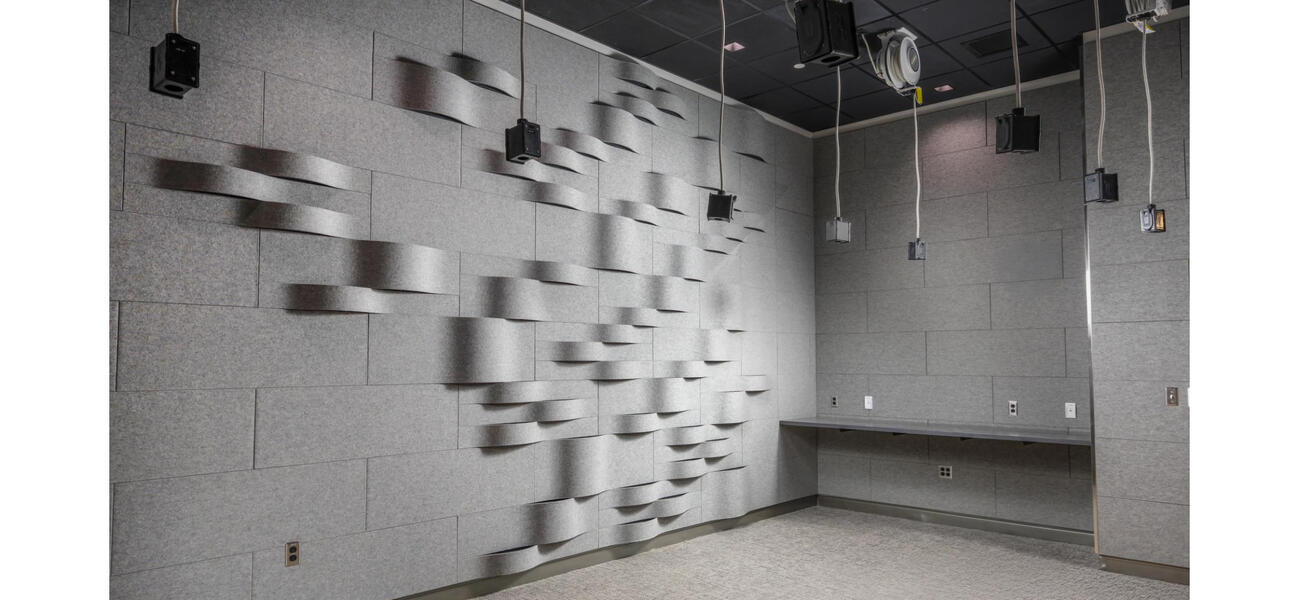
Audio Lab
Photo by Rombout Photography
This sound studio offers one of many opportunities for experiential learning, along with textile and technology labs, and labs featuring 3D printers, laser cutters, and screen-printing devices.
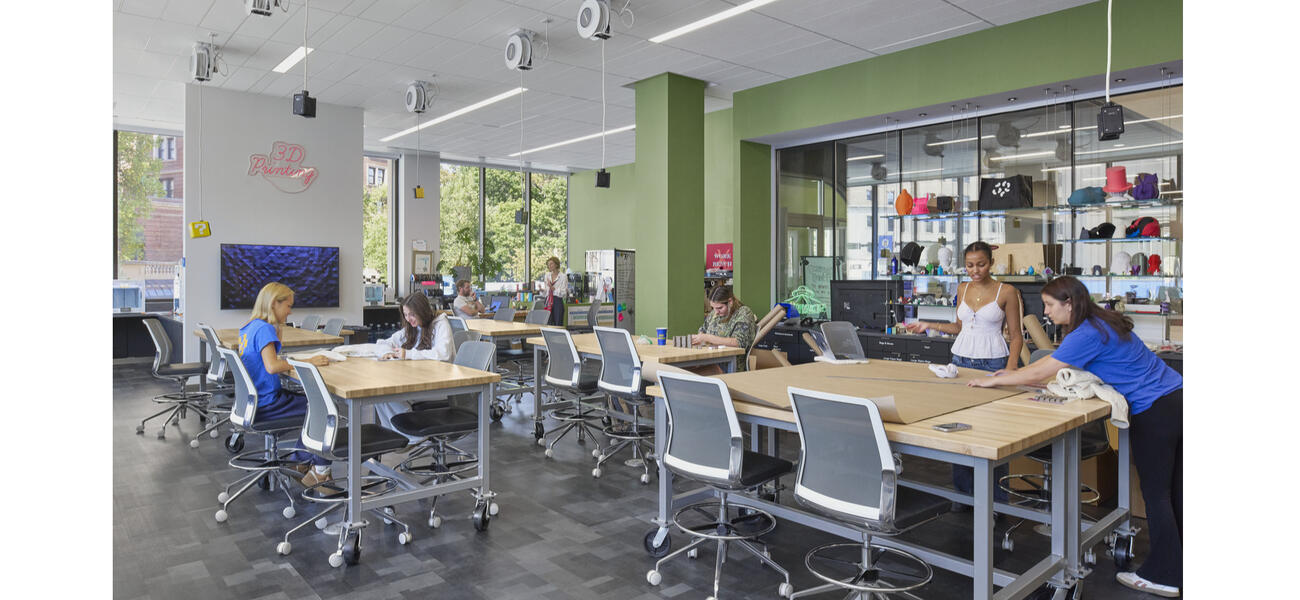
Open Lab Maker Space
Photo by Brad Feinknopf
The maker space is one of many “labs all over this building where you can leave with something you created,” says Matt Hansen, assistant vice chancellor for design stewardship.
When the University of Pittsburgh set out to renovate Hillman Library, the project began with a relatively modest goal: Remove asbestos from the plenum space above the ceilings. What followed over the next decade was something far more ambitious—a four-phase transformation that reimagined what a 21st-century academic library could be, and in doing so, reshaped the university’s relationship with its campus, its students, and its surrounding neighborhood.
The project, designed by GBBN Architects and led on the owner’s side by Pitt’s Office of Planning, Design and Construction, offers a case study in how budget-conscious phasing, deep stakeholder engagement, and a clear institutional vision can turn a building’s liabilities into its greatest assets.
The Origin Story: Asbestos, Aging Infrastructure, and a Changing Campus
Hillman Library was built in the 1960s adjacent to Forbes Field, the storied baseball stadium that once occupied the heart of the Oakland neighborhood. The building’s thick limestone walls and narrow, inward-facing windows were not accidents of style. The library was deliberately designed as a fortress—protecting its collections and its students from the crowds that poured out of the stadium after games.
“I think it’s fascinating that on the design side of this project, we were challenged to penetrate and find permeability in something that was never intended to be permeable,” says Matt Hansen, assistant vice chancellor for design stewardship at Pitt.
By the mid-2010s, that same fortress had become a liability. The plenum space above every ceiling contained asbestos insulation, making routine maintenance—changing a light fixture, servicing a valve—a hazardous materials event. Mechanical systems were at the end of their life. Single-pane windows were failing. Accessible entrances existed, but they were not welcoming.
“It was a $10 million project to get up above the ceilings, get rid of the asbestos, and put it back the way it was,” says Hansen. “Fortunately, people with a broader vision interceded and said, ‘Hey, if we’re dropping the ceilings, we have a chance to reimagine how the space is organized.’ And that really kicked off a different set of analyses and study.”
Three converging drivers made the case for a more comprehensive intervention: rapid enrollment growth (a 111% increase in applications since 2016, and 1,300 more first-year students than anticipated in the most recent fall), deteriorating infrastructure, and a fundamental shift in the role of the academic library itself. The library is no longer book storage; it is something much more, still a resource and an asset, but a different kind of asset for students.
A Transformation, Not a Rehabilitation
In 2017, the university hired Kornelia Tancheva as director of the university library system, and she immediately paused the project for six months. The existing designs, in her view, did not reflect what the library needed to become. Her intervention changed everything.
“Kornelia drove home four ideals that she used to change the trajectory and the path that the project was on,” says Hansen. “In her mind, this was not a rehabilitation at all. It was a transformation. She did not want it to be another study hall. She believed that we had lots of places across campus for students to study; this needed to be much more intentional.”
Tancheva’s guiding principles called for experiential learning, accommodation of multiple learning styles, meaningful adjacency in space planning, and a commitment to sustainability. She wanted students to leave the building with something tangible, not just information they had gathered.
“To enable experiential learning—this act of creating and actively doing—we’ve got labs all over this building where you can leave with something you created,” says Hansen. “We have 3D printers, laser cutters, screen-printing devices, and audio studios. We have all kinds of meeting spaces and gathering spaces, as well as a textiles lab and many technology labs.”
Tancheva also insisted on meaningful adjacency, a principle that shaped the spatial organization of the entire building. One of the clearest examples is the book lab, where students can explore binding techniques and make pop-up books, positioned directly adjacent to the special collections that inspire that work.
Stakeholder Engagement: Building Consensus Around a Shared Vision
The design process for Hillman was as layered as the building’s phased construction. In addition to working closely with Hansen’s planning and construction team and Tancheva’s library leadership, the design team at GBBN conducted surveys and polls with students, asking them what they valued about the existing building and what they felt was missing—for example, daylight.
“The windows were bronze single-pane glass, with the idea that it is knocking out UV and not damaging the books,” explains Matthew Plecity, the lead architect from GBBN. “With about 75% of the collection being stored offsite and able to be recalled in less than 24 hours, we could now make the glass much more transparent.”
That shift—from opaque to transparent—was both literal and symbolic. The windows that once prevented students from looking outward toward Schenley Plaza were replaced with double-pane glazing featuring a gradient frit pattern. The frit serves multiple purposes: It reduces energy consumption, meets bird-safe glazing requirements, and creates a visual gradient that becomes progressively clearer toward the corner facing the Cathedral of Learning, the university’s iconic landmark. The design reinforces a sense of orientation and reverence toward that building.
Getting everyone aligned on the glass required a hands-on demonstration. Plecity ordered a sample panel to show the library director and university leadership how the frit pattern would work. The sample arrived not as a standard 12-inch square, but as a 6-foot-by-6-foot panel that had to be delivered to the firm’s garage. That kind of physical, full-scale mock-up—the kind that makes abstract design decisions tangible—proved essential to building the consensus the project required.
Phasing, Budget, and the Reality of State Procurement
The renovation was executed in four phases over six years, proceeding from the upper floors downward, with the new entry volume added in the final phase.
“The library had to be open throughout,” says Plecity. “We would close off a floor at a time, but we never closed the full library.”
At peak construction, the compressed building was serving between 4,000 and 5,000 students daily.
“That six years translates to someone’s entire academic experience and then some,” says Hansen. “But the fact that we were opening portions of the building periodically throughout that timeline meant that there was something for everybody.”
Sustainability, Collections, and Community Access
Replacing single-pane windows with double-pane glazing reduced the building’s heating and cooling load substantially, allowing the mechanical system to be right-sized: Four air handlers were replaced by just two, and pump sizes throughout the building were decreased accordingly. A photovoltaic array of 242 panels was installed on the roof, along with new green roof terraces. The renovation achieved LEED Platinum certification.
“We have a commitment to carbon neutrality by 2037,” says Hansen. Since the university’s 2008 baseline, it has achieved a 37.3% reduction in greenhouse gas emissions.
The building’s collection strategy was equally deliberate. Between 75% and 80% of the library’s holdings were moved to an offsite facility, where any item can be recalled and delivered within 24 hours. The move was not about digitization—no materials were digitized, and no copyright laws were circumvented. It was about reclaiming space from low-use collections for people.
“The space that was given up by those books is occupied by people,” says Hansen. “I think that’s a pretty amazing transformation in and of itself.”
The new-found space now houses a rare book and special collections room with custom humidity-controlled shelving, a dedicated display area for materials from the university’s notable holdings—including the August Wilson Archive and a George Romero collection—and a variety of active learning and gathering spaces.
Early Results: A Building Proving Its Value
Students are taking note. More than 8,000 students came through the front door in one day less than two months after the library fully reopened, says Hansen. “We have a student population of 22,000, so if you think about 8,000... This is incredibly well used.”
“That is up about 40% from what it would have been at this time before the renovation,” says Plecity.
“It is going to look like an ant hill when it comes to exam time,” he says. “There are going to be students everywhere. I would expect it will be over 10,000 students per day, which is almost 50% of the student population.”
The transformation is not just about access or amenities. “A library used to be where you went to get the books and take them home, and that’s how you learn,” says Plecity. “This is about generating content.”
Hillman Library offers a useful model: Start with the infrastructure problem you have, but don’t stop there. Bring in the right voices early, commit to a unified vision, and phase the work to keep the building in service. The result, in this case, is a building that is doing more for its institution, and its city, than it ever did when it was new.
***
Learn what leading institutions are doing to keep their legacy facilities viable into the future. Plan to attend the Tradeline Facility Renovations and Repurposing Conference in Boston in October. We’ll see you there!