Strategic Plans

Vermeulens Releases Q2-2018 Market Outlook

Published 9/24/2018

Vermeulens has released its market outlook report for the second quarter of 2018. Key points include:

Construction price escalation nationally has trended to 4 percent per annum for the second quarter of 2018. Due to consistent increases in construction costs over the past few years, the long-term trend for the Vermeulens Index is up to 3.4 percent from 3.3 percent.  

Read More

Space Management Tools Are Key to Strategic Facility Planning

Published 8/29/2018

While the term “strategic facility planning” is often used generically to refer to a variety of initiatives, it is actually a unique discipline with a distinct meaning, says Debora Hankinson, architect and director of Strategic Facility Planning at CRB Consulting. As an end product, a strategic facility plan (SFP) is the overarching document that sets the direction for all further planning activities, from master (or campus) planning to the tactical steps of capital projects planning, move management, and deferred maintenance planning.

Read More

Purdue University Develops Discovery Park District

Published 1/24/2018

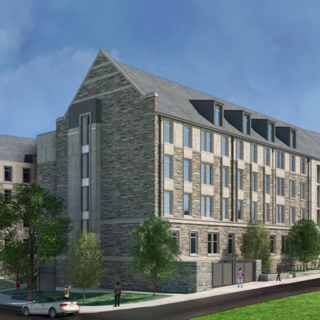
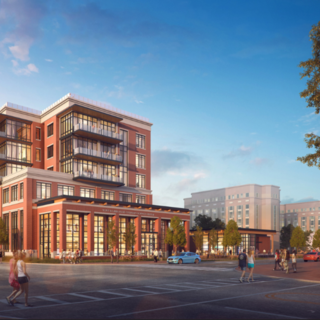
Purdue University broke ground in January of 2018 on an $86 million apartment complex in West Lafayette, Ind. Providing 835 beds, the three-building, 387,000-sf project will be built by a joint venture of Balfour Beatty, Walsh Construction, and Smoot Construction. Completion is expected by August of 2019.

Read More

Harvard University Creates Enterprise Research Campus and SEAS Complex

Published 12/21/2017

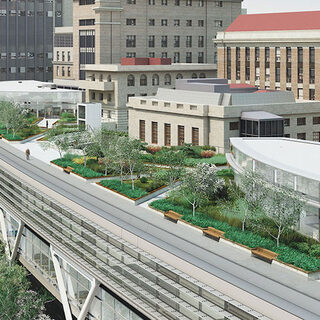
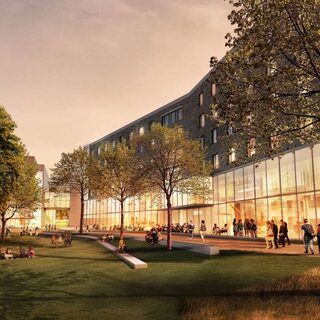
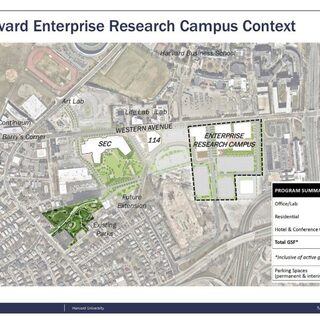
Harvard University is planning to develop the 900,000-sf Enterprise Research Campus in the Allston district of Boston. The 36-acre project will provide teaching, research, and residential facilities in a mixed-use setting that will include business incubators, space for private companies and nonprofits, and public green areas. The first phase of development will create 400,000 sf of office and lab space, 250,000 sf of rental housing, and 250,000 sf of conference and hotel space on a 14-acre site. 

Read More

University of Notre Dame Opens Campus Crossroads

Published 12/20/2017

The University of Notre Dame opened Campus Crossroads in fall of 2017 in Notre Dame, Ind. The $400 million project included the construction of three buildings adjacent to Notre Dame Stadium: O’Neill Hall, Corbett Family Hall, and Duncan Student Center. The project provides over 800,000 sf of classrooms, labs, meeting rooms, event venues, and performance spaces designed for integration with game-day activities at the renovated stadium.

Read More

Successful Planning of Interdisciplinary Science Facilities

Published 4/27/2016

At the inception of a new interdisciplinary science building, bricks-and-mortar considerations must take a back seat to a big-picture view of issues related to organization, funding, governance, and the long-range vision of the institution. The resolution of these issues early on leads to projects that are more successful—not necessarily in terms of cost savings, but in the essential criterion of aligning a new facility with specific academic strengths and the broader institutional mission.

Read More

Robert Wood Johnson University Hospital Expands and Renovates New Brunswick Campus

Published 4/9/2016

Robert Wood Johnson University Hospital will begin construction in summer of 2016 on a 100,000-sf project in New Brunswick. Two new facilities totaling 50,000 sf will be constructed and 50,000 sf in the existing hospital will undergo renovation. The expansion will allow more space for emergency and intensive care as well as accommodating preoperative services. Completion is expected by summer of 2018. The project is part of a master facilities plan to strategically increase capacity on the academic medical center campus.

Read More

Developing a Five-Year Strategic Plan for Accelerated Growth

Published 3/16/2016

In order to increase capacity, improve student/faculty ratios, and boost space utilization by 150 percent, Purdue University’s College of Engineering developed a five-year strategic plan for increasing efficiency and space on the College’s main campus. The plan—which was driven by the need to meet the goal of a 30 percent growth in engineering faculty and staff, along with growth of graduate and undergraduate students—combines a mix of strategies including renovation, portfolio rebalancing, and new construction.

Read More

The "New Rutgers": A Troika of Facilities, Finance, and Research

Published 12/16/2015

In the largest higher education restructuring in the nation’s history, the facilities group at Rutgers, The State University of New Jersey, was elevated to a leadership role, taking its place alongside the offices of finance and research as part of an administrative troika whose heads now report directly to the president. The strategic alignment among these three functions was instrumental in allowing Rutgers to meet a legislative mandate that saw the university grow to 27 million sf in 1,009 buildings with a $3.7 billion operating budget and five different campuses in less than a year.

Read More

Computational Biology Poses New Design Challenges for Research Facilities

Published 11/18/2015

An explosion in computation and large data set analyses is challenging the nature and processes of translational research, significantly impacting how such institutions plan for space needs. The link between strategic planning, programming, and design is much more dynamic, and requires faster feedback and the development of new metrics to drive value creation through strategic planning.

"That increase in computation has a significant impact on how we strategically plan for translational research,” says Andy Snyder, AIA, principal/architect at NBBJ.

Read More

Low EMI Elevator Design Supports Strategic Siting of Research Instrumentation

Published 10/13/2015

The siting of sensitive instruments in a research facility requires awareness of the electromagnetic field (EMF) environment and the various types and locations of emission sources. Some of the most difficult electromagnetic interference (EMI) challenges include DC and geomagnetic sources such as cars, trucks, subways, and trains, as well as facility elevators. The EMI footprint from the movement of an elevator through the earth’s magnetic field can exclude large areas of a facility from housing sensitive tools and instruments.

Read More

Renovation/Utilization Strategies for Program Growth and Productive Collaboration

Published 9/2/2015

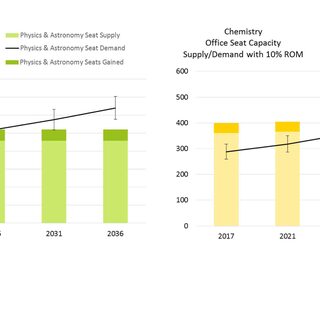
A new master space plan for the University of Texas at Austin’s College of Natural Sciences leverages program adjacencies and shared infrastructure to improve collaborative interdisciplinary research while maximizing space use. This “soft growth” renovation approach allows the college to increase capacity and improve efficiency without demolishing or adding new buildings.

Read More