Vermeulens Releases Q3-2021 Market Outlook
Vermeulens has released its market outlook report for the third quarter of 2021. Key points include:
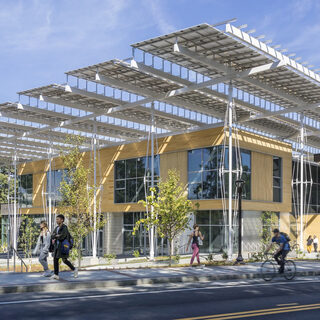
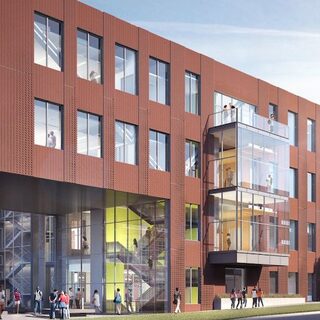
The University of Kansas (KU) faced a daunting challenge: more than 11 million sf of facilities in 150 buildings whose average age was 45 years and a deferred maintenance backlog exceeding $350 million. At the same time, the university’s strategic plan set a goal of increasing research and discovery, and the resulting campus master plan prioritized the need for new research facilities. Realizing that goal while addressing the existing challenges could have taken decades using traditional funding models. The solution? The Integrated Science Building, KU’s $180 million large-scale public-private partnership (P3) for interdisciplinary campus development, which is breaking new ground in funding models, integration, management structure, and fundraising activities. With this initiative, the university took a “great leap forward” in academic and research programs, design decisions, space allocations, programming, and critical infrastructure upgrades, as well as making a bold step with the project delivery.
Vermeulens has released its market outlook report for the second quarter of 2021. Key points include:
Demand for design services from U.S. architecture firms continues to grow at a vigorous pace, according to a report issued by the American Institute of Architects in June of 2021. AIA’s Architecture Billings Index score for May rose to 58.5 compared to 57.9 in April. Any score above 50 indicates an increase in billings, and May’s ABI score is one of the highest in the index’s 25-year history.
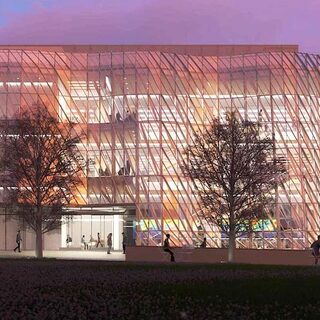
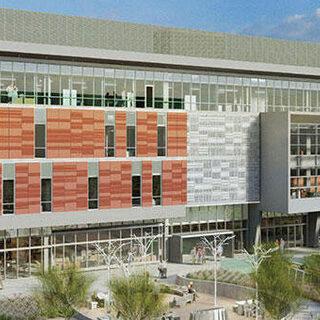
Caltech is planning to break ground in April of 2022 on the $100 million Resnick Sustainability Resource Center in Pasadena. Designed by the Yazdani Studio of CannonDesign, the 80,000-sf interdisciplinary facility will provide sophisticated laboratory environments for research programs in climate science, ecology, biosphere engineering, energy, biofuels, decomposable plastics, solar science, and water and environmental resources.
Johnson Controls International (JCI) launched OpenBlue Buildings as a Service in April of 2021. Offering a comprehensive portfolio of advanced solutions, the program allows building owners to transfer the full lifecycle risk of operations to Johnson Controls, which can include upfront capital and decision-making processes; responsibility for design, construction, and maintenance; and energy efficiency and emissions management.
Vermeulens has released its market outlook report for the first quarter of 2021. Key points include:
Vermeulens has released its market outlook report for the fourth quarter of 2020. Key points include:
Construction Prices: Remain flat through Q4 of 2020, with one in ten projects showing cost reductions with strong contractor coverage across the board.
Fed Watch: The Federal Reserve continued monetary stimulus.
Architectural Billings: Q4 has returned to growth in inquiries; however, three quarters of billing declines in 2020 will result in a lower volume for the first half of 2021.
Efforts to make mass timber construction a viable alternative to concrete and steel took a giant step forward last year when Walmart announced that the 2.4 million sf of office buildings on its new Bentonville, Ark., headquarters campus would use a structural system of cross-laminated timber manufactured from regionally harvested southern yellow pine. It’s not just in the office environment where wood is becoming a contender. “We see increasing interest in using mass timber structures for research/lab buildings, especially at universities that are in major timber-producing regions,” says John Starr, a principal at Lord Aeck Sargent, a Katerra Company (LAS). Starr cited facilities at Georgia Tech, Oregon State, and Michigan State as examples.
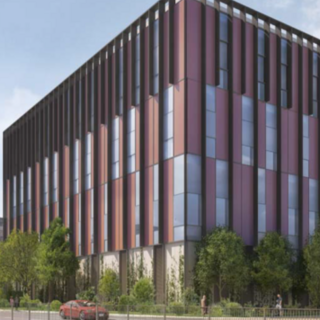
The University of Nevada, Las Vegas broke ground on the Medical Education Building in late October of 2020. Designed by TSK and CO Architects, the five-story, 135,000-gsf facility will be the first permanent structure for the School of Medicine. Funded by $155 million in philanthropic contributions, the project is being developed by Nevada Health and Bioscience Corporation through a public-private partnership.
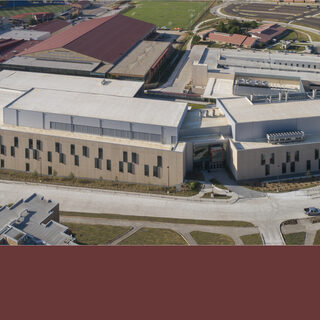
Washington State University opened the $66 million Plant Sciences Building in Pullman in November of 2020. Designed by LMN Architects with Research Facilities Design (RFD) as laboratory design consultant, the 82,476-sf facility provides leading-edge research environments for programs in horticulture, plant biochemistry and pathology, and crop and soil science. Creating a new gateway to the V.
Vermeulens has released its market outlook report for the third quarter of 2020. Key points include:
Facility Logix, EwingCole, and Biggins Lacy Shapiro have launched Rapid Reshore & Development (RR&D) to provide turnkey professional services to the life sciences and biopharmaceutical industries. Addressing many of the logistical challenges faced by companies developing drugs, vaccines, and medical devices, the alliance represents an evolution from transaction-driven service models to a holistic focus on client needs.
The COVID-19 pandemic has amplified the need for the research community to respond quickly to changing markets and to understand the value of laboratory spaces that are flexible, adaptable, and scalable. We’ve seen stadiums converted to makeshift hospitals, “drive-through” testing sites pop up in vacant parking lots, and testing laboratories continually ramp up production to expedite results. This quick-thinking behavior has been inspiring to witness but daunting to execute. Laboratories, by nature, are among the most complex building typologies, where the utmost importance is protecting both the health and safety of their occupants and the integrity of the research. The complexities of the resulting design can be challenging to undertake, but when faced with the extreme circumstances of a pandemic, it is possible to expedite the process with a combination of strategies.
The University of Colorado opened the $61.4 million William J. Hybl Sports Medicine and Performance Center in August of 2020 in Colorado Springs. Designed by HOK and RTA Architects, the 104,600-sf facility integrates undergraduate and graduate education with clinical practice and research in a sports medicine and performance environment.