Engineering Triangle
Courtesy of ZGF and PLACE
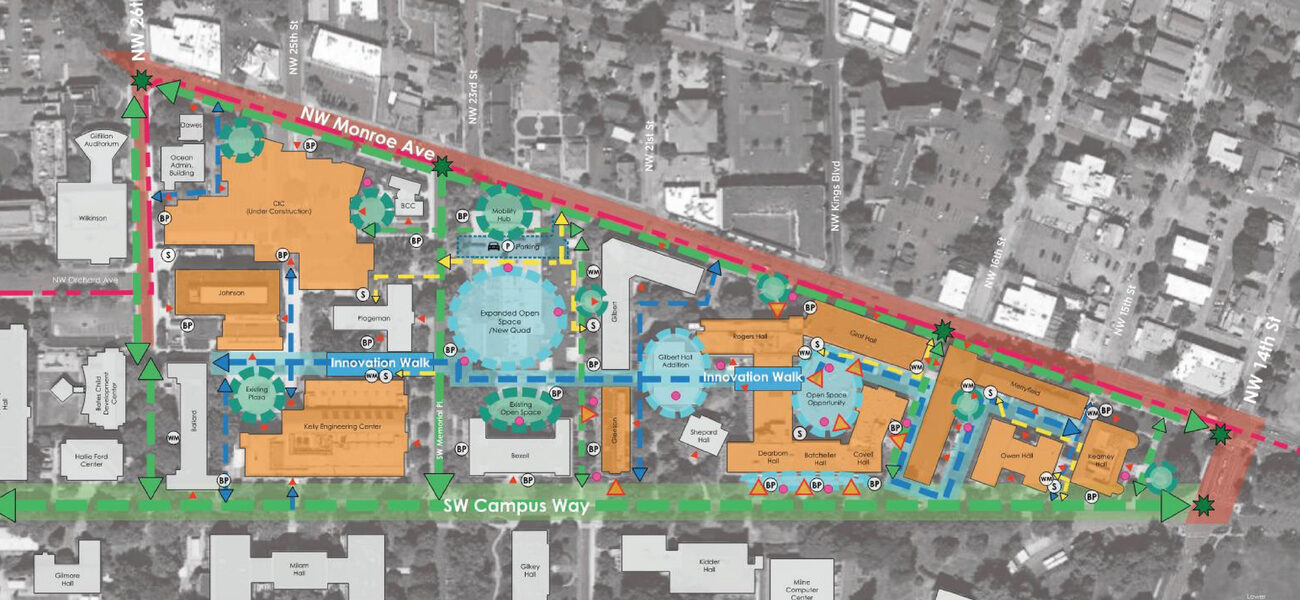
OSU’s Engineering Triangle was the focus of the Engineering Next strategic master planning effort.
Aging Facilities
Courtesy of Oregon State University
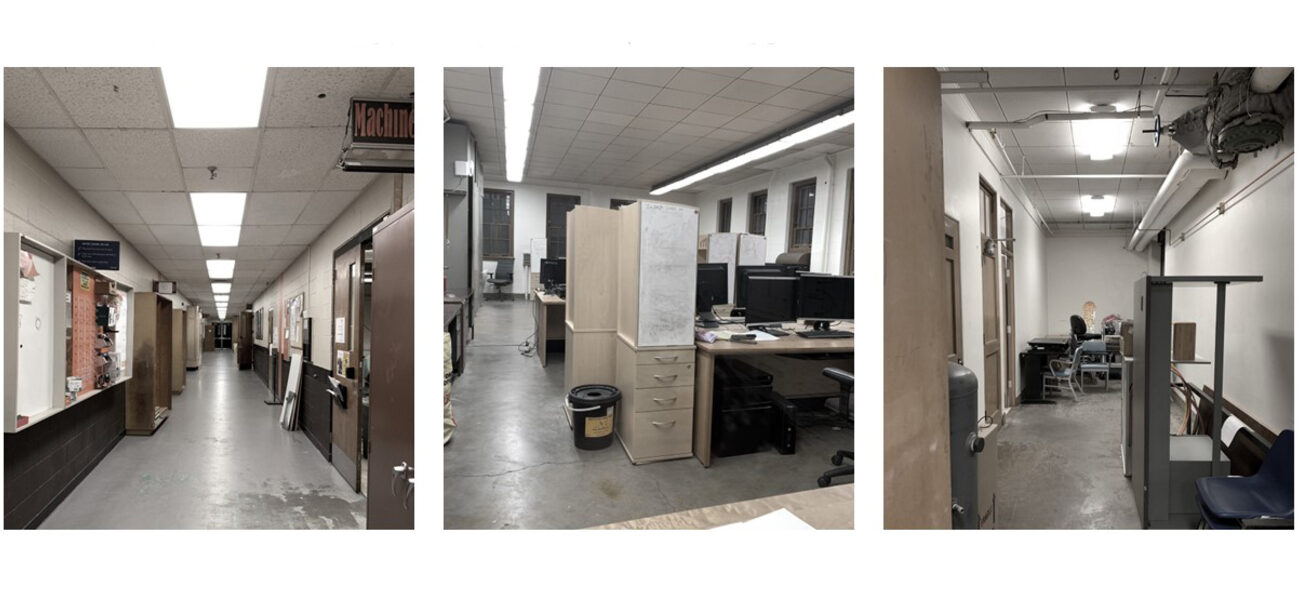
Aging engineering facilities on campus were not keeping pace with enrollment, accessibility, or technological needs.
Huang Collaborative Innovation Campus
Rendering courtesy of ZGF
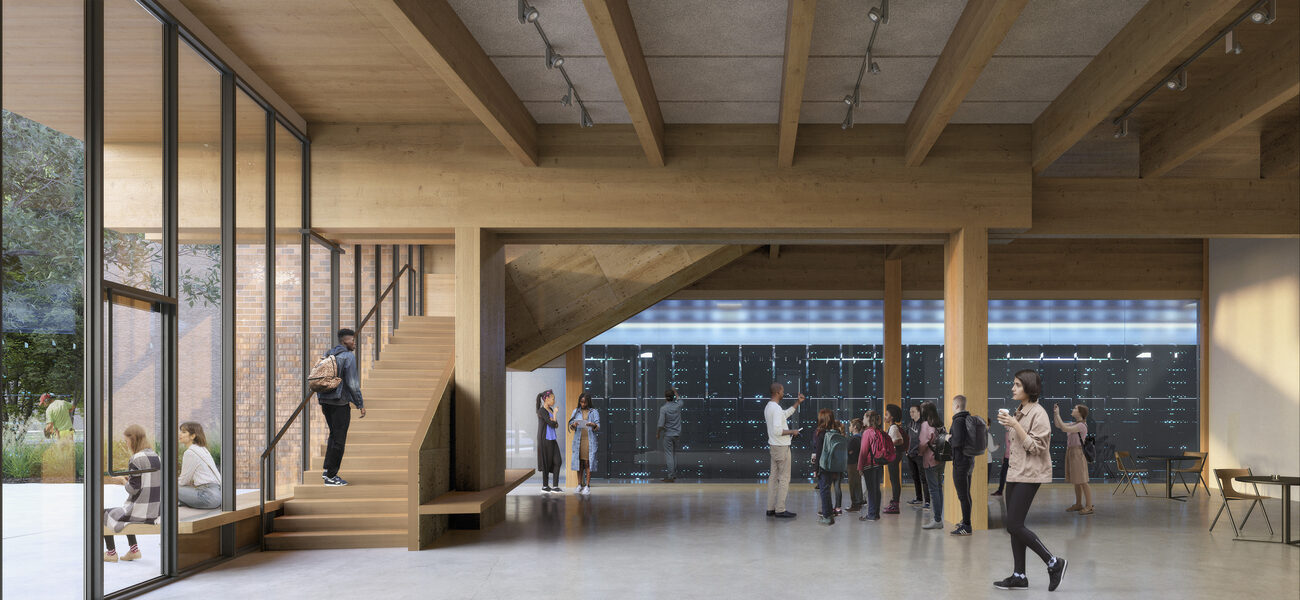
The state-of-the-art Huang Collaborative Innovation Campus, now under construction, set a high bar for renovations to come.
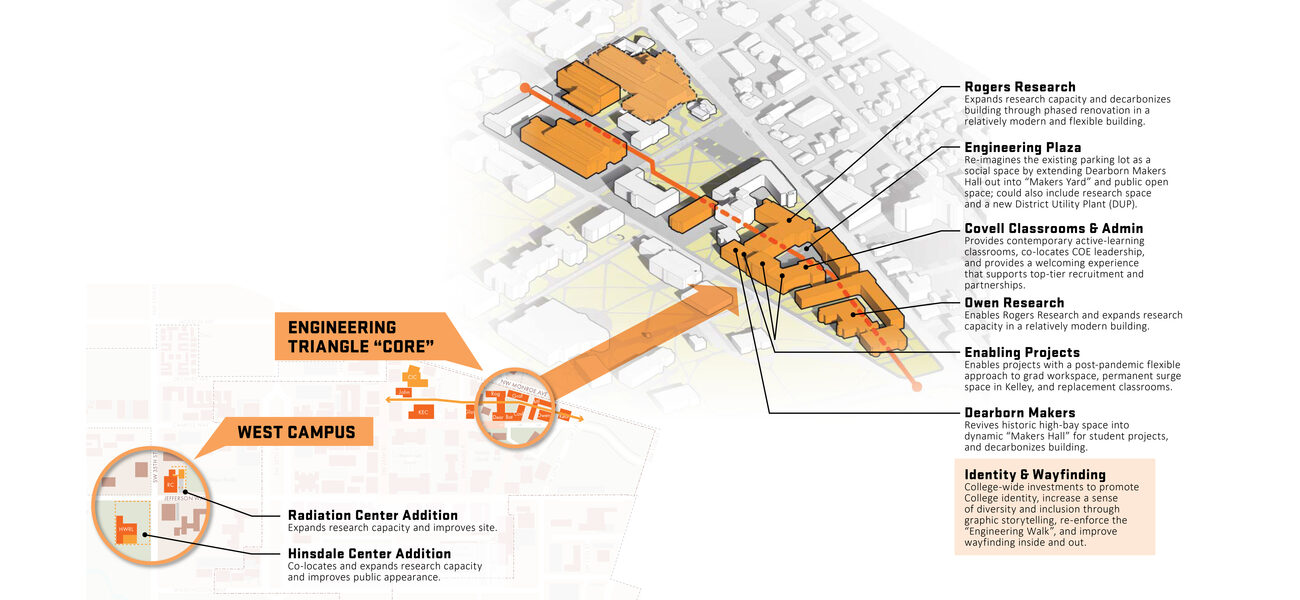
Top Priorities
Courtesy of ZGF
The Engineering Next playbook identified these projects as top priorities.
At Oregon State University (OSU), the College of Engineering is embarking on a transformative journey to optimize space, enhance research capacity, and create a cohesive environment for students and faculty. Through strategic planning, innovative redesigns, and an emphasis on community engagement, OSU is redefining how legacy buildings can serve modern needs without massive new construction.
A major focus of OSU’s 10-year plan centers on the university’s “engineering triangle,” a cluster of historic buildings dedicated to engineering research and education. These century-old buildings, while rich in history, are in desperate need of modernization to support the university’s cutting-edge research. While previous years have seen new construction, the next phase will focus on preserving and enhancing existing spaces.
Key OSU facilities include the Kelley Engineering Center—a modern, lab-rich environment—and the O.H. Hinsdale Wave Research Laboratory, a vast industrial space designed to support advanced research in fluid dynamics. Together, these spaces highlight the campus’s engineering needs: 77% of the facilities are aging yet vital to research and education. To address these challenges, OSU developed a flexible master plan “playbook” to guide the strategic renovation and optimization of its engineering facilities, ensuring they meet the demands of a growing student body and evolving technological advancements.
Behind this ambitious effort is a team of experts including Scott Ashford, OSU’s dean of engineering; Libby Ramirez, the university’s campus architect; and Susan Oehme and David Levo of ZGF Architects, who have spent months mapping out a comprehensive vision.
Engineering the Future
OSU is on a record-breaking trajectory, welcoming its largest freshman class in history. With 37,000 students—33,000 of whom study at its Corvallis, Ore., campus—OSU is a bustling hub of learning, innovation, and research. Additionally, says Ramirez, “As a public R1 institution, OSU holds the distinction of being one of only three universities nationwide with land, sun, sea, and space grant designations.” Beyond its two primary campuses in Corvallis and Bend, OSU operates 11 colleges and 12 statewide experiment stations.
The Corvallis campus currently spans 7.6 million sf and encompasses a National Historic District of more than 75 buildings with strict architectural standards. But with such a diversity of building styles emerging over time, the campus’s identity can feel a bit scattered. “All of these different categories are not lending themselves to expressing what the College of Engineering is truly able to do,” says Ramirez.
Among the university’s most exciting recent developments is the143,000-sf Huang Collaborative Innovation Complex, now under construction. Originally planned for another part of campus, the facility will now anchor the engineering triangle, offering state-of-the-art resources, such as an extended reality theater, robotics playground, and a cleanroom.
Constructed from sustainable mass timber, this facility is set to become a campus gem; however, it stands in stark contrast to the surrounding buildings, many of which date back to the early 20th century and require millions of dollars in incremental repairs.
The need for change is undeniable. In one building, a drinking fountain bears a permanent sign advising users to let the water run for several minutes for the best taste—a clear symbol of the deferred maintenance challenges OSU faces. For Dean of Engineering Scott Ashford, this isn’t acceptable. “We have to do better,” he says.
Recognizing the need for a long-term approach, OSU leadership committed to creating a strategic master plan that maximizes available resources and attracts donor support to ensure smart, impactful renovations.
Next: A Call to Action
“We wanted to work within the academic calendar, gathering as much information as possible before the summer break to maintain momentum,” says Oehme, who served as project manager for the master planning effort. Over a span of five months, the team conducted an extensive outreach process, engaging over 1,500 individuals—from faculty and students to capital planners and communications specialists. This broad input helped shape a forward-thinking master plan: the Engineering Next playbook.
One of the most striking aspects of the process was its inclusivity. “This is one of the most engaged university communities we’ve worked with,” notes Oehme. The team used a mix of traditional surveys, interactive workshops, and large-scale mapping exercises to gather insights. The survey results revealed key disparities—while faculty members had a general awareness of their environment, they often felt disconnected from their peers. Meanwhile, students and researchers expressed a need for spaces that embodied the aspirations of a top-tier R1 university.
To translate these ideas into actionable steps, ZGF and its partners—including KPFF Consulting Engineers, Affiliated Engineers (AEI), PLACE Landscape Architecture, and Turner Construction—categorized over 200 project ideas into architectural, infrastructural, and identity-related interventions. “We literally laid everything out on a 16-foot-long conference table,” recalls Levo. The process helped prioritize 10 key projects that were both financially and logistically viable.
Among the flagship initiatives is the proposed “Engineering Walk,” a dynamic pathway designed to highlight OSU’s legacy of innovation. The project blends wayfinding graphics with storytelling to make the engineering community’s groundbreaking work more visible. “One of the challenges was the opacity of the current layout,” says Levo, the project’s academic planner. “You couldn’t easily see the amazing things happening inside these buildings.”
Another critical focus was accessibility. Many of OSU’s engineering buildings are historical, and their design often fails to accommodate modern needs. Rogers Hall, for example, was identified as a prime candidate for renovation. Once considered an underwhelming structure, Rogers has the potential to be transformed into a modern, functional research hub via a phased, floor-by-floor renovation approach that minimizes disruptions while maximizing usability.
Graduate student spaces also underwent a significant rethink. “Coming out of the pandemic, many students adopted more flexible work habits,” notes Levo. By introducing hoteling spaces—shared workstations that can be reserved as needed—the university could reduce underutilized areas and repurpose space for expanding research facilities.
The final deliverable—a fluid, adaptable playbook rather than a rigid plan—reflects OSU’s need for flexibility in the face of evolving financial and economic landscapes. “We wanted something that could grow and shift with the university’s needs,” explains Oehme.
Making Waves…and Exploring Hidden Opportunities
Nestled on OSU’s west campus, the Hinsdale Wave Research Laboratory is already one of the world’s top coastal and ocean engineering test labs, drawing 6,000 visitors annually, including top government officials. “But its infrastructure needs optimization to enhance both function and aesthetics,” says Ashford. A key proposal includes a covered staging area for school groups, providing shelter from Oregon’s frequent rain while improving the facility’s usability. A practical redesign of lay-down space would allow for better organization and testing efficiency, making the most of the existing structure without the complexities of full-scale new construction.
Similarly, Dearborn Hall, a once-dynamic engineering facility, had been modified over time in ways that limited its potential. The multi-story high-bay space, now occupied by underutilized infill classrooms and computer labs, is set to be reimagined as a state-of-the-art, multi-story engineering playground for undergraduate research and capstone projects. By opening up underused spaces, integrating modern workstations, and reconnecting Dearborn with neighboring Rogers and Batcheller halls, the new layout will transform the building into a collaborative, student-centered innovation hub.
Rethinking Campus Flow and Connectivity
Beyond individual buildings, OSU is also addressing how its engineering campus connects as a whole. A major initiative involves repurposing a current parking lot into an open-air testing and research space. This change would allow large-scale engineering projects to extend outdoors, accommodating robotics, infrastructure research, and hands-on learning—and embracing Corvallis’s drizzly climate as a feature rather than a hindrance.
Another key component is the strategic creation of seamless walkways between buildings. By elevating pathways and adding bridges, OSU aims to link five major engineering buildings, fostering better collaboration and improving student experience. These changes will help break down the silos between disciplines, making interdisciplinary research and education more fluid.
Playbooks Don’t Gather Dust
What sets this transformation apart is OSU’s Engineering Next playbook—a master plan designed not to sit on a shelf but to actively guide development. This flexible roadmap allows projects to move forward as funding and opportunities arise.
According to Ashford, faculty buy-in has been crucial. “Everyone understands the timelines, and they’re excited. This plan isn’t just about today—it’s shaping the future of engineering at OSU.” Importantly, university leadership has endorsed the vision, ensuring long-term sustainability.
A key strategic approach has been aligning infrastructure upgrades with broader renovation projects. If a road needs resurfacing near an engineering building, it will be done in tandem with building renovations to maximize efficiency. Similarly, OSU is exploring the potential of district utility plants to provide shared resources across multiple buildings, reducing costs and environmental impact.
The success of this initiative isn’t just in the buildings—it’s in the process. By engaging advisory boards, students, faculty, and facilities teams, OSU has ensured that the new designs serve real needs. The emphasis on shared spaces, student-centered research, and flexible funding strategies reflects a forward-thinking approach. As OSU moves forward, its engineering campus is on its way to demonstrating that big changes don’t always require big new buildings—just smarter, more intentional use of what already exists.
By Liz Batchelder