Research

Auburn Research and Technology Foundation Breaks Ground on RFID Lab

Published 5/18/2026

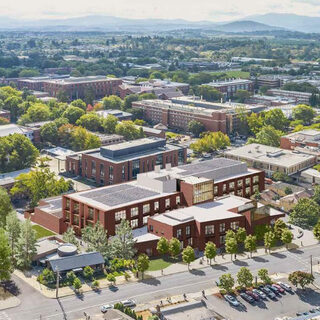
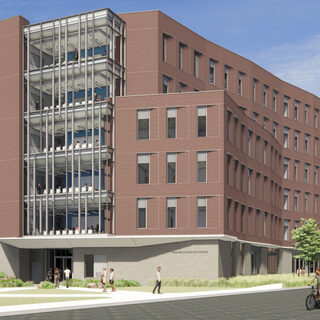
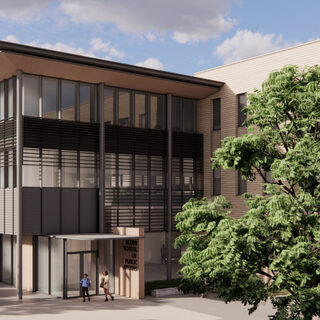
The Auburn Research and Technology Foundation (ARTF) broke ground in April of 2026 on a $22 million facility for Auburn University's RFID Lab in Alabama. The 100,000-sf building was designed by Goodwyn Mills Cawood to meet the growing demands of innovation, research, and collaboration in advancing the development of radio frequency identification technologies.

Read More

Data-Driven Insights to Maximize Value of Research Space

Published 4/28/2026

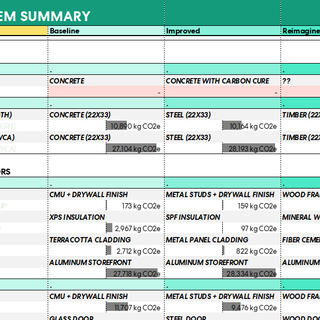
Collecting and analyzing data is par for the course in facilities planning and operations. But how is that data used, for how long, and how often is it updated? Poorly curated data can be barely more useful than no data at all. But many institutions don’t know where to start or how to make the best use of data they already have. Mining and strategically analyzing information can provide data-driven insights into space needs to help increase utilization, create space planning programs, and understand carbon footprints. 

Read More

University of New Mexico Plans Humanities and Social Sciences Complex

Published 4/6/2026

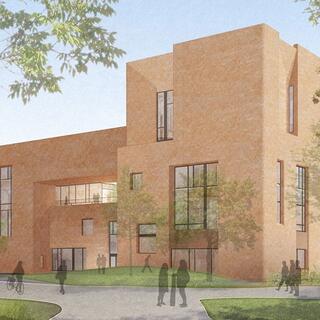
The University of New Mexico is planning to construct the $138 million Humanities and Social Sciences Complex (HSSC) at the heart of its Albuquerque campus. The 80,728-gsf facility was designed by SMPC Architects and Tod Williams Billie Tsien Architects + Partners to serve as a central hub for the College of Arts & Sciences.

Read More

University of British Columbia Opens Gateway Health Building

Published 3/31/2026

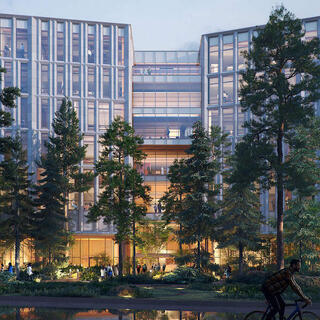
The University of British Columbia opened the CAD 207.9 million Gateway Health building in Vancouver in February of 2026. Designed by Perkins&Will and Schmidt Hammer Lassen, the 270,550-sf facility showcases a six-story atrium connecting two five-story wings. This interdisciplinary nexus provides advanced teaching labs, flexible classrooms, and four large lecture halls, with interconnecting stairs reaching from the basement to the highest level to encourage physical activity.

Read More

ASU Deploys Research Space Utilization Metrics for Affordable and Sustainable Growth

Published 3/17/2026

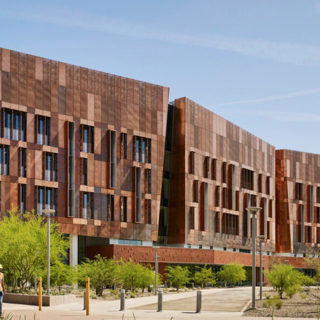
Facing the mandate to grow university research expenditures to $1 billion by 2028, Arizona State University’s (ASU) Research Space Planning group was charged with determining how much lab space would be required to meet that goal and what the cost would be. Under the leadership of senior director Erik Halle, the planning group engaged in a multi-stage process analyzing utilization and cost data, benchmarking, and incorporating user feedback to arrive at the answer.  Introducing new practices like improved lab-to-gross-square-foot ratios and the recovery of underutilized space, among other measures, culminated in meeting the $1 billion target almost three years early without additional construction.

Read More

Dry Labs Produced by Large-Scale Renovation Equip Medical Center for Growth

Published 3/3/2026

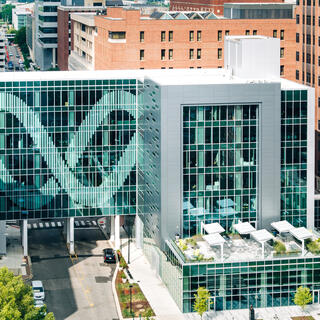
The University of Alabama at Birmingham’s (UAB) Altec/Styslinger Genomic Medicine and Data Sciences Building (ALGEN) is the product of a down-to-the-concrete renovation that transformed an aging, nondescript health sciences research facility into a modern, light-filled home to seven floors of four different dry lab phenotypes. The building is topped by an executive floor that, for the first time, brings together key leadership of the university’s health system and Heersink School of Medicine (HSOM). Fresh glazing on an expanse stretching over a busy downtown street creates a striking double helix pattern that telegraphs the building’s mission. A newly constructed conference center adjoins the renovated structure.

Read More

Engineering Next: OSU’s Master Plan for a Future-Ready Campus

Published 1/6/2026

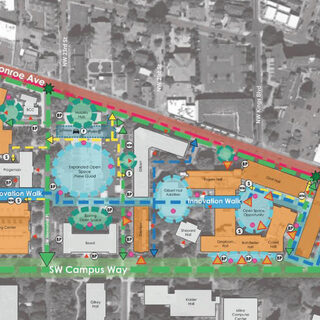
The Oregon State University College of Engineering is embarking on a transformative journey to optimize space, enhance research capacity, and create a cohesive environment for students and faculty. Through strategic planning, innovative redesigns, and an emphasis on community engagement, OSU is redefining how legacy buildings can serve modern needs without massive new construction. A major focus of the 10-year plan centers on the university’s “engineering triangle,” a cluster of historic buildings dedicated to engineering research and education. These century-old buildings, while rich in history, are in desperate need of modernization to support the university’s cutting-edge research. While previous years have seen new construction, the next phase will focus on preserving and enhancing existing spaces.

Read More

Empowering AI-Ready Research Environments

Published 12/2/2025

Artificial intelligence is no longer a futuristic concept; it’s a transformative force actively reshaping how research is conducted, how buildings are designed, and how energy is consumed. From self-driving labs—defined as laboratories where scientific systems can autonomously perform multiple cycles of the scientific method—to smart energy systems, AI is ushering in a new era of efficiency, collaboration, and complexity. This shift was evident in a series of think tank sessions hosted by SmithGroup’s Science & Technology, Artificial Intelligence, and Energy Advisory Board, where leaders from academia, private industry, the energy sector, design, engineering and planning explored the rapid evolution of AI and its impact on research environments. In just six months between sessions, the pace of change was striking: Half of the experts expressed openness to selective technological enhancements, an idea nearly all had rejected earlier. This growing acceptance signals a more tangible AI-driven future, though strategies around governance and energy are still emerging. The following report offers insights into how AI is transforming research ecosystems, the energy infrastructure needed to support this growth, and the challenges and opportunities ahead.
Read More

Oregon State University Builds the First Mass Plywood Lab Building in the U.S.

Published 9/16/2025

Mass timber construction is widely lauded for its sustainability benefits, including wood’s natural carbon sequestration, lower embodied energy footprint, lighter weight as compared to steel or concrete, and essential renewability. But does it pay off in terms of a university’s performance standards and cost concerns when embarking on a project as ambitious as Oregon State University’s Jen-Hsun and Lori Mills Huang Collaborative Innovation Complex, a $213 million, 143,000-sf facility dedicated to advanced programs in artificial intelligence, robotics, energy, and materials science? Scott Ashford, OSU’s dean of the College of Engineering, and Libby Ramirez, the university’s resident architect, argue that with careful strategy and an eye toward the data, the answer is “yes.”

Read More

Incorporating Advanced Labs into Urban Commercial Buildings

Published 8/19/2025

Designing and building labs in the unlikely and constrained location of the prestigious Pacific Design Center (PDC) with Hollywood as a backdrop is a daunting task, requiring adherence to quality expectations, facilities management guidelines in a non-research environment, separation from existing high-end tenants, and compliance with infrastructure requirements. Cedars-Sinai, one of the largest nonprofit medical centers in the U.S., accepted the challenge after deciding to expand its research portfolio. Growing beyond its limited campus is necessary to accommodate the rapid growth of its research facilities and to aid in recruiting top scientists by providing innovative facilities with optimum resources. Hospital officials looked a half mile from their campus to the PDC, a designated cultural resource building complex designed by Cesar Pelli in the 1970s. Known in the 1980s and 1990s as a vibrant hub of premier art, design, and architectural showrooms, many of the tenants now have online shops rather than physical space in the cluster of buildings, leaving vacancies available for lease and an opportunity for Cedars-Sinai’s growth.

Read More

UC Berkeley Plans Genomics R&D Hub

Published 7/29/2025

The University of California, Berkeley is planning to begin construction in spring of 2026 on a seven-story facility for the Innovative Genomics Institute and Bakar Labs. Designed by DGA and Weiss/Manfredi, the development will expand research capabilities in genomics engineering with CRISPR technologies and provide critical infrastructure for life science companies scaling their operations. 

Read More

University of Houston Breaks Ground on Hobby School of Public Affairs

Published 5/16/2025

The University of Houston broke ground in April of 2025 on a $52 million facility for the Hobby School of Public Affairs. Designed by Lake|Flato to foster creativity, community, and wellness, the 42,000-sf structure will feature interactive open settings illuminated by natural light. The transformative project will drive collaboration across disciplines through shared exploration of the myriad fields affected by public policy, such as health care, energy, and urban planning.

Read More

Iowa State University Dedicates Therkildsen Industrial Engineering Building

Published 5/15/2025

Iowa State University dedicated the Therkildsen Industrial Engineering Building in May of 2025 in Ames. The four-story, 80,660-gsf facility provides a dynamic new home for the Department of Industrial and Manufacturing Systems Engineering's teaching, research, and administrative activities. The $70 million project features technically enhanced environments where students can gain the specialized knowledge to design tomorrow’s innovative, safe, and nimble production processes across all industry sectors.

Read More