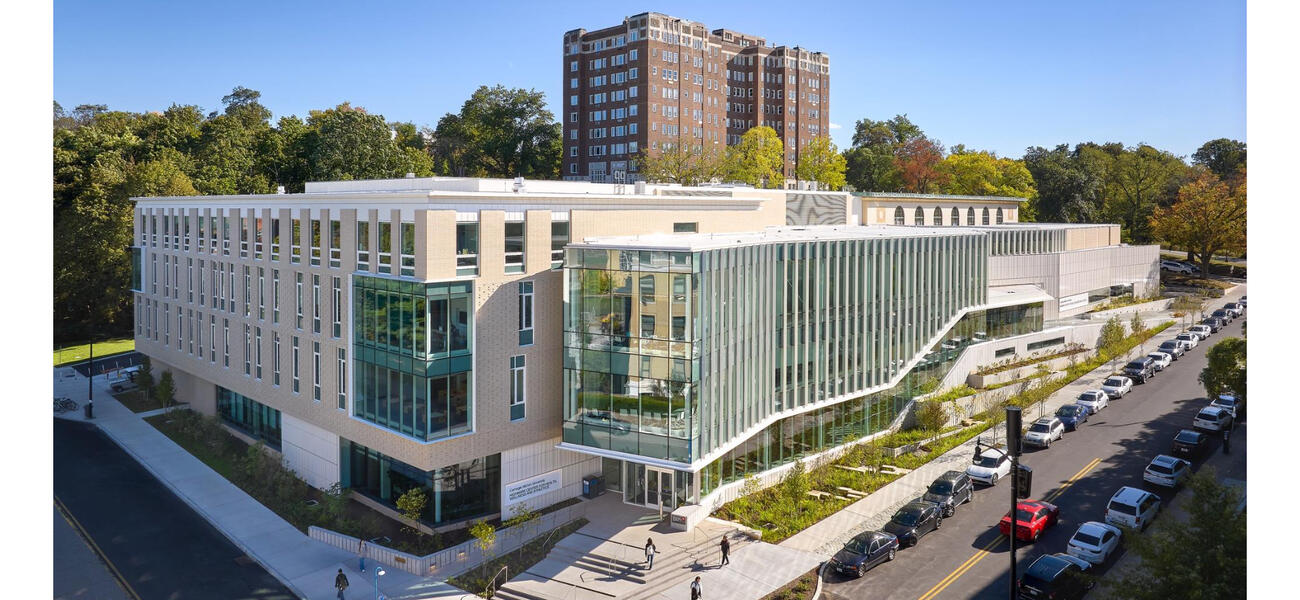
Carnegie Mellon’s Highmark Center
Photo by Ed Massery, courtesy of BCJ
Carnegie Mellon’s Highmark Center is the crown jewel of the university’s holistic approach to student health and success.
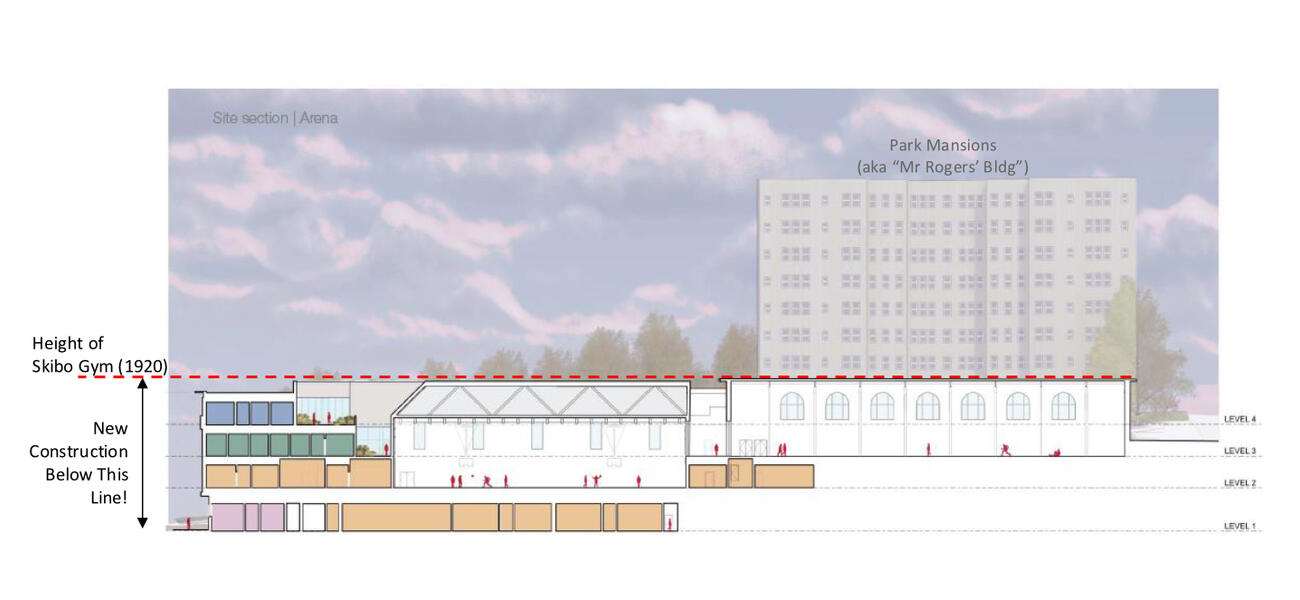
Keeping a Low Profile
Courtesy of BCJ
All new Highmark construction had to be below the roof of the existing Skibo Gym to avoid disrupting the sightline of the adjacent condo tower.
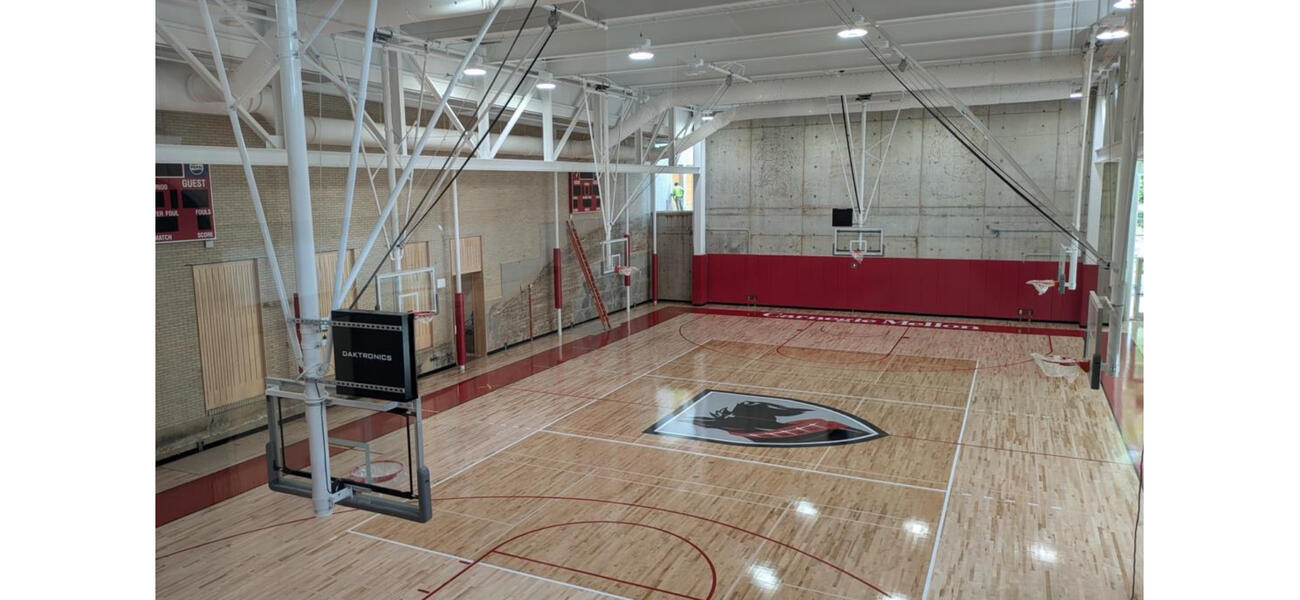
Multi-Activity Court
Photo by Ed Massery, courtesy of BCJ
Highmark’s Multi-Activity Court provides space for team practice during tournaments as well as intramural and recreational activities.
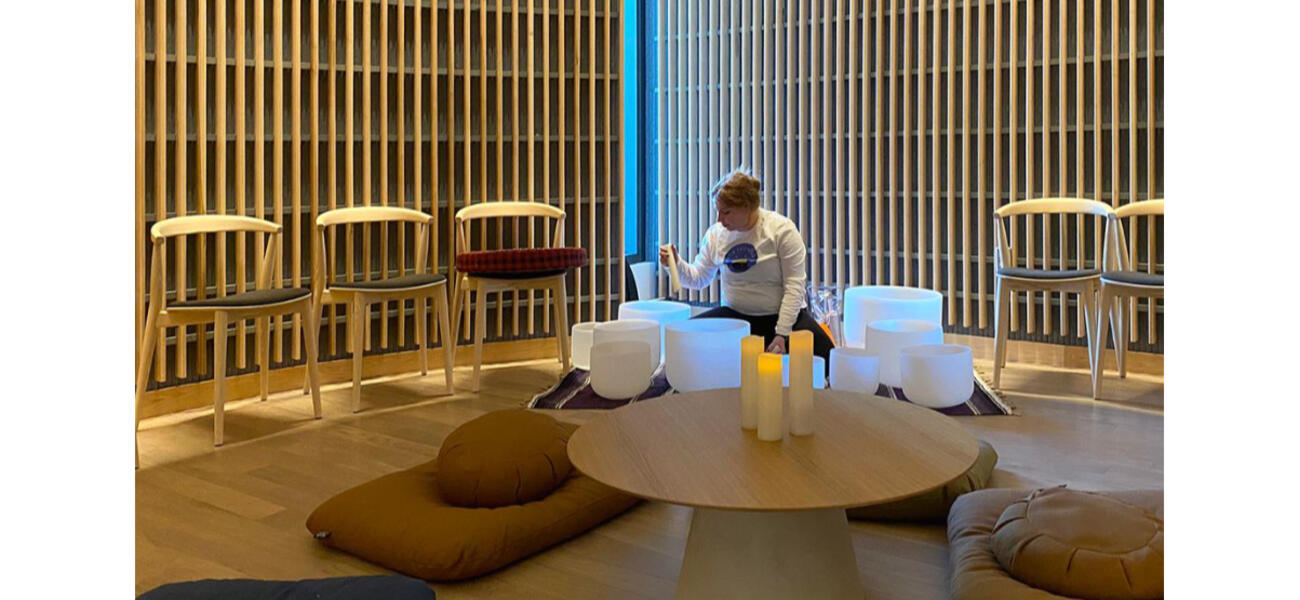
Spiritual and Religious Center
Photo by Ed Massery, courtesy of BCJ
The Center’s non-denominational Spiritual and Religious Center supports numerous faith traditions and contemplative uses, reinforcing inclusivity and reflection.
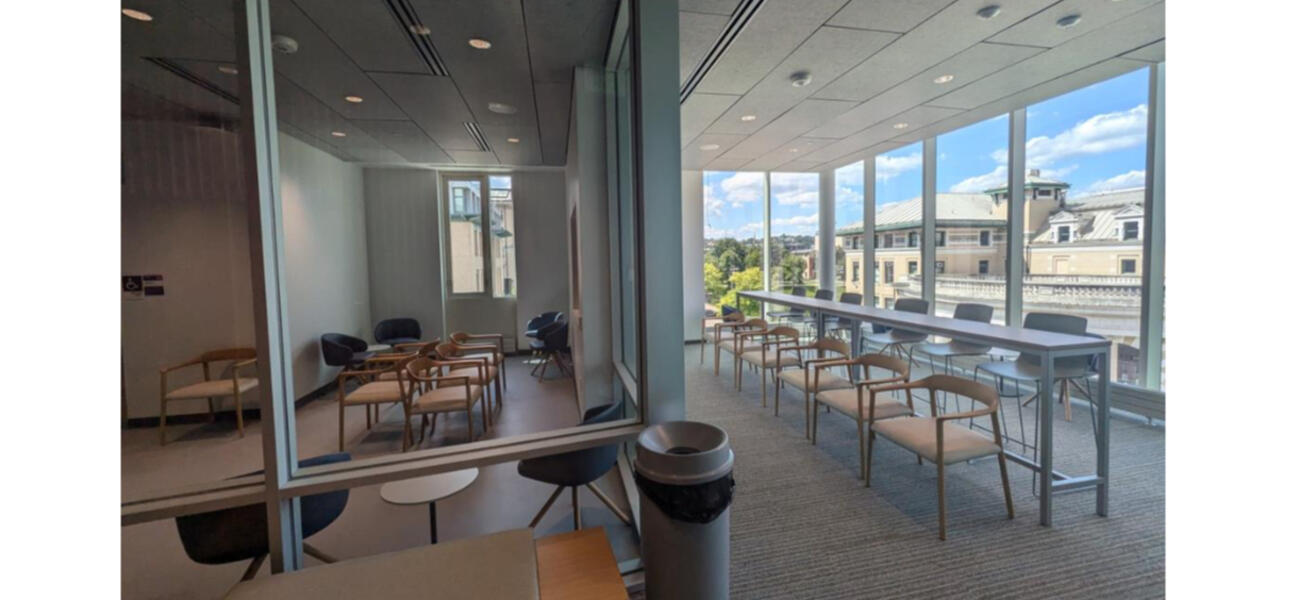
Health Clinic
Photo by Ed Massery, courtesy of BCJ
The health clinic has separate waiting rooms for sick and well patients, a lesson learned during the pandemic.
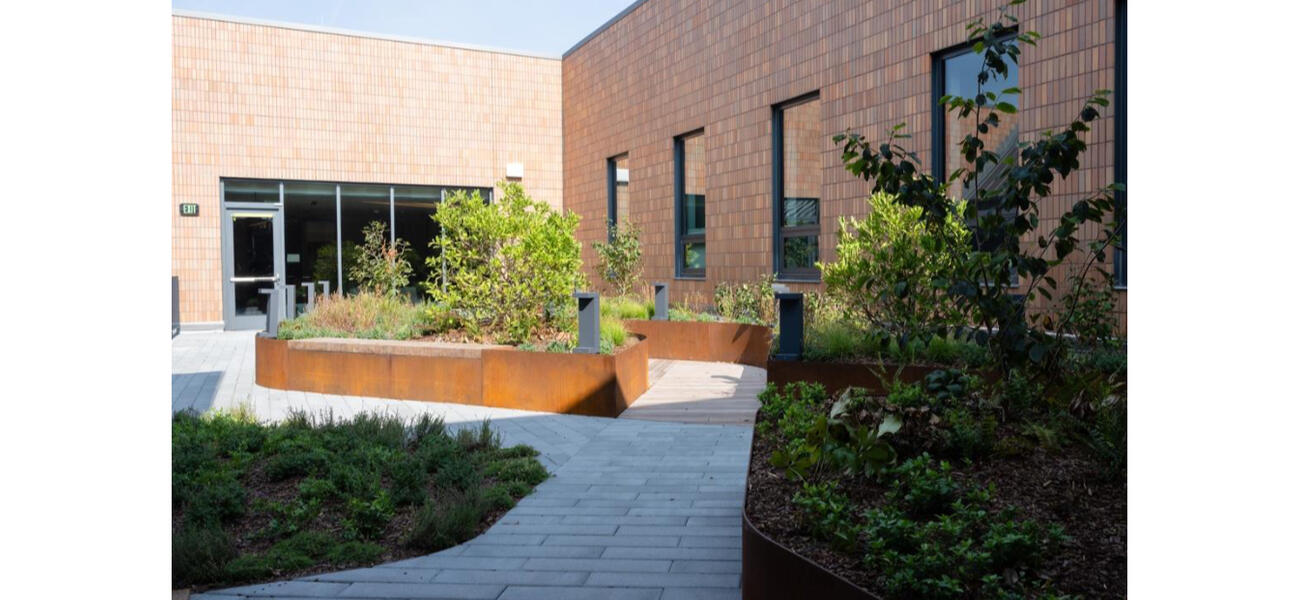
Wellness Garden
Photo by Ed Massery, courtesy of BCJ
Located on the top level of the Highmark Center for privacy, the Counseling and Psychological Services offices open onto a soothing Wellness Garden.
Carnegie Mellon University’s Highmark Center for Health, Wellness and Athletics represents the largest in a series of recent initiatives designed to enhance the student experience and boost the university’s competitive appeal. It also marks a definitive break from the old “sink-or-swim” posture that characterized campus environments across the country for decades.
Completed in 2024, the Highmark Center is the latest component of the university’s integrated wellness system, crafted in response to the holistic health and wellness recommendation in its strategic plan. Its construction entailed partial demolition of the 1920s-era Skibo Gym, then revamped with a 140,000-sf addition that turned it into a welcoming, inclusive, and accessible destination housing student health services, a wellness garden, intercollegiate facilities, and athletics department offices. Over the years, the holistic health initiative also saw upgrades to other areas on the 140-acre campus, including indoor and outdoor performance and recreational surfaces that expand opportunities for NCAA and intramural activity; a 70,000-sf addition to an existing recreation and fitness center; and a fitness center in the new business school complex that’s open to the entire university.
The challenge of translating the goal to promote a culture of lifelong wellness into physical spaces fell to a team led by Carnegie Mellon’s university architect Bob Reppe, who cites a pair of statistics that illustrate the need for such programs. The first is from a 2019 report by the Center for Collegiate Mental Health, noting that, between 2009 and 2015, campus counseling center utilization increased nationally by an average of 30% to 40%, while enrollment increased by only 5%. The other is from a 2022 study from the National College Health Assessment stating that “44% of students now start college with a pre-existing and ongoing health condition.”
In part, these statistics reflect a cultural shift that has dramatically lessened the stigma of mental health counseling. Reppe also points out that today’s incoming college students have, from a young age, been exposed to far more deliberate programming than previous generations. They arrive on campus expecting to find similar direction and support.
“This new generation of students believes that taking care of the brain is as important as taking care of the body, so they are much more open to the idea of therapy,” he says. “‘Wellness’ might have a different definition for every individual, but the global idea is that helping students find the right balance in their physical, mental, and academic states is the best enabler of their success. Happy students make successful students.”
A Detour to Incremental Change
The origin of Carnegie Mellon’s integrated support system harks back to the early 2000s, when, like many other universities at the time, the administration was looking at building “a giant, one-size-fits-all student athletic support system facility with everything we need: a running track, a field house, practice courts, counseling, a health center, etc.,” relates Reppe. However, when the projected building size came in at 320,000 sf, potentially making it the largest structure on campus, leadership decided it was not the best use of university resources. Shifting gears, planners began to envision a more distributed system, one that would utilize existing facilities and boost them to their full potential through incremental changes.
The first area to receive attention was the overused outdoor grass intramural field behind the football stadium. The stand-alone playing field, often unavailable for recreation either because of team practice or poor surface conditions, was resurfaced with artificial turf. The improvement doubled the amount of use it could withstand and now allows both football and soccer teams to practice simultaneously. The second field, added in 2009, opened more opportunities for intercollegiate and recreational activities and other campus groups.
Next up was the Cohon University Center, home to the swimming pool and indoor non-intercollegiate sports, along with some university support services.
“We hadn’t made a major investment in the building since it opened in 1996, when we had only 10,000 students,” says Reppe. “Since then, enrollment has risen to 16,000, and there has been a huge increase in the number of people going to the gym, working out, taking physical care of themselves.”
The 70,000-sf Cohon expansion was completed in 2016. Reppe notes that even though it quadrupled the space available for fitness and weight training, “we could have built it twice as large for the amount of the demand there is.”
Some of that demand was funneled to the new 14,000-sf fitness center that opened on the business school’s Tepper Quad in 2018, adding another location for cardio and free-weight workouts.
The Anchor
The transformation of the Skibo Gymnasium into a modern hub, where students find help developing habits to support lifelong success, was a complex process. As the embodiment of Carnegie Mellon’s comprehensive approach to the student experience, Highmark Center plays multiple roles, addressing the physical, mental, emotional, and spiritual aspects of health. The planning team formulated a list of principles to guide the new design. Must-have attributes were:
- a welcoming, inclusive, and accessible space for the campus;
- an environment that fosters face-to-face collaboration;
- a holistic approach to wellness;
- a place that instills pride in students, faculty, staff, and alumni;
- opportunities to engage with nature.
Putting all the pieces together produced a four-story building totaling approximately 165,000 sf, including 25,000 sf retained from the historic gym.
Site constraints posed an early challenge. The gym was just downhill from an established condominium tower. An agreement between its residents and the university allowed new construction only if the height did not exceed that of the existing gym. The building had to conform to the 65-foot drop in grade across the site, meaning that the top level would be even with the sightline.
“That restriction was particularly difficult given the large program volumes required, especially for the performance gym,” says Reppe.
Similarly, rooftop mechanical units that would be visible from the apartments were prohibited. The design team’s solution—integrating the air-handling units within the structural trusses above the performance gym—was a study in thoughtful engineering and coordination.
“This way, the AHUs are concealed beneath the roofline and out of view, achieving necessary building performance without disrupting the neighbors’ sightlines,” he notes. “The solution allowed us to comply fully with height and aesthetic limitations while still supporting major athletic spaces.”
Performance Spaces
A member of the University Athletic Association Division III conference, Carnegie Mellon was missing out on opportunities to host basketball and volleyball tournaments because the Skibo facility had only one gym up to NCAA standards. Its second gym was not qualified as a practice court for intercollegiate competition, thus its use for recreation only.
As the Highmark Center, the facility addresses the capacity issue with a new 30,000-sf main gym arena and an adjacent 9,000-sf multi-activity court (MAC) gym. The arena gains flexibility when the seats are retracted, becoming a double court that can accommodate two basketball teams practicing simultaneously.
“Adding two playing surfaces in the new facility eliminates a lot of waiting,” says Reppe. Much like the improvements in the outdoor fields and in the Cohon Center that enable simultaneous use, “just one or two strategic pieces open up the facility capacity with almost quadruple the impact. This has become a theme,” he notes.
Highmark Center is essentially two connecting blocks, accommodating the public and private functions of the facility. Each block is designed to meet a contrasting set of needs. The location of the athletic area on the west side of the site meets two key priorities for access. First, it presents a convenient entry point for the crowds, which can swell to almost 1,000 at sports events, while also providing a clear path for emergency vehicles and the loading dock. It also offers direct access to the adjacent 480-acre Schenley Park, a long-time university goal.
“Integrating nature into the daily routine was central to our mission,” says Reppe. “Now, the soothing landscape is visible from outdoor terraces and windows, and track and field athletes literally step out of their locker room doors to begin their workouts in the park.”
Private Spaces
The block housing Highmark’s more private functions is on the northeast side of the building. The more public areas are on the first two floors. On entering, the first thing students see is the desk of the wellness concierge, staffed by either an employee or student trained to field a diverse set of inquiries.
“Students might be looking for a program that improves their diet, or want to engage with a religious group, or express a need for counseling,” explains Reppe. “The concierge’s role is to help them determine where they need to be in this building.”
They might be directed to the nearby Wellness Lab, where student wellness programs and therapy-pet events are held. Anticipating the need for clean-up after the animal visits, the room is equipped with floor drains for easy wash-down. Also on this first floor is the flexible, non-denominational Spiritual and Religious Center, which supports numerous faith traditions and contemplative uses, reinforcing inclusivity and reflection.
Athletics Department offices are on the second floor, along with locker rooms, the training center, and rehabilitation facilities. There are also connections to the performance and practice gyms and the indoor fieldhouse via stairs and elevators.
The level of privacy gradually increases on the upper two floors. University Health Services, which includes licensed clinical spaces, occupies the third floor. A key feature is the scheme of dual waiting rooms, segregating visitors into sick and well waiting areas. The glass-enclosed sick zone operates under negative pressure, drawing exhaust air outside to prevent recirculation. Reppe points out that the value of the physical separation is a lesson learned during the pandemic. “It’s not something we would have done without that experience.”
The fourth floor is where the most confidential services—Counseling & Psych (CaPS) and the Wellness Garden—are located. “The idea was to provide a space where counselors, students, staff, and faculty can meet one-on-one and be able to commune in nature, or enjoy quieter space to contemplate and have discussions,” explains Reppe.
Cost
Another unusual facet of the project is the fact that, despite the site constraints and complicated mix of programs, the $105 million Center came in under budget. Reppe attributes the economies to the design and construction team’s ingenuity. Locating the AHUs in between the trusses that support the large basketball court not only satisfied height and sightline restrictions but also eliminated the expense of extending an elevator to the roof. Retaining and repurposing the original 1925 gym cut around 20,000 sf from the building mass. The design team simplified the private block with stacked services and repeating floor plans, making it essentially a four-story office tower.
“Putting offices over the big volume of the gym would have required extra structures to support,” says Reppe. “Simplifying the massing of building made it easier to build and cost less.”
Carnegie Mellon students are surely not the only ones who are happy and successful as a result of the construction project.
By Nicole Zaro Stahl
| Organization | Project Role |
|---|---|
|
Bohlin Cywinski Jackson
|
Architect
|
|
Mascaro Construction Co.
|
General Contractor
|
|
Langan Engineering & Environmental Services
|
Civil Engineer
|
|
Affiliated Engineers, Inc. (AEI)
|
Mechanical Engineer
|
|
KPFF Consulting Engineers
|
Structural Engineer
|
|
OJB Landscape Architecture
|
Landscape Architect
|
|
Babich Acoustics
|
Acoustical Engineering
|
|
BrightTree Studios
|
A/V, IT/Telecommunications, Security
|
|
Francis Krahe & Associates Inc.
|
Lighting Designer
|
|
BranchPattern
|
LEED Consultant & Commissioning
|