Tradeline's industry reports are a must-read resource for those involved in facilities planning and management. Reports include management case studies, current and in-depth project profiles, and editorials on the latest facilities management issues.
Latest Reports
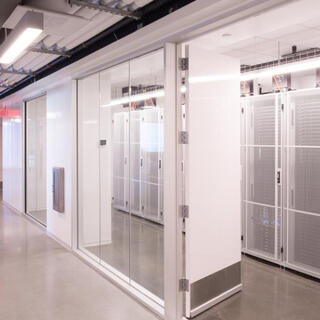
Making Sure Your Zettaflops Don’t Flop
Every new building is a gamble on the future, but some are bigger bets than others. These days, one of the highest-stakes wagers campus planners must make is how much to upgrade their high-performance facilities to meet tomorrow’s demand. It isn’t an easy call. Once relegated to distant basements, computer labs are now being built right in the heart of campus, a reflection of their ever-growing importance. With the number of majors that utilize high-performance computing expected to rise nationally by the end of the decade and the growing importance of cutting-edge supercomputers in recruiting the very best scholars, the overall direction is clear. But a lot can go wrong, which makes planning tomorrow’s high- performance computing facilities today very complicated and potentially risky.
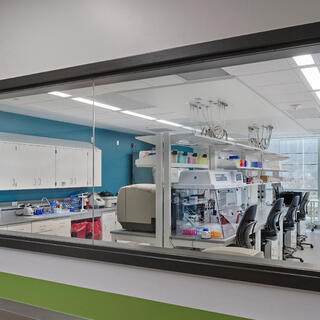
Building the Miracle Factory: Mayo Clinic’s Vision for Biomanufacturing
From cortisone to CAT scans, the future of medicine has often arrived first at the Mayo Clinic. The tradition continues today with the fit-up of a new headquarters for regenerative biotherapeutics adjacent to the research center’s Rochester, Minn., campus. The fourth floor of the recently built Discovery Square building, Two Discovery Square, had been earmarked originally for office space, but after COVID hit, the developer offered the opportunity to convert some of the office space to laboratory space. Mayo Clinic had been planning to build a Center for Regenerative Biotherapeutics and saw an opportunity to lease the 18,000-sf space at Discovery Square and convert it for this cutting-edge biomanufacturing facility.
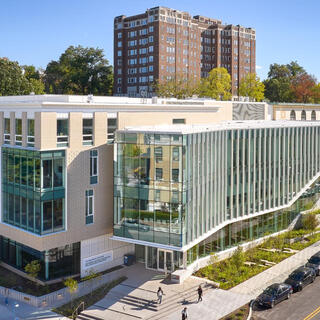
Carnegie Mellon’s Highmark Center Raises the Bar for Athletics, Health, and Wellness Facilities
Carnegie Mellon University’s Highmark Center for Health, Wellness and Athletics represents the largest in a series of recent initiatives designed to enhance the student experience and boost the university’s competitive appeal. It also marks a definitive break from the old “sink-or-swim” posture that characterized campus environments across the country for decades.
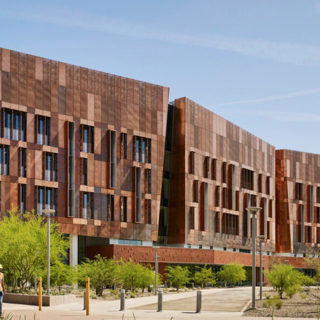
ASU Deploys Research Space Utilization Metrics for Affordable and Sustainable Growth
Facing the mandate to grow university research expenditures to $1 billion by 2028, Arizona State University’s (ASU) Research Space Planning group was charged with determining how much lab space would be required to meet that goal and what the cost would be. Under the leadership of senior director Erik Halle, the planning group engaged in a multi-stage process analyzing utilization and cost data, benchmarking, and incorporating user feedback to arrive at the answer. Introducing new practices like improved lab-to-gross-square-foot ratios and the recovery of underutilized space, among other measures, culminated in meeting the $1 billion target almost three years early without additional construction.
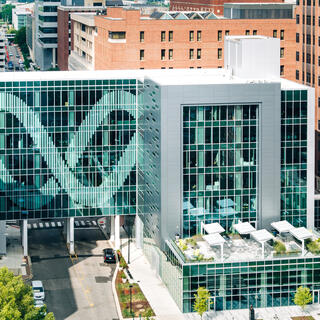
Dry Labs Produced by Large-Scale Renovation Equip Medical Center for Growth
The University of Alabama at Birmingham’s (UAB) Altec/Styslinger Genomic Medicine and Data Sciences Building (ALGEN) is the product of a down-to-the-concrete renovation that transformed an aging, nondescript health sciences research facility into a modern, light-filled home to seven floors of four different dry lab phenotypes. The building is topped by an executive floor that, for the first time, brings together key leadership of the university’s health system and Heersink School of Medicine (HSOM). Fresh glazing on an expanse stretching over a busy downtown street creates a striking double helix pattern that telegraphs the building’s mission. A newly constructed conference center adjoins the renovated structure.