Alternative Work Styles

Medical College of Wisconsin Opens Hub for Collaborative Medicine

Published 2/24/2018

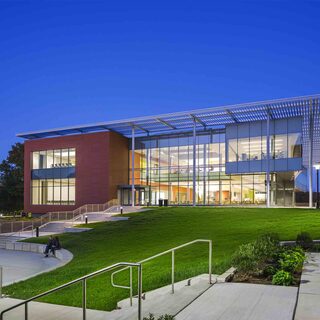
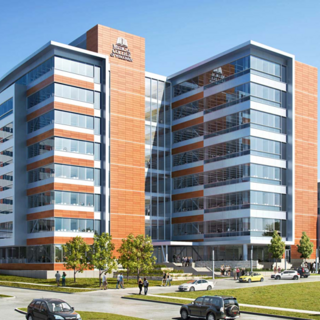
The Medical College of Wisconsin opened the $90 million Hub for Collaborative Medicine in February of 2018 in Wauwatosa. Designed by Flad Architects, the eight-story, 318,000-sf administrative building can house 1,500 occupants, including clinicians, researchers, faculty members, and administrative staff. The facility is physically connected to the existing Medical Education and Health Research Center buildings to the north at multiple levels, and connected to the Wisconsin Diagnostic Laboratory Building to the south by an enclosed elevated skywalk.

Read More

Mass Innovation Labs Signs Ground Lease at Innovation Square Seaport

Published 1/19/2018

Mass Innovation Labs, a provider of life science research space solutions, signed a ground lease in December of 2017 for 54,0000 sf at Innovation Square Seaport (iSQ) in Boston. Located in the Raymond L. Flynn Marine Park, the 375,000-sf iSQ campus is being built by Related Beal, a real estate developer, owner, and operator. Mass Innovation Labs will anchor the first two floors of the multi-tenant facility, which will include coworking spaces and a collaboration center.

Read More

Ford Motor Company Expands and Renovates Michigan Facilities

Published 4/26/2017

Ford Motor Company is expanding and renovating its research and manufacturing facilities in Michigan. Construction will begin in mid-2017 on a $200 million data center in Romeo. In 2018, a truck and SUV production facility in Wayne will be retooled at a cost of $850 million. Ford will also invest $150 million to expand its Wayne engine manufacturing plant. 

Read More

GlaxoSmithKline Renovates Pennsylvania Research Facility

Published 12/21/2016

GlaxoSmithKline began construction in December of 2016 on a 100,000-sf SMART laboratory and office facility in Upper Providence, Pa. Skanska has been awarded the $45 million contract for demolition and renovation of four floors in an existing structure to implement GSK’s Smart Space concept, which features integrated technological innovations for research and productivity. Completion is expected in October of 2017.

Read More

Using Social Data to Optimize Workspace Design and Performance

Published 10/12/2016

Organizations of all types are using location-based social media data and other user-generated information to improve workspace design and functionality. By researching occupancy data, user satisfaction ratings, and other metrics, facility designers are finding smarter ways to lower costs and create efficiencies. While some organizations mine existing trace data automatically generated by mobile devices and building management systems, others are developing customized platforms dedicated to capturing key information.

Read More

Transforming Organizational Culture through Building Design

Published 8/10/2016

Leading-edge interdisciplinary facilities like the New Jersey Institute for Food, Nutrition and Health (IFNH) at Rutgers University, as well as facilities in Wisconsin and Washington, D.C., are transforming academic research culture through the use of open building designs that foster cross-discipline collaborations and “emergent outcomes.” This approach to culture-driven facility design is also being successfully deployed at other universities across the country in an effort to improve the way research institutes operate and compete for grants and contracts.  

Read More

Vassar College Completes Integrated Science Commons

Published 5/19/2016

Vassar College completed construction in spring of 2016 on the $125 million Integrated Science Commons in Poughkeepsie, N.Y. Designed by Ennead Architects, the project features the 82,000-sf Bridge for Laboratory Sciences, a teaching and research building that spans a ravine.

Read More

Change Management Strategies for Successful Workplace Transformation

Published 5/11/2016

Whether personal or professional, change evokes an emotional response. Workplace change initiatives, especially those relating to space, nudge (or jolt) employees out of their comfort zones and typically entail some modification in routine and behavior. Relationships change, as well, and questions arise about how to continue performing at a high level in the new environment. The fastest, most productive change strategies take these human dimensions into account.  

Read More

Ford Initiates Comprehensive Campus Redevelopment Project

Published 4/22/2016

Ford Motor Company will begin construction in May of 2016 on a comprehensive redevelopment of its real estate portfolio in Dearborn, Mich. The project will include construction of a 700,000-sf design facility as well as the expansion and renovation of Ford's existing headquarters campus. Designed by SmithGroupJJR to promote collaboration and interaction, the updated buildings will feature open workspaces with unassigned seating.

Read More

The Next-Next-Generation Workplace

Published 2/10/2016

Workspace planners are often asked to design to a 10-to-20-year time horizon, but the more rapidly technology advances, the harder this becomes. And it’s not just the hardware, software, and work tasks that are going to change, says Kay Sargent, director of workplace strategies at Lendlease. It’s also the workers themselves. Science shows that workers’ brains are going to work differently in 20 years, says Sargent, and companies need to start planning for this now, or pay the price.

Read More

Building Internal Consensus for Shared Core Research Facilities

Published 11/4/2015

The Shared Resource Center, which will provide new lab space for four existing core facilities at the H. Lee Moffitt Cancer Center & Research Institute in Tampa, Fla., is nearing completion with substantial buy-in from staff, despite a sometimes challenging consensus-building process, according to Moffitt’s Christine O’Connell, senior director of laboratory research operations and Susan Constable, manager of shared resources.

Read More

Defining the New Lab of the Future

Published 10/14/2015

The phrase “lab of the future” typically refers to a flexible, open floorplan designed to promote collaboration and cross-pollination between researchers. But these buzzwords have been used for decades, with open labs dating back to the mid-’60s and flexible casework to the mid-’80s. So how successful have these features been, and what defines the lab of the future in 2015 and beyond?

Read More

Increased Daylight and Modular, Open Space Improve Outlook and Productivity

Published 9/23/2015

Diverse projects in New York, New Jersey, and Maryland demonstrate that integrating flexible infrastructure, collaborative work styles, daylight, and sustainability all contribute to a “health-positive” scientific research environment, a concept derived from neurological and behavioral research indicating that access to natural light and human interaction improve well-being and productivity.

Read More

Space Design Should Reflect a Company’s Needs, Not Latest Trends

Published 4/1/2015

To achieve the most viable, successful workspaces, companies need to look closely at the factors that most directly influence their work culture instead of following the latest design trends, according to Kay Sargent, director of workplace strategies at Lend Lease. No single workplace design fits every company, and a workspace should fit the people using it, as well as the organizational goals.

Read More

Maximizing Operating Efficiency of High-Containment Labs

Published 1/21/2015

Researchers at Duke University Medical Center’s Regional Biocontainment Lab (RBL) recently organized and launched a select-agent-based study in just 30 days from inception to conclusion, thanks to the organization’s highly efficient operational framework. Fast tracking of the study—which involved aerosol exposure of 38 immunized mice to Francisella tularensis, the causative agent of tularemia—was made possible through the facility’s strategic management and cross-trained staffing model.

Read More