Designing for Unknown Users
Courtesy of HGA
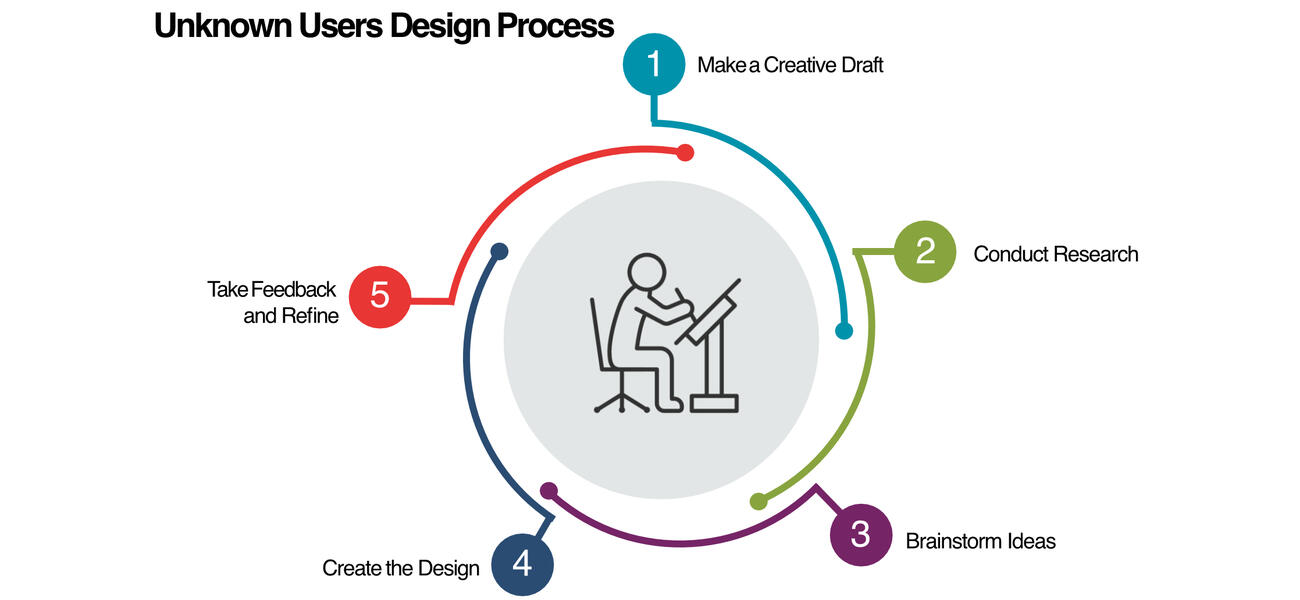
The process of designing for unknown users diverges from the linear path of a single-use building.
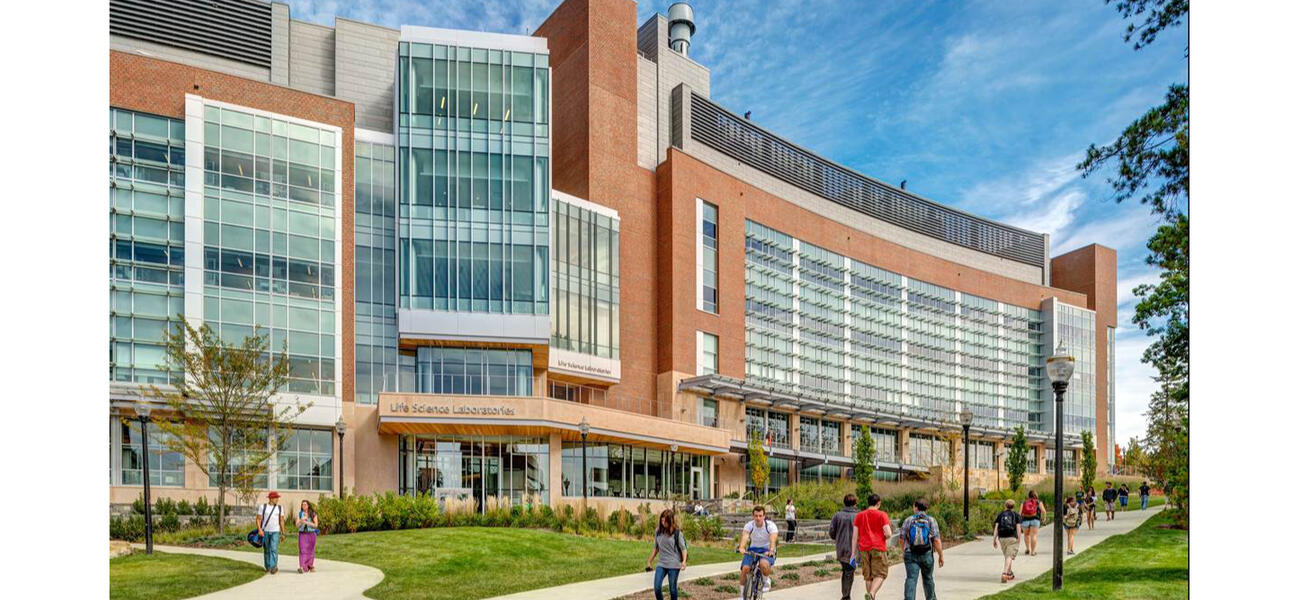
UMass Life Science Laboratories
Courtesy of HGA
Planning for the Life Science Laboratories at UMass Amherst exemplifies a cyclical rather than linear track.
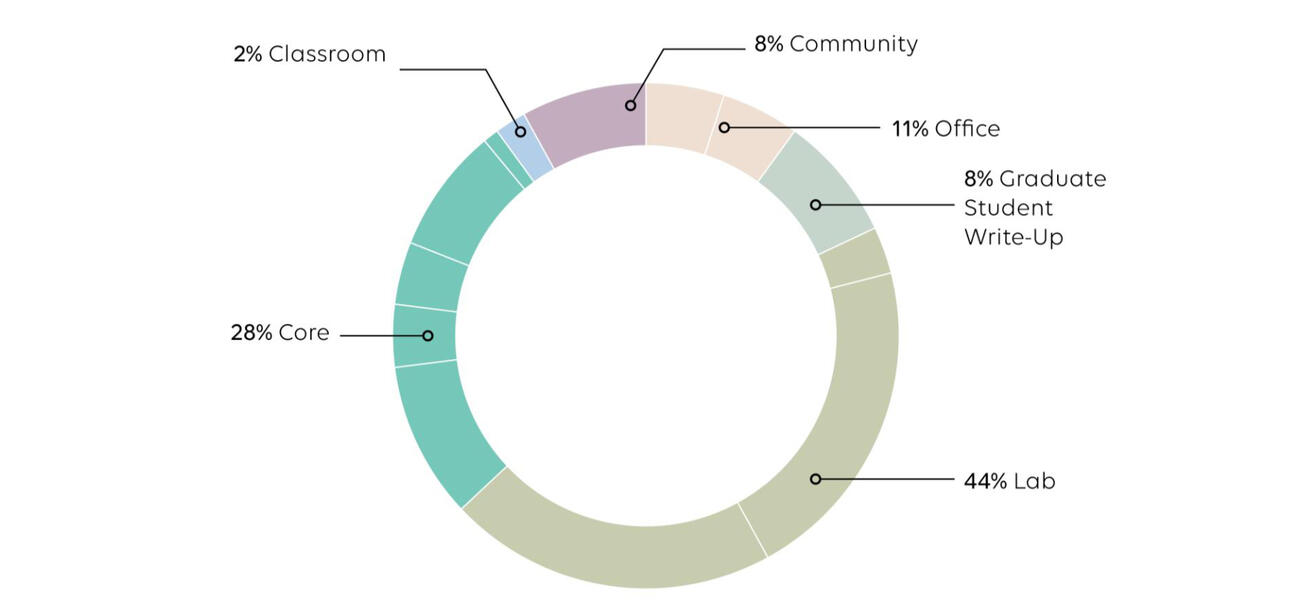
UMass Program Distribution
Courtesy of HGA
The Life Science Laboratories building at UMass Amherst is heavy on lab space in part because of a state requirement for minimum 60% efficiency in laboratory buildings, and in part to address poor conditions in existing wet lab facilities.
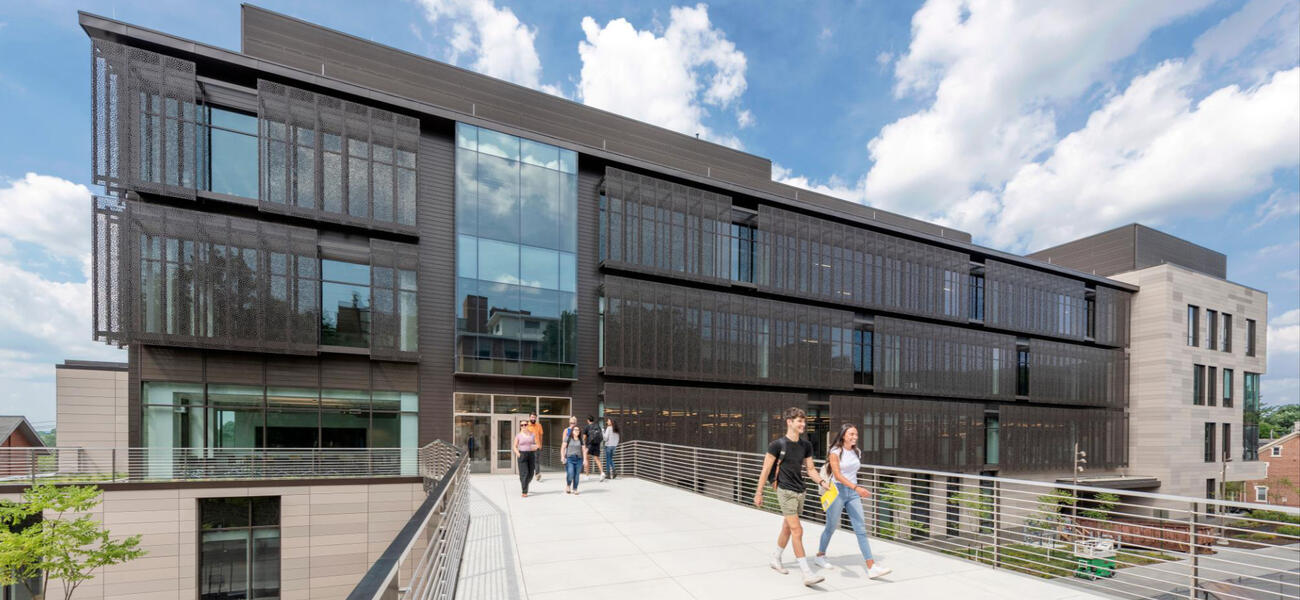
Lehigh University' Health, Science and Technology Building
Courtesy of HGA
Lehigh’s Health, Science and Technology Building is designed to leverage research talent to develop industry partnerships and spur regional economic growth.
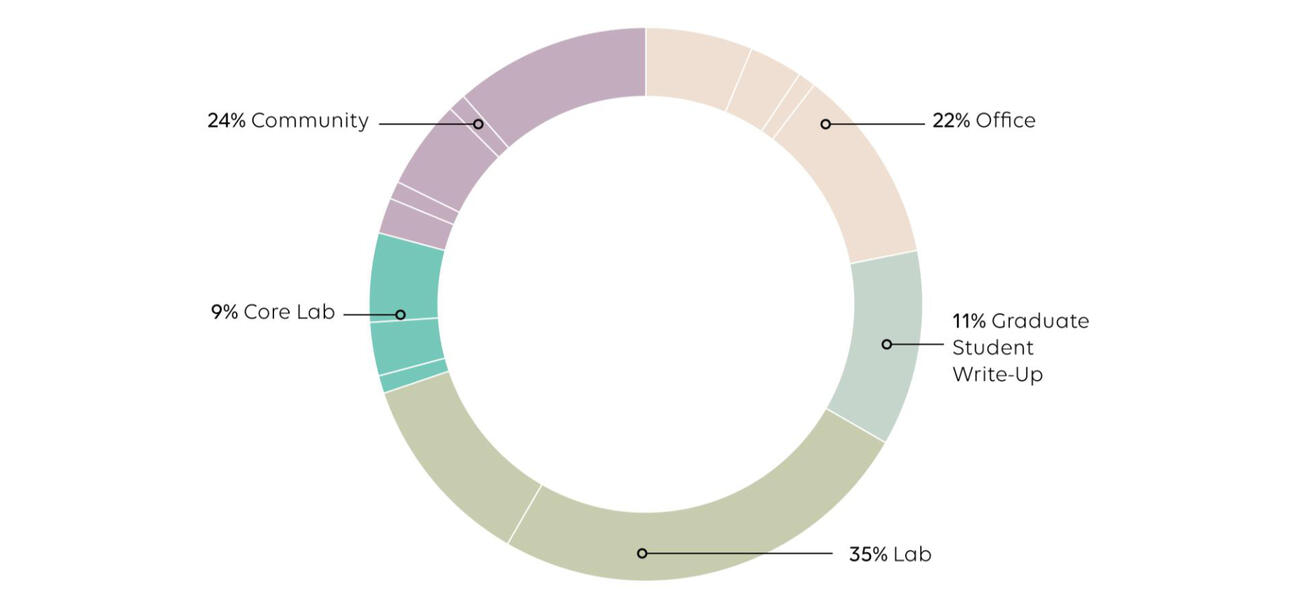
Lehigh Program Distribution
Courtesy of HGA
Lehigh’s Health, Science and Technology Building dedicates a large percentage of space to offices.
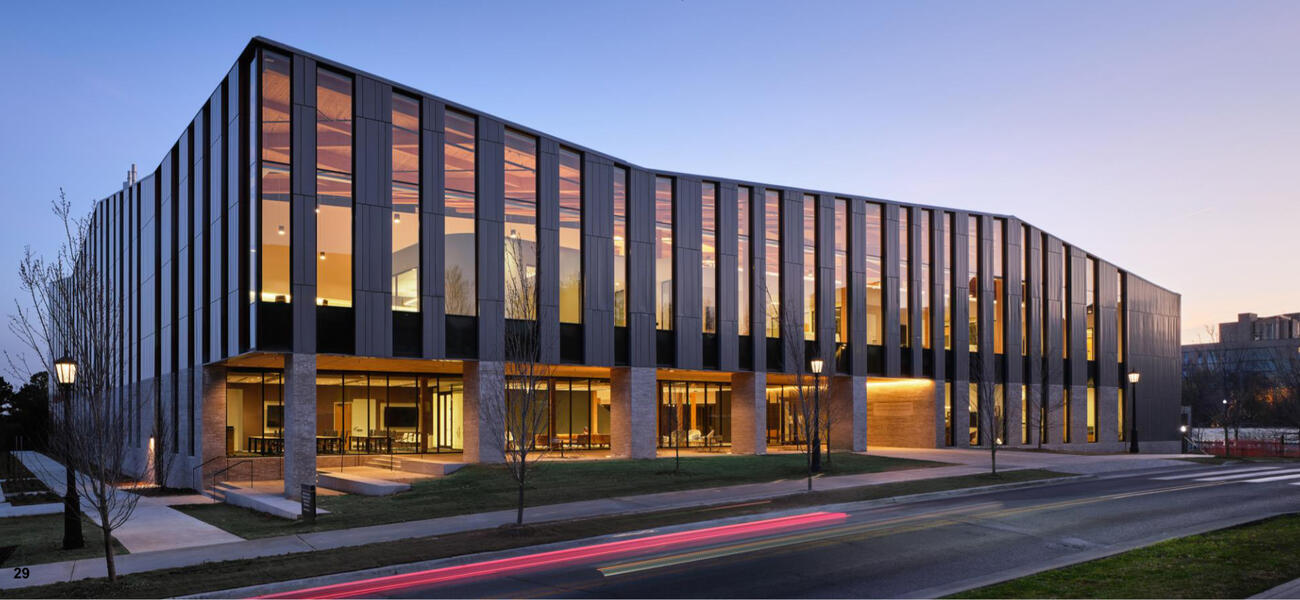
University of Arkansas’ Institute for Integrative and Innovative Research (I³R)
Courtesy of HGA
University of Arkansas’ Institute for Integrative and Innovative Research (I³R) features a flexible lab bar as the workhorse, with a mass-timber, triangular pavilion for social gatherings.
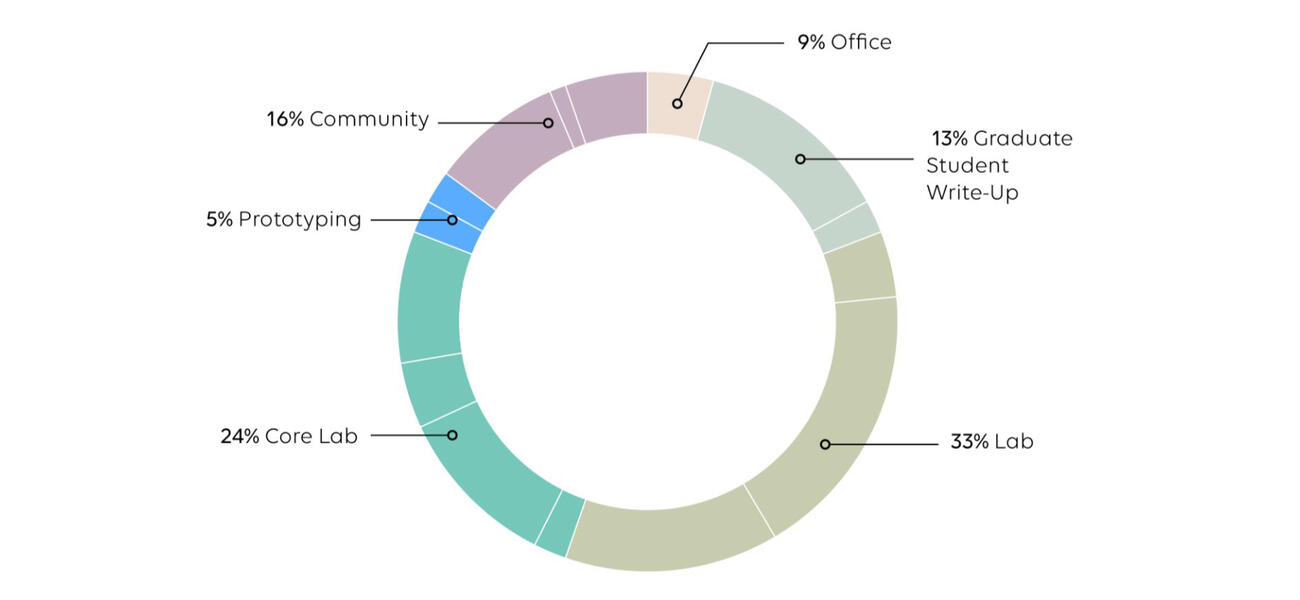
University of Arkansas Program Distribution
Courtesy of HGA
Program distribution focuses on core lab space, with 29% dedicated to prototyping space for industry engagement.
Case Western Reserve’s Interdisciplinary Science and Engineering Building
Courtesy of HGA
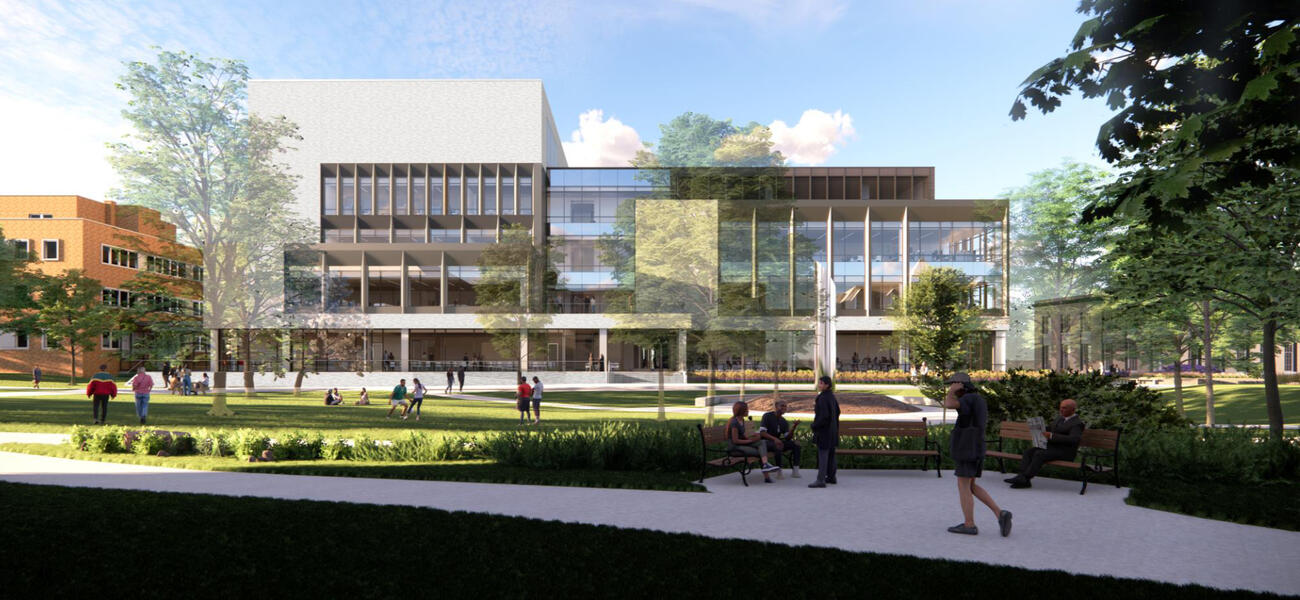
Case Western Reserve’s Interdisciplinary Science and Engineering Building is designed to support grant-successful faculty.
Case Western Reserve University Program Distribution
Courtesy of HGA
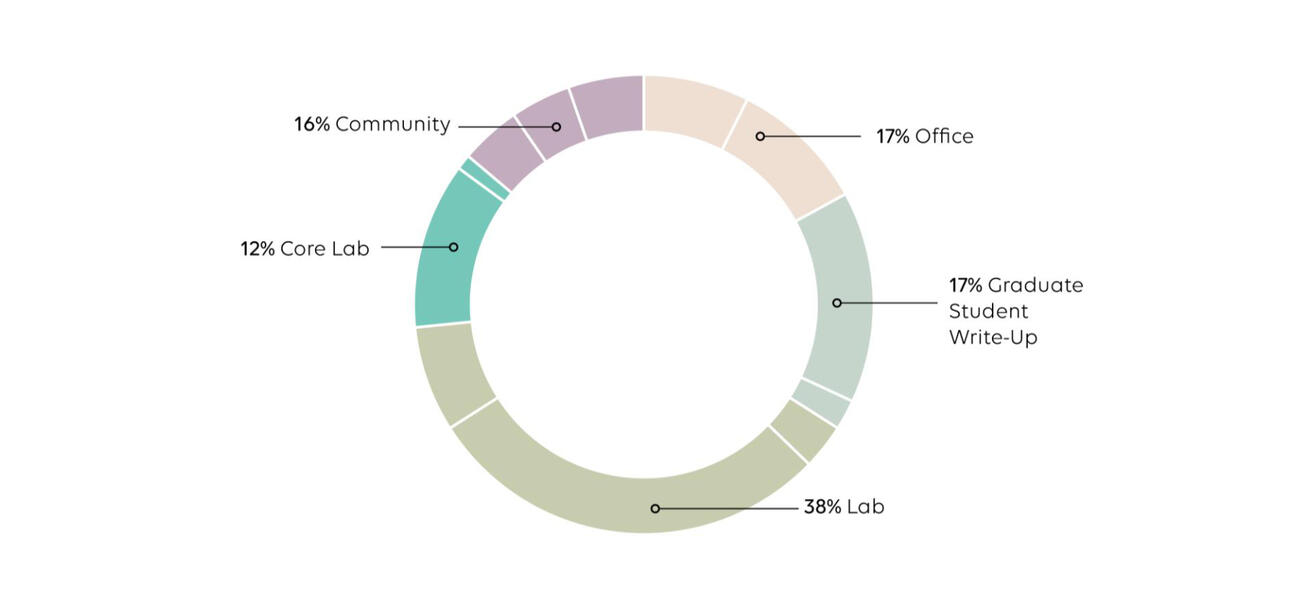
Interdisciplinary Science and Engineering Building at Case Western Reserve allocates 38% of its space to technical assigned labs, with another 12% in core labs.
The landscape of academic research has shifted dramatically over the past three decades. Where scientists once worked within single disciplines, today’s researchers tackle complex societal challenges demanding collaboration across multiple fields, and the development of partnerships with private industries addressing the same issues. This evolution has fundamentally changed the approach to research facility design, requiring unique considerations for buildings whose users may not yet be identified and whose research hasn’t been imagined. As a result, the design process has become more cyclical, with fewer known variables upfront, requiring uncertainty management while still delivering buildings that will serve institutions for decades to come.
The Shift from Linear to Cyclical Design
Thirty years ago, designing a single-discipline building like a chemistry facility involved gathering comprehensive information early in the programming phase, interviewing future occupants, understanding their processes and equipment needs, and following a linear path through design and construction. But as scientific culture evolved toward interdisciplinary work, this straightforward approach became obsolete.
Today, facility planners must think about more nebulous concepts: How will the building support the science that needs to happen? How can it foster relationships within the research community for interdisciplinary collaboration? How can it facilitate the translation of benchtop research into solutions that impact society?
Instead of working in a linear fashion, projects now proceed in two tracks: a program track addressing people, activities, and equipment in the traditional sense; and a physical track involving land use, buildings, and infrastructure, all while developing concepts around scientific capabilities. These concepts iterate cyclically until reaching a consensus solution.
“The stakeholder groups—or subject-matter experts—are the ones who help us design around, or bracket, the science and what the capabilities of the building would be in the end,” says Jeffrey Puleo, AIA, LEED AP, planning principal at HGA Architects in Boston. “For us, those stakeholder groups are where the action is.”
University of Massachusetts: The Pioneer Project
The Life Science Laboratory building at UMass Amherst, which opened in 2013, exemplifies this new approach. The project began with a broad vision for life sciences research from the university’s chancellor, which stakeholders refined into three supporting centers: Bioactive Delivery, Personalized Health Monitoring, and Models to Medicine.
The university took an innovative approach to assigning faculty, issuing a campus-wide call for proposals. Fourteen groups applied, with ground rules requiring interdisciplinary or transdisciplinary composition: Teams had to span colleges and departments and focus on societal problems.
The building dedicated 72% of its program to assigned and core lab space, driven by two factors: a state requirement for minimum 60% efficiency in laboratory buildings, and the university’s need to address poor conditions in existing wet lab facilities.
“They were trying to focus on getting as much wet lab space out of the building as they could,” explains Puleo. “That put a lot of pressure on the community space, which we’ll see in other projects is starting to expand, and that is where the interaction in science is developed.”
The project’s timeline presented challenges, with faculty not invited until late 2010, and proposals due after the main building was bid. Despite these hurdles, the investment paid dividends. “There is no longer that traditional disciplinary approach that they had in the past,” says Puleo.
Lehigh University: Investing in Collaboration
Lehigh University’s Health, Science and Technology Building pursued similar goals: leveraging research talent to develop industry partnerships and create economic impact for Bethlehem, Pa.
“When an institution makes that investment in core labs, there is an ability to increase the density in the assigned lab space, because not every group needs their own imaging tool,” says Puleo.
The major departure in this building was significant investment in office areas, creating maximum transparency between lab and office environments. Faculty offices were pulled from exterior walls, with graduate students intermixed among them in landscaped open areas. Interior open staircases connected floors, while a science café became an unexpected success.
“This is a huge benefit not only for faculty and students who work in the building, but also high school students who walk past the building during the day and can come in here and grab a snack on their way to high school,” says Puleo. “They do that quite often.”
Assignable lab space dropped to 35%, with 24% devoted to community space—the science café and open collaboration areas. This has proven to be the primary benefit to occupants, and where science is thriving at Lehigh.
Strategically, the university assigned stakeholders from two colleges to work during design, establishing loads and functionality before assigning research clusters.
University of Arkansas: Regional Economic Impact
The University of Arkansas’ Institute for Integrative and Innovative Research (I³R) is a 130,000-sf facility at the campus edge. A significant Walton Family Foundation grant enabled the university to pursue ambitious research goals, with priorities focusing on research innovation and regional economic development.
“How we can interact with and impact the private sector was very important on this one,” says Meredith Hayes Gordon, AIA, LEED AP, a principal at HGA in Minneapolis. “That regional economy in Northwest Arkansas is rich with major companies in the healthcare, transportation, food, and retail sectors, so it offered a lot of opportunity for that engagement with industry collaboration.”
University leadership engaged 75 faculty surrogates during the basis-of-design phase to understand what science in their fields meant, where it was headed, and what capabilities the region lacked that might offer new opportunities for industry engagement.
The design features an efficient, flexible lab bar as the workhorse, with a mass-timber, triangular pavilion serving as the community-building component. The two-story atrium will accommodate musical concerts, art exhibitions, and poster sessions. The triangular pavilion ensures visual connectivity throughout the building: No matter where occupants are, they can see into other spaces, including technical labs and collaborative areas.
Program distribution includes 29% of the building dedicated to core lab and prototyping spaces that will attract industry engagement. Total community space totals 16%, likely reduced because functions are concentrated in the central atrium.
Case Western Reserve: Planning for Century-Long Flexibility
Case Western Reserve University’s Interdisciplinary Science and Engineering Building (ISEB) is a 190,000-sf facility on the Case Quad in Cleveland. When President Eric Kaler arrived in 2021, he established objectives to drive interdisciplinarity, grow non-medical research, and increase research expenditures by 50%, from $400 million to $600 million annually.
“Eric Kaler and I have a vision fundamentally grounded in the notion that science is a social activity,” explains J. Michael Oakes, PhD, the university’s executive vice president for research and economic development. “In my opinion, interdisciplinary work generally fails because, as a caricature, you put the English professor at a lunch with the chemistry professor. They have a great conversation, they are brilliant people, it’s awesome, and then nothing occurs. Instead, I think the right model is to have an objective, a focus area, and then say, ‘Who from the community wants to come and join the solution or address that focus area?’ So, now we are focusing people of all different backgrounds in a direction to solve a problem, and I think that’s where the action is.”
Eight themes spanning the College of Arts and Sciences, Case School of Engineering, and School of Medicine will be supported from day one. The ground level dedicates significant square footage to core facilities and community space. “It’s important to note that this building is making a clear statement about welcoming the Cleveland community in a different way than they have done before,” observes Gordon.
Oakes emphasizes the building’s century-long perspective. “Interdisciplinary Science and Engineering Building is for grant-successful faculty,” he says. “If you’re not churning out the grants, if you’re not producing the science we need and want for our reputational and other impact success, you need to work somewhere else on campus.”
“We knew that the cores were essential to our success,” adds Oakes. Shared core facilities maximize efficiency and accessibility. “One of the things we wanted to do—because we’re in Cleveland, Ohio—is a lot of industrial stuff,” he says. “We want our industry partners to have access to the core. So, we’ve set up the physical, the bureaucratic, and the social way to do that. It’s important for us, particularly in these funding environments, to have another source.”
Program breakdown allocates 38% to technical assigned lab space, with another 12% in core labs—totaling 50% technical lab space. Community space comprises 16%. “Thinking about core facilities has been an evolution at Case Western Reserve, because so much of what is deemed a core facility right now is within a department and owned by the department, versus more widely,” notes Gordon.
Key Lessons: The Evolution of Research Design
Comparing all four projects reveals clear trends. The emphasis on collaborative and social space has grown significantly from UMass’s limited community areas to substantial investments at Lehigh, Arkansas, and Case Western Reserve.
Critical takeaways include:
- Collaborations happen mostly outside the lab, not within it.
- Lab space is meant for heads-down, focused tasks, while idea generation and collaboration occur elsewhere.
- Investment in core labs enables higher density in assigned lab space—more shared facilities means less dedicated space that will churn over time.
What researchers consistently report is that when students are in the lab, they’re heads-down and focused. They don’t want interruptions or feedback while monitoring reactions or conducting experiments. Buildings must provide for engagement among students and faculty outside hard lab space; this transition has accompanied the shift toward interdisciplinary models and the need to support research’s social aspects.
The four case studies demonstrate that designing research facilities without fully identified users requires careful balance: enough specificity to support anticipated science, sufficient flexibility to accommodate evolution, and strategic investment in the social infrastructure where collaboration truly happens. As universities continue competing for research talent and funding, these design principles are becoming standard practice.
***
Learn more about how leading institutions are positioning themselves for the future at the Tradeline Science and Engineering Facilities 2026 conference. Join us in Boston in October!