Laboratory: Dry And Wet

Clemson University Opens Advanced Materials Innovation Complex

Published 3/27/2026

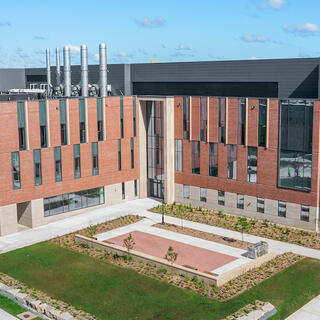
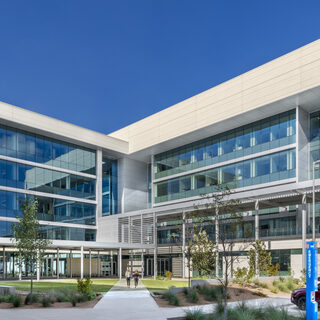
Clemson University opened the Advanced Materials Innovation Complex in February of 2026 in Clemson, S.C. The $130 million building is the university's most technologically advanced facility to date and will enable the workforce of the future to gain hands-on experience in next-generation manufacturing processes.

Read More

ASU Deploys Research Space Utilization Metrics for Affordable and Sustainable Growth

Published 3/17/2026

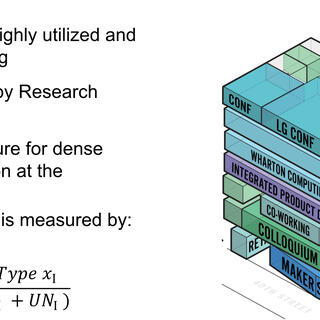
Facing the mandate to grow university research expenditures to $1 billion by 2028, Arizona State University’s (ASU) Research Space Planning group was charged with determining how much lab space would be required to meet that goal and what the cost would be. Under the leadership of senior director Erik Halle, the planning group engaged in a multi-stage process analyzing utilization and cost data, benchmarking, and incorporating user feedback to arrive at the answer.  Introducing new practices like improved lab-to-gross-square-foot ratios and the recovery of underutilized space, among other measures, culminated in meeting the $1 billion target almost three years early without additional construction.

Read More

University of Miami Health's Griffin Cancer Research Building Leads the Next Era of Translational Medicine

Published 3/11/2026

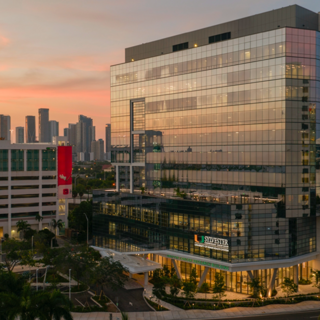
The University of Miami Health System is transforming cancer care and research in South Florida with the opening of the Kenneth C. Griffin Cancer Research Building. Representing an investment of over $250 million, the state-of-the-art facility was designed by HOK to seamlessly integrate biomedical discovery with world-class patient treatment. The 244,000-sf structure doubles the footprint of the Sylvester Comprehensive Cancer Center and provides the Miller School of Medicine with leading-edge research environments for collaborative team science.

Read More

Construction Continues on UCLA Research Park

Published 3/4/2026

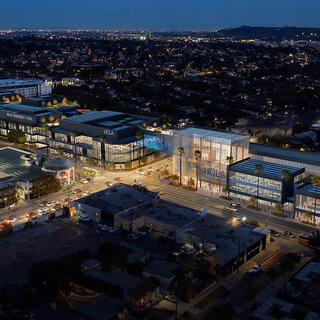
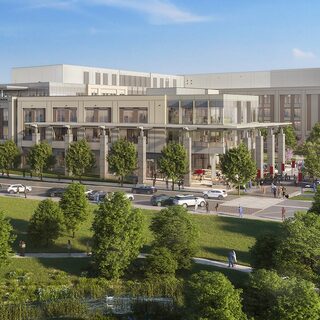
The University of California, Los Angeles is constructing the UCLA Research Park to create an engine of innovation and economic growth for Southern California and beyond. The visionary project is transforming the former Westside Pavilion shopping mall into a dynamic destination where basic scientists join with industry experts to advance discovery and commercialization. Acquired by UCLA in December of 2023, the property encompasses more than 1.3 million gsf on 9.2 acres, with two main buildings spanning a total of 700,000 sf connected by an enclosed pedestrian bridge.

Read More

University of Toronto Plans James and Louise Temerty Building

Published 3/3/2026

The University of Toronto is planning to construct the James and Louise Temerty Building on its St. George Campus to provide the Temerty Faculty of Medicine with modern, collaborative environments for discovery and learning. Standing 11 stories high with two basement levels, the 398,000-gsf facility will offer multiple floors of wet and dry laboratories for interdisciplinary research that will be shared with the Faculty of Arts & Science’s Department of Cell & Systems Biology.

Read More

Breakthrough Properties Announces Roche Expansion at Harvard's Enterprise Research Campus

Published 2/19/2026

Roche will expand its leased presence on Harvard University’s Enterprise Research Campus from 30,000 sf to 100,000 sf in Breakthrough Properties’ One Milestone property in Boston. Located in the thriving Allston neighborhood, the Roche Genentech Innovation Center will bring together cardiovascular, renal, and metabolism experts with data science and AI specialists to accelerate drug discovery and development. Construction is nearly complete and phased occupancy will commence in mid-2026.

Read More

University of Wisconsin-River Falls Opens SciTech Innovation Center

Published 2/17/2026

The University of Wisconsin-River Falls opened the Science and Technology Innovation Center (SciTech) in January of 2026. Designed by BWBR Architects, the $117 million building features immersive environments for hands-on discovery. The three-story, 134,560-gsf structure offers a maker space, active learning studios, 12 instructional labs, and three wet research labs. This nexus of experiential education also provides 32 undergraduate research spaces, an optics lab, computational labs, offices, and conference rooms.

Read More

Return on Mission: Rethinking Space and Purpose in Higher Education

Published 2/3/2026

In a higher education landscape facing shifting enrollment trends, rising costs, and an uncertain future, institutions must rethink how they use their physical spaces—not just as real estate, but as engines of purpose. And rather than traditional return on investment (ROI), they should employ “Return on Mission” to evaluate their success rather than metrics like net-to-gross ratios, utilization rates, and physical occupancy to assess their spaces. Relying solely on ROI falls short of capturing what truly matters: the activity inside the space and the value it generates.

Read More

University of South Carolina Constructs School of Medicine

Published 1/23/2026

The University of South Carolina is constructing the School of Medicine Columbia as the centerpiece of its $300 million Health Sciences Campus. Supporting the institution’s evolving approach to medical pedagogy and discovery, the 330,000-sf building will feature active learning classrooms, leading-edge simulation spaces, wet and dry labs, and a health science library.

Read More

“Resilient Chassis” Enhances Long-Term Flexibility of Labs

Published 1/20/2026

The ideal lab building can flex over time to accommodate each new generation of researchers, with minimal disruption and infrastructure change. Using an approach called the “resilient chassis,” labs are grouped by typologies and placed around a common spine or “chassis” of mechanical/electrical/plumbing (MEP) systems based on zoning and capacity needs. The best location for each lab is determined by grouping labs together that share specialized requirements, such as vibration sensitivities, noise restrictions, lighting or electrical requirements, and instrumentation needs. 

Read More

University of Oregon Constructs Second Phase of Knight Campus

Published 12/30/2025

The University of Oregon is constructing the second phase of the Phil and Penny Knight Campus for Accelerating Scientific Impact in Eugene. Designed by ZGF Architects, Building 2 will double capacity for the research and development of biomedical technologies and expand space for academic programs, engineering, and applied science.

Read More

Kadans Breaks Ground on Science and Innovation Building

Published 12/18/2025

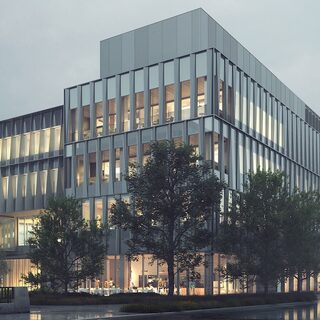
Kadans Science Partner began construction in November of 2025 on a 217,000-sf science and innovation building in the United Kingdom. Designed by Sheppard Robson, Plus Ultra Manchester will accommodate organizations from across the life sciences, health research, advanced materials, and deep technologies sectors. The facility’s customizable floor plates will provide a flexible arrangement of laboratories, cleanrooms, offices, and assembly space. A vibrant atrium will interlink with numerous breakout zones to foster interdisciplinary collaboration.

Read More

University of Alabama at Birmingham Opens Genomic Medicine and Data Sciences Building

Published 11/21/2025

The University of Alabama at Birmingham opened the Altec/Styslinger Genomic Medicine and Data Sciences Building in October of 2025. Designed by William Blackstock Architects, the $78 million project involved the renovation and expansion of the existing Lyons-Harrison Research Building to accommodate leading-edge labs, computational suites, meeting rooms, offices, and purpose-built venues for innovation and collaboration.

Read More

Transforming Research Space Management for a New Era

Published 11/11/2025

In an era of expanding research portfolios and heightened expectations for interdisciplinary collaboration, universities face intensifying pressure to strategically plan, manage, and optimize research space. Research facilities, wet labs, maker spaces, core facilities, and computational suites, represent some of the most limited and costly assets in the academic environment. As competition for high-quality laboratories and specialized rooms grows, institutions are re-evaluating entrenched practices, strengthening policy frameworks, and adopting data-driven systems to ensure that space is allocated efficiently, transparently, and equitably. The most successful universities treat research space not as a static inheritance but as a strategic resource that must evolve with the institution’s mission.

Read More

Rowan University Opens Schreiber School of Veterinary Medicine

Published 11/10/2025

Rowan University opened the Shreiber School of Veterinary Medicine in October of 2025 on its West Campus in Mullica Hill, N.J. Supported by $75 million in state funding, the pioneering facility addresses an increased national demand for veterinary professionals and advances the wellbeing of animals and humans in alignment with the One Health initiative.

Read More