Laboratory: Dry

College of the Desert Creates Palm Springs Campus

Published 4/13/2026

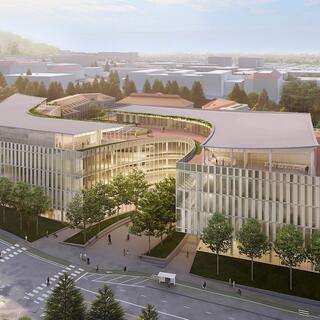
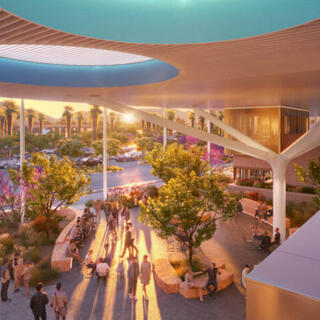
The College of the Desert is constructing a $268 million campus in Palm Springs, Calif. Designed by WRNS Studio, this regional hub for education and workforce training will offer dry labs, maker spaces, AI-enabled environments, and immersive studios. The development’s main facility, The Accelerator, will house programs in digital media and arts, healthcare, and architecture. Technology-driven classrooms will prioritize flexibility to support innovative teaching and learning methodologies.

Read More

University of Michigan Builds Center for Innovation in Detroit

Published 4/7/2026

The University of Michigan is constructing the Center for Innovation in Detroit to accelerate technology-focused research and train the next generation of skilled workers. Designed by KPF, the $250 million facility will act as a powerful engine for job creation and inclusive talent development by accommodating both degree-based offerings and instructional courses for non-students in a range of fields.

Read More

ASU Deploys Research Space Utilization Metrics for Affordable and Sustainable Growth

Published 3/17/2026

Facing the mandate to grow university research expenditures to $1 billion by 2028, Arizona State University’s (ASU) Research Space Planning group was charged with determining how much lab space would be required to meet that goal and what the cost would be. Under the leadership of senior director Erik Halle, the planning group engaged in a multi-stage process analyzing utilization and cost data, benchmarking, and incorporating user feedback to arrive at the answer.  Introducing new practices like improved lab-to-gross-square-foot ratios and the recovery of underutilized space, among other measures, culminated in meeting the $1 billion target almost three years early without additional construction.

Read More

University of Wisconsin-Eau Claire Constructs Science and Health Sciences Building

Published 3/16/2026

The University of Wisconsin-Eau Claire (UWEC) is constructing the Science and Health Sciences Building to expand undergraduate research capacity and create an anchor for a new innovation cluster. Designed by HOK and Potter Lawson, the $340.3 million structure will provide dynamic facilities for STEM courses and programs in nursing, psychology, pre-professional health sciences, public health, and environmental studies.

Read More

University of Missouri-Kansas City Constructs Healthcare Delivery & Innovation Building

Published 3/6/2026

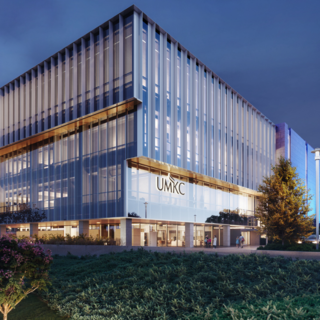
The University of Missouri-Kansas City (UMKC) is constructing the $145 million Healthcare Delivery & Innovation Building to provide leading-edge environments for immersive learning, training, and discovery. Shaped by the architectural expertise of RDG Planning & Design and Clark & Enersen, the 160,000-sf facility will enable the next generation of medical professionals to gain hands-on experience in the delivery of team-based care. 

Read More

Dry Labs Produced by Large-Scale Renovation Equip Medical Center for Growth

Published 3/3/2026

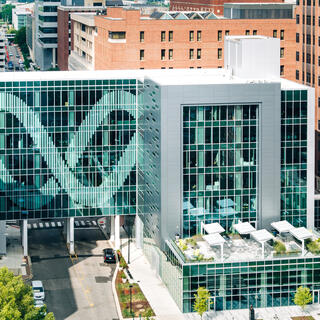
The University of Alabama at Birmingham’s (UAB) Altec/Styslinger Genomic Medicine and Data Sciences Building (ALGEN) is the product of a down-to-the-concrete renovation that transformed an aging, nondescript health sciences research facility into a modern, light-filled home to seven floors of four different dry lab phenotypes. The building is topped by an executive floor that, for the first time, brings together key leadership of the university’s health system and Heersink School of Medicine (HSOM). Fresh glazing on an expanse stretching over a busy downtown street creates a striking double helix pattern that telegraphs the building’s mission. A newly constructed conference center adjoins the renovated structure.

Read More

William & Mary Opens Integrated Science Center 4

Published 2/13/2026

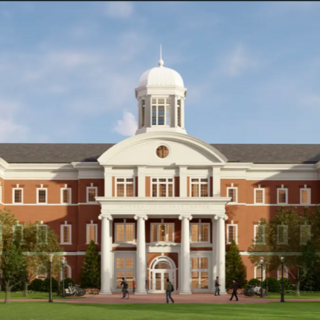
William & Mary opened the Integrated Science Center 4 (ISC4) in January of 2026 in Williamsburg, Va. Designed by Goody Clancy with Baskervill as interior design architect, the $103 million facility provides a vibrant home for the School of Computing, Data Sciences & Physics, the university's first new school in 50 years. The visionary project included 124,000 gsf of new construction, augmented by 10,000 gsf of renovated space to establish a link to the existing ISC complex.

Read More

University of Victoria Constructs Net-Zero Engineering Expansion

Published 2/9/2026

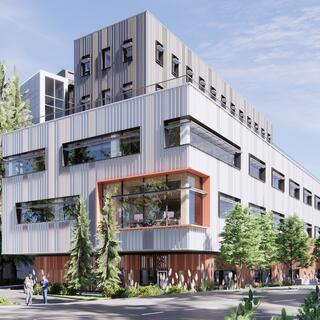
The University of Victoria is expanding the footprint of the Department of Engineering and Computer Science (ECS) with two highly sustainable facilities. The CAD 89.6 million project includes the construction of a six-story addition to the ECS building to provide biomedical, geotechnical, materials, building science, and environmental and hydraulics labs. Featuring active learning venues and undergraduate design studios, the development will also house graduate student workstations, faculty collaboration spaces, computer labs, and departmental offices.

Read More

Christopher Newport University Opens Science and Engineering Research Center

Published 1/28/2026

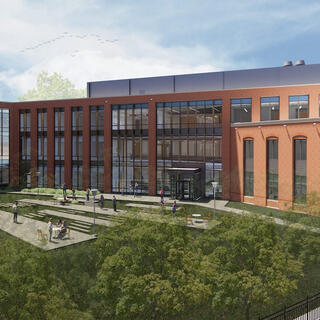
Christopher Newport University opened the Science and Engineering Research Center in January of 2026 in Newport News, Va. Catalyzing innovation and interdisciplinary exchange, the 83,000-sf building was designed by Glavé & Holmes Architecture to provide state-of-the art environments for learning and discovery. The Robotics and Autonomous Systems Lab offers a dedicated assembly zone alongside a two-story open area equipped with a motion capture system for the testing of drones and other technologies.

Read More

Florida State University Opens College of Business

Published 1/15/2026

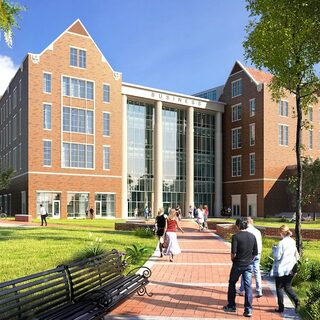
Florida State University opened a new home for its Herbert Wertheim College of Business in January of 2026 in Tallahassee. Designed by Goody Clancy, Legacy Hall aims to catalyze excellence in education, research, and innovation. The $160 million facility provides a 300-seat auditorium, multiple 100-seat lecture halls, leading-edge classrooms, and dedicated zones to forge connections between faculty, students, and industry partners.

Read More

Transforming Research Space Management for a New Era

Published 11/11/2025

In an era of expanding research portfolios and heightened expectations for interdisciplinary collaboration, universities face intensifying pressure to strategically plan, manage, and optimize research space. Research facilities, wet labs, maker spaces, core facilities, and computational suites, represent some of the most limited and costly assets in the academic environment. As competition for high-quality laboratories and specialized rooms grows, institutions are re-evaluating entrenched practices, strengthening policy frameworks, and adopting data-driven systems to ensure that space is allocated efficiently, transparently, and equitably. The most successful universities treat research space not as a static inheritance but as a strategic resource that must evolve with the institution’s mission.

Read More

Arkansas Children’s Constructs NCOR Facility

Published 9/26/2025

Arkansas Children’s is constructing the $75 million National Center for Opioid Research and Clinical Effectiveness (NCOR) on the site of the Little Rock hospital campus. Designed by ESa (Earl Swensson Associates), the 65,000-sf facility will enable pioneering longitudinal studies on the effects of opioid exposure on family and pediatric health to guide treatment approaches and inform policy decisions.

Read More

Oregon State University Builds the First Mass Plywood Lab Building in the U.S.

Published 9/16/2025

Mass timber construction is widely lauded for its sustainability benefits, including wood’s natural carbon sequestration, lower embodied energy footprint, lighter weight as compared to steel or concrete, and essential renewability. But does it pay off in terms of a university’s performance standards and cost concerns when embarking on a project as ambitious as Oregon State University’s Jen-Hsun and Lori Mills Huang Collaborative Innovation Complex, a $213 million, 143,000-sf facility dedicated to advanced programs in artificial intelligence, robotics, energy, and materials science? Scott Ashford, OSU’s dean of the College of Engineering, and Libby Ramirez, the university’s resident architect, argue that with careful strategy and an eye toward the data, the answer is “yes.”

Read More